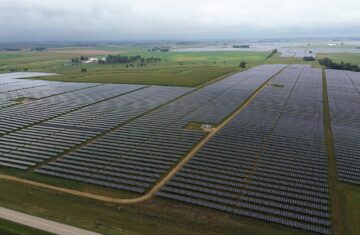
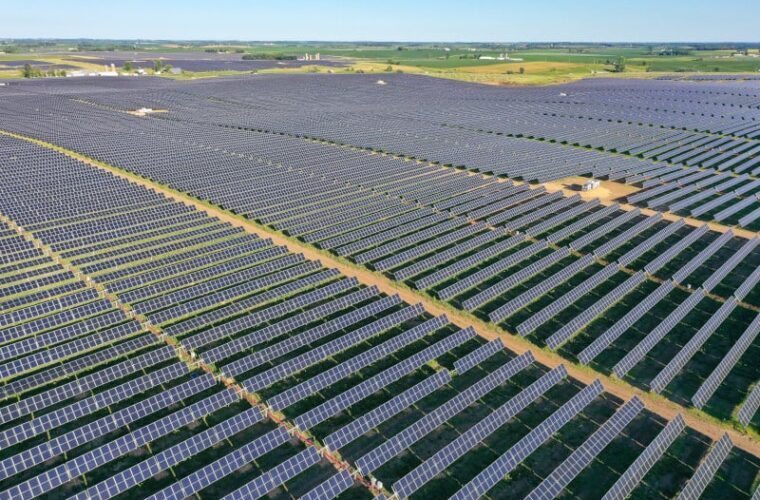
West Texas plains, the Phoebe Solar Farm represents a strategic diversification of the region’s energy landscape, known historically for its oil and gas production. This project signifies a new chapter for the Permian Basin, leveraging its abundant sunlight to generate clean power for the state’s growing grid and demonstrating how legacy energy regions can lead in the renewable transition.
Significance & Context
The Phoebe Solar Farm is a 150-megawatt (AC) utility-scale solar facility developed by EDF Renewables on private land in Winkler County. The project’s entire output is sold under a long-term power purchase agreement to Austin Energy, supporting the city’s ambitious sustainability goals. This connection to a major municipal utility highlights the project’s role in powering urban centers across Texas. The facility generates enough electricity to power approximately 30,000 Texas homes and displaces an estimated 280,000 metric tons of carbon dioxide emissions annually, contributing to a cleaner state-wide grid managed by the Electric Reliability Council of Texas (ERCOT).
Development Timeline
The development of the Phoebe Solar Farm began with site selection and land acquisition around 2019. A key milestone was the execution of the power purchase agreement with Austin Energy, securing the project’s financial viability. The project then successfully navigated the local permitting process with the Winkler County Commissioners Court. Construction commenced in 2022, and despite the challenges of the West Texas environment, the project was completed and reached commercial operation in late 2023.
Technology & Innovation
The Phoebe Solar Farm is engineered to withstand the high temperatures and occasional dust storms characteristic of the Permian Basin. The facility utilizes robust single-axis tracking systems with high-efficiency monocrystalline photovoltaic panels. This tracking technology is crucial in this region, maximizing energy capture from the intense sun. The project also features advanced inverter technology that provides essential grid-forming capabilities, helping to maintain the stability and reliability of the local ERCOT grid, which is particularly valuable in a region with a high concentration of intermittent energy resources.
Challenges & Controversies
A significant challenge for the Phoebe Solar project was managing the high costs and logistical complexities associated with constructing a large-scale facility in a relatively remote area of West Texas. Challenges included securing skilled labor and transporting materials efficiently. These hurdles were overcome through strategic project planning, early procurement of critical components to mitigate supply chain delays, and partnerships with local contractors. The project also implemented a comprehensive waterless cleaning system for the solar panels to conserve water, a critical consideration in the arid climate.
Community & Economic Impact
The Phoebe Solar Farm provides a substantial economic boost to Winkler County. During the construction phase, the project typically employed over 300 workers, providing a significant, though temporary, infusion into the local economy. For long-term operations, it supports a permanent team of technicians for maintenance and monitoring. The project provides a stable, drought-proof source of revenue for local landowners through long-term lease agreements. Based on Texas’s tax code and local assessment models, the project likely contributes millions of dollars in property tax revenue over its lifetime, directly benefiting county services and school districts.
Future Outlook
With an operational lifespan of 30+ years, the Phoebe Solar Farm is a long-term asset for both Winkler County and the ERCOT grid. The project’s success in the Permian Basin paves the way for further solar development in the region, creating a more diversified energy economy. The site’s infrastructure has the potential for future augmentation, such as the co-location of battery energy storage systems (BESS). This would allow the solar energy generated during the day to be stored and dispatched during the evening peak demand, significantly enhancing the project’s value and supporting grid reliability. The Phoebe Solar Farm stands as a model for the synergistic coexistence of traditional and renewable energy in Texas.
Learn more about: Top 10 Solar Farms in USA