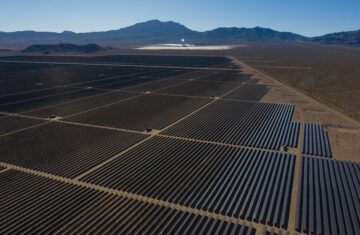
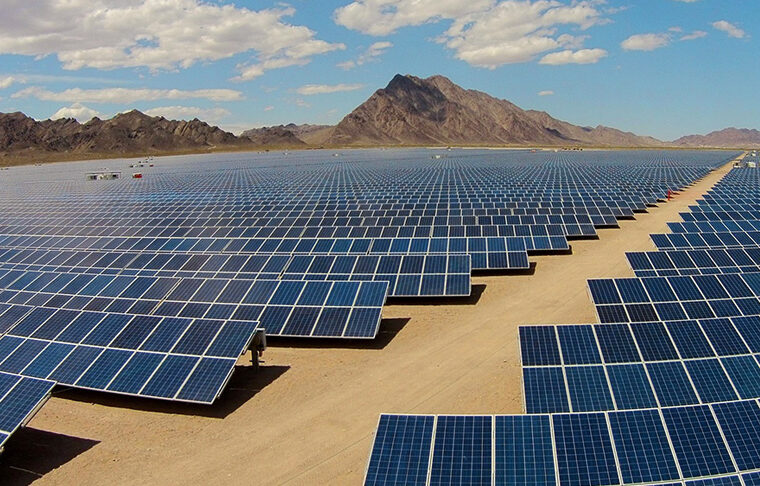
Boulder City, Copper Mountain Solar 5 represents a significant expansion of one of America’s most established solar energy complexes, demonstrating Nevada’s continued leadership in utility-scale renewable energy development. This project underscores how optimized solar technology and strategic site selection can deliver increasingly efficient clean power to meet growing regional electricity demands.
Significance & Context
Copper Mountain Solar 5 is a 250-megawatt (AC) facility developed by SOLV Energy as the latest phase in the broader Copper Mountain Solar complex. The project sells its power to NV Energy under a long-term power purchase agreement, supporting Nevada’s renewable portfolio standard which requires 50% renewable energy by 2030. According to data from the U.S. Energy Information Administration (EIA), the facility generates enough electricity to power approximately 75,000 homes. This output displaces an estimated 400,000 metric tons of carbon dioxide emissions annually, making a substantial contribution to regional decarbonization efforts.
Development Timeline
The project’s development leveraged the established infrastructure and permitting expertise gained from previous phases, with serious development beginning in 2020. A key milestone was the execution of the power purchase agreement with NV Energy, approved by the Public Utilities Commission of Nevada (PUCN). The project successfully navigated federal permitting with the Bureau of Land Management (BLM) due to its location on public lands. Construction commenced in 2022, and the project achieved commercial operation in 2024.
Technology & Innovation
Copper Mountain Solar 5 utilizes cutting-edge solar technology that represents a significant advancement over earlier phases. The facility features single-axis tracking systems with bifacial solar panels that capture light on both sides, increasing energy yield by approximately 15% compared to traditional panels. According to performance data from the National Renewable Energy Laboratory (NREL), this configuration is particularly effective in Nevada’s high-irradiance environment. The project also incorporates advanced inverters with enhanced grid-support functionality, providing voltage regulation and frequency response services crucial for maintaining grid stability.
Challenges & Controversies
A significant challenge for Copper Mountain Solar 5 involved minimizing environmental impact on the sensitive desert ecosystem. The project’s location on BLM land required extensive consultation with the U.S. Fish and Wildlife Service regarding desert tortoise habitat and implementation of a comprehensive Habitat Conservation Plan. This was resolved through careful site planning to avoid critical habitats, the creation of wildlife corridors, and funding for conservation efforts elsewhere. The project also uses a waterless cleaning system for solar panels to conserve scarce water resources in the arid climate.
Community & Economic Impact
The Copper Mountain Solar 5 project provides substantial economic benefits to Clark County and the state of Nevada. During peak construction, the project typically employed over 400 workers, according to workforce estimates from the Solar Energy Industries Association (SEIA). For long-term operations, it supports approximately 10-15 permanent positions for maintenance and monitoring. While located on federal land, the project generates significant economic activity through payments to the U.S. Treasury and payments in lieu of taxes (PILT) that likely contribute to local services. The project also creates a stable revenue stream for the federal government through land lease payments.
Future Outlook
With an operational lifespan exceeding 30 years, Copper Mountain Solar 5 solidifies southern Nevada’s position as a national leader in solar energy production. The project’s success on public lands provides a model for responsible renewable energy development in sensitive ecosystems. The existing infrastructure has significant potential for future augmentation with battery energy storage systems (BESS), which would allow solar energy to be dispatched during evening peak hours. As the Copper Mountain complex continues to expand, it demonstrates how phased development can optimize transmission infrastructure and create lasting economic benefits while supporting Nevada’s and the nation’s clean energy transition.
There is also at USA: Saint Solar farm