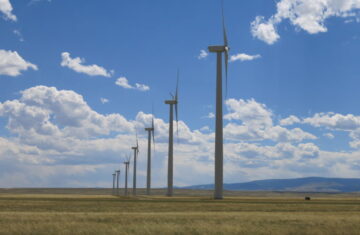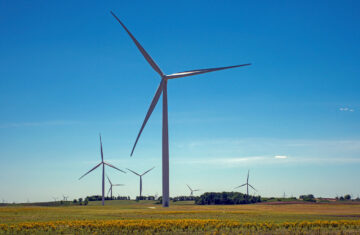
Straddling the scenic Buffalo Ridge in southwestern Minnesota, the Trimont Area Wind Farm stands as a significant early contributor to the state’s renewable energy portfolio. This multi-county project helped establish the region as a wind power hub, demonstrating the potential for harnessing the area’s consistent winds to generate clean power and stimulate rural economies.
Significance & Context
The Trimont Area Wind Farm is a 100-megawatt (MW) facility spanning Martin and Jackson Counties. Developed by Juhl Energy and later acquired by Algonquin Power & Utilities Corp., the project was a notable early-2000s development that contributed to Minnesota’s mandate for investor-owned utilities to generate a portion of their power from renewable sources. Its output is sold to Xcel Energy, helping the utility meet its regulatory requirements. The facility generates enough electricity to power approximately 35,000 Minnesota homes.
Development Timeline
Development for the Trimont Area Wind Farm began with land acquisition and wind studies in the early 2000s. The project successfully secured its interconnection agreement with the Midcontinent Independent System Operator (MISO), with its status historically documented in the public MISO Generation Interconnection Queue. Construction commenced in 2004, and the project achieved commercial operation in 2005, becoming a functional part of the grid during a period of rapid wind industry growth in the state.
Technology & Innovation
At the time of its commissioning, the project utilized 67 GE Wind 1.5-megawatt turbines, which were a workhorse model of the era. While standard for its time, the project’s development on the Buffalo Ridge was part of a broader collective innovation, proving that the geological formation was a prime location for wind generation. The data and experience gained from operating in this location, including managing icing conditions and optimizing layout for the specific wind patterns, provided valuable insights for the numerous, larger projects that would follow in the same area.
Challenges & Controversies
A significant challenge for the Trimont Area Wind Farm, as with many early wind projects, was addressing local concerns about visual impact and turbine noise in a previously undeveloped landscape. Some residents were apprehensive about the change to the rural character of the area. The developers addressed this through community meetings and by working with county officials to establish clear zoning ordinances, including setback requirements from non-participating properties. The tangible economic benefits that followed operation helped to gradually build broader acceptance.
Community & Economic Impact
The project has provided a steady economic benefit to Martin and Jackson Counties. During its construction, the Trimont Area Wind Farm typically employed over 150 workers. It continues to support local technicians for ongoing operations and maintenance. Over its operational life, the project has generated millions of dollars in property tax revenue and landowner lease payments. This revenue likely contributes significantly to local school districts and county services. For the farmers hosting the turbines, the long-term lease payments have provided a reliable source of income, complementing agricultural revenues.
Future Outlook
As one of the earlier projects on the Buffalo Ridge, the Trimont Area Wind Farm is now approaching a stage where repowering is becoming a consideration. Replacing its original turbines with modern, more powerful models could significantly increase its energy output and extend its operational life for decades. As analyzed by the U.S. Energy Information Administration (EIA), such life-extension projects are a key strategy for states to maximize the value of existing renewable energy sites. The project’s established infrastructure and proven wind resource position it well for a future second life, ensuring it remains a valuable asset in Minnesota’s energy landscape.
Discover also at USA: Maple Ridge Wind Farm