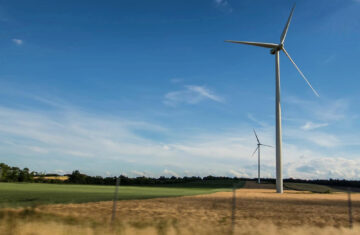
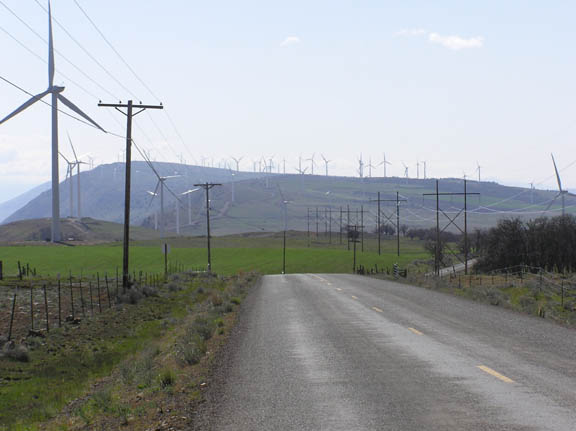
Perched on the scenic bluffs overlooking the Columbia River in Klickitat County, Washington, the Harvest Wind Project represents a strategic and visually prominent contribution to the Pacific Northwest’s renewable energy hub. This project leverages the region’s exceptional wind resources and established transmission infrastructure to deliver clean power, while demonstrating a model for integrating large-scale energy development with ongoing agricultural use in a sensitive ecological corridor.
Significance & Context
The Harvest Wind Project, developed by First Wind (later SunEdison and now Brookfield Renewable), is a significant component of the Columbia River Gorge’s wind energy complex. With an installed capacity of 98.9 megawatts (MW), the facility generates enough electricity to power approximately 30,000 Washington homes annually, based on calculations from the U.S. Energy Information Administration (EIA). Its output feeds directly into the Bonneville Power Administration (BPA) transmission system, a contribution tracked by the Washington State Department of Commerce and BPA’s own generation interconnection reports.
Development Timeline
The project’s development navigated the unique regulatory environment of the Columbia River Gorge. Initial planning began in the mid-2000s. The project underwent rigorous review by the Columbia River Gorge Commission. After securing approvals, construction commenced, and the Harvest Wind Project achieved commercial operation in 2012, a date confirmed by its listing in the U.S. Wind Turbine Database.
Technology & Innovation
The project utilizes durable turbines suited for the Gorge’s winds, featuring 43 Siemens (now Siemens Gamesa) 2.3 MW turbines. A key aspect was minimizing visual impact through careful siting, a critical component of the permitting process within the scenic area. This balance is a topic of ongoing research in landscape management, with relevant principles discussed by the National Renewable Energy Laboratory (NREL).
Challenges & Controversies
The foremost challenge was securing permits within the Columbia River Gorge National Scenic Area, where strict rules govern visual impacts and wildlife protection. Opposition focused on the effect on the iconic landscape. This hurdle was resolved through a multi-agency review and a settlement agreement with opposition groups. The agreement included additional mitigation measures, such as enhanced wildlife monitoring. Approval from the Klickitat County Board of Commissioners and the Columbia River Gorge Commission, with these conditions, allowed the project to proceed. Details of the settlement are often referenced in commission meeting minutes.
Community & Economic Impact
For Klickitat County, a region that has embraced wind energy, the project provided a valuable addition. During its construction, the project typically employed 150-250 workers, according to industry models from the American Clean Power Association. In its operational phase, it contributes to the county’s substantial property tax base, helping to fund schools and services, as detailed in Klickitat County financial records. Furthermore, it provides long-term lease payments to participating landowners, a benefit for the agricultural economy supported by Washington State University Extension.
Future Outlook
As a well-sited asset, the Harvest Wind Project has a stable long-term operational outlook. Its location within a National Scenic Area makes physical expansion highly unlikely. However, the project could be a candidate for repowering at the end of its lifecycle, a strategy analyzed in NREL reports on wind plant modernization, pending rigorous review. Its continued operation underscores the ongoing role of the Columbia River Gorge as a strategic clean energy resource for the Northwest, aligned with Washington’s Clean Energy Transformation Act (CETA).
At Greenbrier County you can find also: Beech Ridge Energy