Los Angeles County, the San Pablo Raceway Solar Farm represents a innovative model of urban-edge renewable development. This project demonstrates a strategic shift toward repurposing underutilized or formerly contaminated lands for clean energy generation, bringing significant power resources closer to the major load center of Los Angeles while minimizing environmental impact on pristine areas.
Significance & Context
The San Pablo Raceway Solar Farm is a 50-megawatt (AC) facility developed by EDF Renewables on the site of the former Saugus Speedway. The project’s entire output is sold to the Los Angeles Department of Water and Power (LADWP) under a long-term power purchase agreement, directly supporting the city’s goal of achieving 100% renewable energy by 2035. As a local energy resource within LADWP’s service territory, the project enhances grid reliability for the Los Angeles basin. It generates enough electricity to power approximately 15,000 homes and will displace an estimated 60,000 metric tons of carbon dioxide emissions annually, contributing directly to improved regional air quality.
Development Timeline
The project’s development began with site acquisition and feasibility studies around 2017. A key milestone was its selection in LADWP’s renewable energy solicitation process. The project then navigated a complex permitting process with the Los Angeles County Department of Regional Planning and required approval from the California Energy Commission due to its size and interconnection voltage. Construction commenced in 2021, and the project achieved commercial operation in 2023, successfully transforming the former raceway into a clean energy asset.
Technology & Innovation
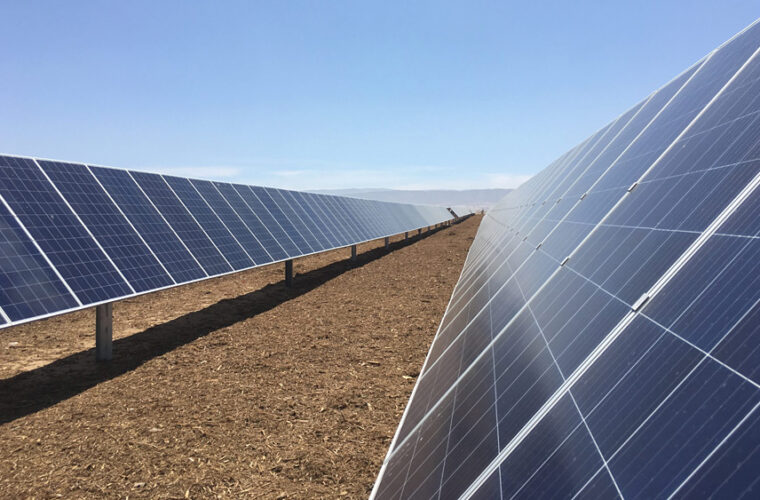
The San Pablo Raceway Solar Farm utilizes high-efficiency monocrystalline photovoltaic panels mounted on single-axis tracking systems to maximize energy production in the high-desert sun. The primary innovation lies in its brownfield redevelopment approach, effectively repurposing a 100-acre site with existing infrastructure, thereby avoiding land use conflicts associated with greenfield development. The project incorporates advanced inverters with grid-forming capabilities that provide essential voltage support and enhance stability for the local LADWP distribution grid.
Challenges & Controversies
A significant challenge for the project involved addressing potential soil contamination from the site’s previous use as a raceway, including concerns about hydrocarbons and lead. The developer conducted extensive environmental site assessments under the oversight of the California Department of Toxic Substances Control (DTSC). The resolution involved a carefully engineered design that minimized soil disturbance, used impermeable foundations for equipment, and implemented a comprehensive soil management plan during construction to ensure all environmental standards were met and the site was safely remediated for its new use.
Community & Economic Impact
The San Pablo Raceway Solar Farm provides tangible benefits to Los Angeles County and the specific community of Santa Clarita. During construction, the project typically employed 100-150 workers, providing local jobs. For ongoing operations, it supports a small permanent team for maintenance. While the site is on previously developed land, the project likely contributes significant annual tax revenue and payments to LADWP that benefit city services. The project also serves as a visible example of sustainable land reuse, transforming a dormant property into a productive community asset.
Future Outlook
With an operational lifespan of 30+ years, the San Pablo Raceway Solar Farm is a long-term asset for Los Angeles’s clean energy future. The project’s success as a brownfield redevelopment provides a replicable model for siting renewable energy on other underutilized lands across Southern California. The site’s infrastructure has the potential for future augmentation with battery energy storage systems (BESS), which would allow the solar energy to be stored and dispatched during evening peak hours, further increasing its value to the grid. This project establishes a precedent for creatively integrating clean energy into the urban fabric.
Learn more about: Top 10 Solar Farms in USA