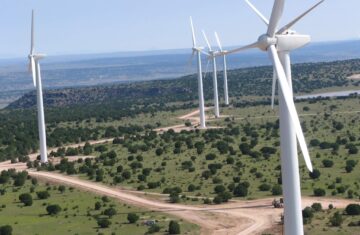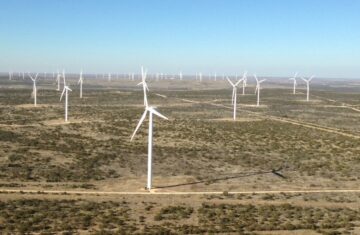
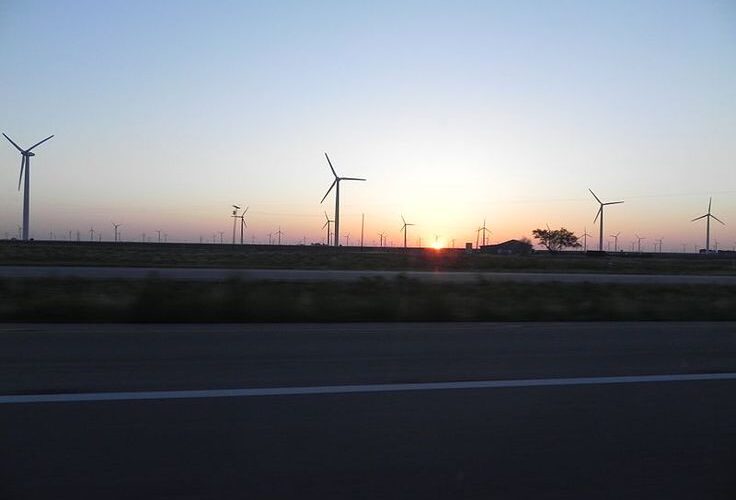
West Texas, the Roscoe Wind Farm stands as a monumental testament to the scale and ambition of American renewable energy. Once holding the title of the largest wind farm in the world, its sheer size redefined what was possible for wind energy generation. The project transformed the local economy of a small Texas town and solidified the state’s reputation not just as an oil giant, but as a global leader in wind power, demonstrating the transformative potential of large-scale clean energy infrastructure.
Significance & Context
The Roscoe Wind Farm is a behemoth in the wind energy sector. With a total capacity of 781.5 megawatts (MW), the project occupies over 100,000 acres and generates enough electricity to power nearly 265,000 homes. Developed by E.ON Climate & Renewables, this colossal project was a landmark achievement that helped drive down the cost of wind energy through economies of scale. Its output provides a massive injection of zero-emission power into the Electric Reliability Council of Texas (ERCOT) grid, avoiding millions of metric tons of carbon dioxide emissions over its operational lifetime.
Development Timeline
The development of the Roscoe Wind Farm was a phased endeavor that unfolded over several years, reflecting its unprecedented scale. The project was constructed in four distinct phases between 2007 and 2009. This incremental approach allowed the developers to manage the immense logistical challenges, financing, and construction workforce required. The final phase’s completion in 2009 cemented its status as a world-record holder and a symbol of the wind industry’s rapid growth during that period.
Technology & Innovation
The Roscoe Wind Farm is a living museum of wind turbine technology from the late 2000s, featuring machines from three different manufacturers: Mitsubishi, General Electric, and Siemens. The farm comprises over 600 turbines of varying models and sizes, with capacities ranging from 1.0 MW to 2.3 MW. This diversity was partly a result of its phased construction and the rapidly evolving turbine market. Deploying and integrating such a vast and varied fleet of turbines was a significant engineering feat that provided valuable insights into the performance and reliability of different technologies in a single location.
Challenges & Controversies
A project of this magnitude inevitably faced significant hurdles. The primary challenge was the sheer logistical complexity of constructing what was essentially a power plant spread across 156 square miles. This involved coordinating the transportation of thousands of oversized components across rural Texas roads and managing a construction workforce that peaked at over 500 people. To resolve this, the developer worked closely with local and state transportation authorities to plan routes, reinforce roads, and schedule deliveries to minimize disruption. Additionally, the project required negotiating land leases with hundreds of individual landowners, a complex process that demanded extensive community outreach and transparent communication to build trust and secure participation.
Community & Economic Impact
The Roscoe Wind Farm has had a profound and lasting economic impact on Nolan County and the town of Roscoe. During its multi-phase construction, the project typically employed hundreds of workers, providing a massive boost to local businesses. In its operational phase, it typically employs dozens of full-time technicians, creating a stable source of high-skilled jobs in a rural area. Most significantly, the project likely contributes tens of millions of dollars in property tax revenue over its lifetime, which has been transformative for local school districts and county services. For the hundreds of participating landowners, the annual lease payments provide a crucial and reliable source of supplemental income, bolstering the agricultural economy.
Future Outlook
As one of the earlier generation of mega-wind farms, the Roscoe Wind Farm is a foundational asset in Texas’s energy landscape. While its original turbines are less powerful than modern models, the project continues to be a significant power generator. Its long-term outlook will likely involve a strategic evaluation for repowering—replacing the aging turbines with newer, more powerful units. As detailed by the National Renewable Energy Laboratory (NREL), this could potentially double or triple the farm’s capacity on the same land footprint, ensuring the Roscoe Wind Farm remains a cornerstone of Texas’s clean energy economy for decades to come.
Also at Texas: Scurry County Wind park