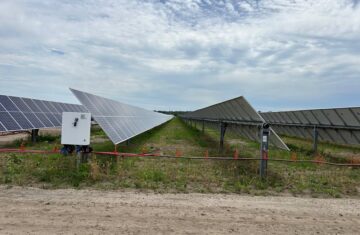
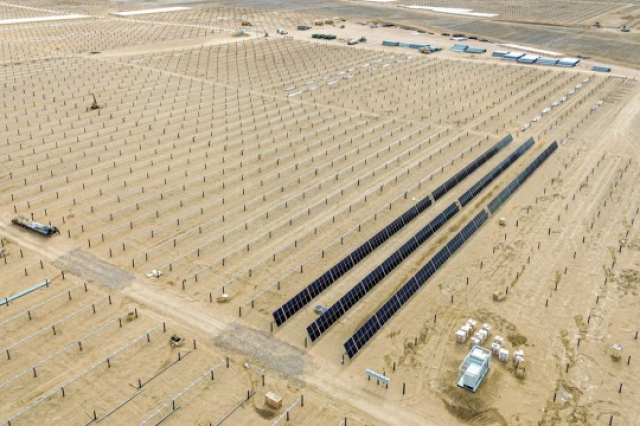
The Panoche Valley Solar Farm in San Benito County was conceived as one of California’s most ambitious renewable energy projects, designed to transform a vast agricultural valley into a major power generation hub. Its proposal, as documented in the Final Environmental Impact Report (FEIR), highlighted the intense conflict between the state’s green energy ambitions and the preservation of sensitive ecosystems, serving as a critical case study in the complex balancing act required for large-scale infrastructure development.
Significance & Context
Planned by Duke Energy Renewables, the project was originally envisioned as a 247-megawatt (MW) photovoltaic facility that, according to the developer’s initial proposals, would power approximately 90,000 homes. Its scale was intended to make a substantial contribution to California’s Renewable Portfolio Standard goals. The project’s location in Panoche Valley was chosen for its high solar insolation, but it also placed it directly in a region recognized by the California Department of Fish and Wildlife for its significant biological diversity, setting the stage for a protracted environmental review process.
Development Timeline
The project’s timeline spans over a decade of development challenges. Initiated in 2009, the project underwent extensive environmental review through the California Environmental Quality Act (CEQA) process. After years of legal challenges, the San Benito County Board of Supervisors approved the project in 2015, a decision covered by local news outlet BenitoLink. However, continued opposition and changing economic factors led Duke Energy to sell the project to Avalon Solar LLC in 2018, which continued pursuing a modified version.
Technology & Innovation
The proposed facility planned to use conventional photovoltaic technology but at an unprecedented scale for the region. The innovation lay not in the technology itself but in the extensive environmental mitigation measures proposed. These included creating thousands of acres of conservation land to protect endangered species habitat—a model that attempted to balance large-scale renewable development with environmental stewardship. The project also proposed using dry-cooling technology to minimize water usage in the arid valley, as detailed in the project’s FEIR.
Challenges & Controversies
The project faced massive opposition from environmental groups including the Sierra Club and Center for Biological Diversity, who argued it would destroy critical habitat for endangered species. According to court documents from the California Court of Appeal (First Appellate District, Case No. A143990), opponents filed multiple lawsuits challenging the environmental impact report. The resolution came through a landmark settlement in 2020, reported by Reuters, that reduced the project size to 100 MW and established a 26,000-acre conservation fund—one of the largest habitat preservation agreements in California history.
Community & Economic Impact
For San Benito County, one of California’s economically challenged regions, the project promised substantial benefits. An economic analysis cited in the San Benito County Staff Reports estimated that during construction, it typically would have employed 300-400 workers, while operations would require 15-20 permanent positions. The project likely would contribute approximately $250,000 annually in tax revenue to the county, plus payments to landowners hosting facilities. However, these economic benefits must be weighed against potential impacts to the agricultural character of the valley.
Future Outlook
The future of the Panoche Valley Solar Farm remains uncertain following its dramatic scaling back. The current 100-MW proposal represents a compromise between renewable energy goals and environmental protection. If developed, it would serve as a model for how large-scale solar projects can proceed in environmentally sensitive areas through extensive mitigation and conservation offsets. The project’s tortuous path through California’s regulatory and legal systems, chronicled by publications like PV Magazine, demonstrates the increasing complexity of siting major renewable energy infrastructure in the state.