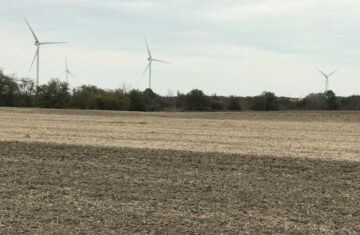
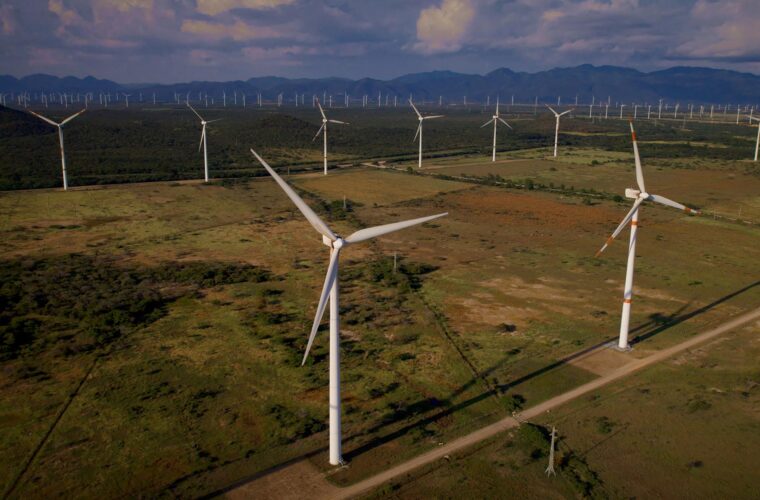
New Mexico Wind Energy Center stands as a landmark achievement in the state’s renewable energy history. Upon its completion, it was the largest wind farm in the state, signaling a major commitment to harnessing its natural resources for clean power generation and setting the stage for future development.
Significance & Context
The New Mexico Wind Energy Center is a 204-megawatt (MW) facility located in Guadalupe, De Baca, and San Miguel Counties. Developed by FPL Energy (now NextEra Energy Resources), the project was a pivotal early investment in large-scale wind power for the region. Its entire output was initially sold to the Salt River Project (SRP), an Arizona-based utility, under a long-term power purchase agreement. This cross-state sale demonstrated the potential for New Mexico to become a regional exporter of clean energy. The facility generates enough electricity to power approximately 94,000 homes.
Development Timeline
The project’s development began in the early 2000s, a period of growing interest in the wind resources of the American Southwest. Construction was completed in two phases: the first 80 MW phase became operational in 2003, followed by a 124 MW expansion that was completed in 2005. This phased approach allowed the developers to scale the project efficiently based on market conditions and transmission availability. The project’s approval involved key reviews by the New Mexico Public Regulation Commission (NMPRC).
Technology & Innovation
At the time of its construction, the New Mexico Wind Energy Center featured 1.5-MW turbines from GE Wind Energy, which represented the industry standard for utility-scale projects. The facility’s significant innovation was its scale and its role in proving the commercial viability of wind energy in New Mexico’s specific climate and wind patterns. Its success provided critical data and a proof-of-concept that de-risked subsequent wind investments in the state, paving the way for the diverse fleet of projects that followed.
Challenges & Controversies
A primary challenge for this pioneering project was the limited capacity of the existing transmission infrastructure to deliver power from the remote, wind-rich site to population centers. This required careful coordination with grid operators and highlighted a systemic barrier to renewable development in the region. The issue was resolved not at the project level alone, but as part of a broader regional effort to upgrade transmission lines, which eventually facilitated the development of New Mexico’s Wind Energy Transmission Corridor.
Community & Economic Impact
The project has had a profound and lasting economic impact on three rural counties. During its multi-phase construction, the New Mexico Wind Energy Center typically employed hundreds of workers. It continues to support a local workforce for ongoing operations and maintenance. Over its operational life, the project has generated tens of millions of dollars in property tax revenue and landowner lease payments. This revenue likely contributes substantially to the budgets of local school districts and county governments, providing a stable financial foundation and offering ranchers a critical supplemental income.
Future Outlook
As one of the state’s first and largest wind facilities, the New Mexico Wind Energy Center is a foundational asset. Having been operational for nearly two decades, it is now entering a period where repowering is a consideration. Replacing its original turbines with modern, more powerful models could significantly increase its output and efficiency. As analyzed by the U.S. Energy Information Administration (EIA), such life-extension projects are key to maximizing the value of existing sites. The project’s legacy as a trailblazer ensures it will remain a point of focus for the state’s clean energy strategy for years to come.
Find also at New Mexico: San Juan Mesa Wind Project