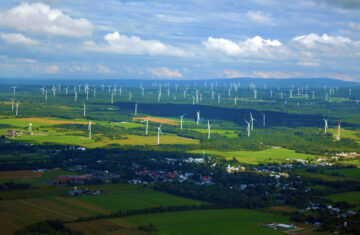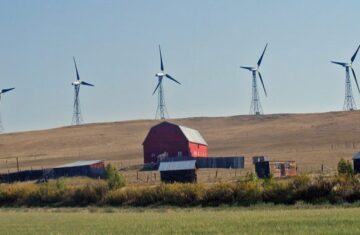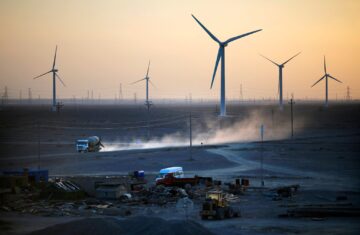
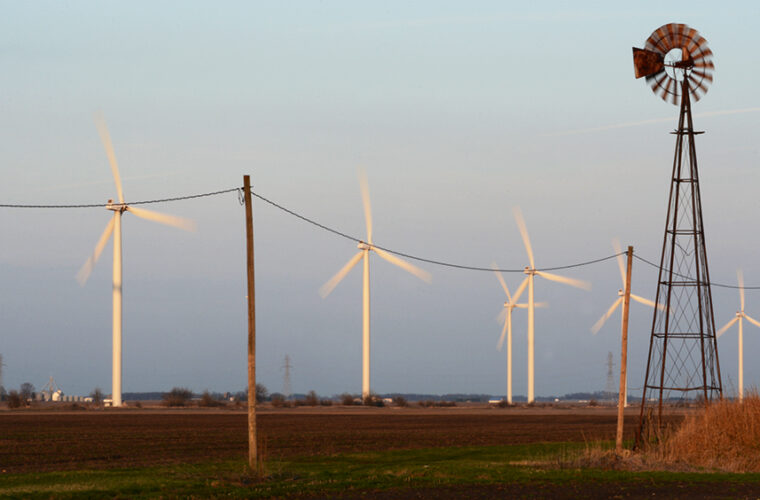
Meadow Lake Wind Farm stands as a titan of American renewable energy. As one of the largest wind farms in the United States by capacity, it exemplifies the industrial scale and economic integration of wind power in the Midwest, transforming vast tracts of farmland into a prolific source of clean electricity for the regional grid while providing a foundational new revenue stream for the rural community.
Significance & Context
The Meadow Lake Wind Farm, developed and owned by NextEra Energy Resources, is a colossal contributor to both Indiana’s and the nation’s wind energy portfolio. Built across six phases, the project boasts a staggering total capacity of approximately 800 megawatts (MW), generating enough electricity to power well over 220,000 homes annually, based on calculations from the U.S. Energy Information Administration (EIA). This massive output is fed directly into the Midcontinent Independent System Operator (MISO) grid, a contribution highlighted in the American Clean Power Association’s project database and tracked by the Indiana Office of Energy Development.
Development Timeline
The project’s development unfolded in a strategic, phased approach over nearly a decade. Initial development began in the mid-2000s. The first phase achieved commercial operation in 2009, with subsequent phases (Meadow Lake II through VI) added in waves, culminating with the final phase coming online around 2016, a timeline documented in the U.S. Wind Turbine Database and local news reports from the Journal & Courier.
Technology & Innovation
Meadow Lake Wind Farm serves as a living timeline of wind turbine evolution. Earlier phases feature GE 1.5 MW and Siemens 2.3 MW turbines, while later phases incorporated more powerful Vestas and GE models in the 3-4 MW class. This technological progression within a single project showcases the rapid advancement in turbine efficiency, a trend analyzed in reports from the Lawrence Berkeley National Laboratory and the National Renewable Energy Laboratory (NREL).
Challenges & Controversies
A persistent challenge was managing consistent community relations and addressing concerns over visual impact and property values as the project’s footprint expanded. This hurdle was resolved through continuous public outreach and working within county-established ordinances. The renewal of support from the White County Board of Commissioners for each phase, based on the project’s proven economic benefits, was crucial. County wind ordinances, which set standards for setbacks, are accessible through county resources.
Community & Economic Impact
For White County, the wind farm has been an economic game-changer. Across all construction phases, the project collectively employed well over 1,000 workers at various peaks, according to industry models. Operationally, it generates tens of millions in annual property tax revenue, the cornerstone of the county’s budget, profoundly funding schools and services as detailed in White County financial reports. Furthermore, it provides substantial, long-term lease payments to hundreds of participating farmers, a benefit for agricultural economics supported by Purdue University Extension.
Future Outlook
As a mix of mature and newer assets, the Meadow Lake Wind Farm is a long-term pillar of the MISO grid. Its older phases will inevitably enter the repowering cycle, a strategy analyzed in NREL reports on wind plant modernization. Phased repowering could dramatically increase the site’s total generation capacity, injecting new capital into the county and renewing revenue streams for decades, aligning with Indiana’s energy planning and MISO’s long-term system assessments accessible through MISO’s MTEP.
At Beaver County you can find also: Milford Wind Corridor