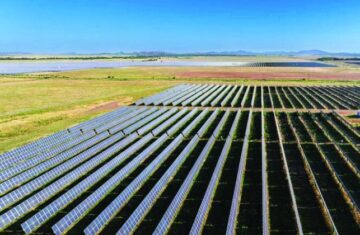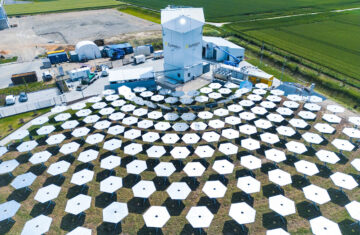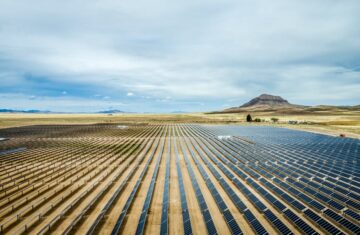
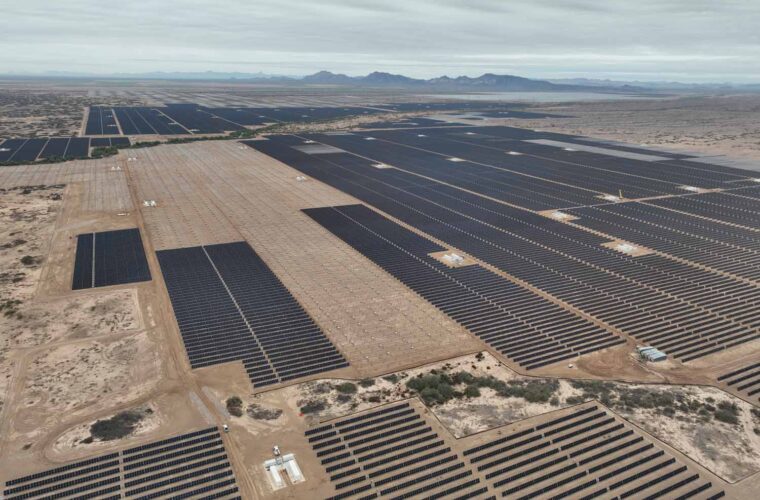
McFarland Solar and Storage project represents a critical evolution in power plant design, moving beyond standalone generation to become a fully dispatchable clean energy resource. This hybrid facility combines massive solar generation with significant battery storage, allowing it to deliver reliable power around the clock. As Arizona faces increasing electricity demand and water scarcity, McFarland provides a resilient, non-water-consuming power source that enhances grid stability and supports the state’s economic growth while advancing its decarbonization goals.
Significance & Context
The McFarland Solar and Storage project is strategically vital for Arizona’s power grid, managed by utilities such as Arizona Public Service (APS) and Salt River Project (SRP). Its ability to store solar energy and dispatch it during peak evening hours makes it functionally equivalent to a traditional natural gas peaker plant, but without associated emissions or water consumption for cooling—a critical advantage highlighted by the Arizona Department of Water Resources. The project supports utility compliance with the state’s energy standards while providing a reliable solution to the “duck curve” challenge, where evening demand spikes as solar generation fades.
Development Timeline
Development for McFarland Solar and Storage began in the early 2020s, coinciding with rapidly declining battery costs and increasing grid reliability concerns. Key milestones included securing land rights, navigating state and county permitting for both generation and storage components, and finalizing power purchase agreements that valued the project’s dispatchability. Construction commenced in 2023, and the facility achieved full commercial operation in 2025.
Technology & Innovation
The project combines single-axis tracking solar arrays with a large-scale lithium-ion battery energy storage system (BESS) with a capacity of over 500 megawatt-hours. The facility utilizes advanced energy management software that optimizes when to charge the batteries, sell solar power directly to the grid, or discharge stored energy based on real-time market conditions and grid needs. This integrated control system allows McFarland to provide essential grid services like frequency regulation and black-start capability.
Challenges & Controversies
A significant challenge for the McFarland project was addressing safety concerns and regulatory requirements for the large-scale battery system. Local fire departments and community members raised questions about fire risks and emergency response protocols for the BESS component. This was resolved through the development of a comprehensive safety plan—including advanced thermal monitoring, suppression systems, and dedicated training for first responders—developed in collaboration with the Arizona Department of Forestry and Fire Management and local emergency services.
Community & Economic Impact
For the local county, McFarland Solar and Storage delivers substantial economic benefits. During construction, the project typically employed over 400 workers, providing a significant boost to local businesses. The complex nature of the hybrid facility creates higher-skilled permanent positions for operations and maintenance compared to solar-only projects. The project likely contributes a major increase in property tax revenue, supporting local schools and public services—a fiscal impact analyzed by the Arizona Tax Research Association. Landowners receive stable lease payments for otherwise marginal land.
Future Outlook
The successful operation of McFarland Solar and Storage establishes a new benchmark for what constitutes a modern power plant in the Southwest. Its proven ability to provide firm, dispatchable clean energy makes it a model for future hybrid developments in Arizona and beyond. As battery technology continues to improve, the site has potential for storage capacity expansion. McFarland demonstrates that the future of reliable, sustainable power in arid regions lies in integrated solar-storage solutions that maximize value while minimizing environmental impact.
Also at Arizona: Sonoran Solar Energy