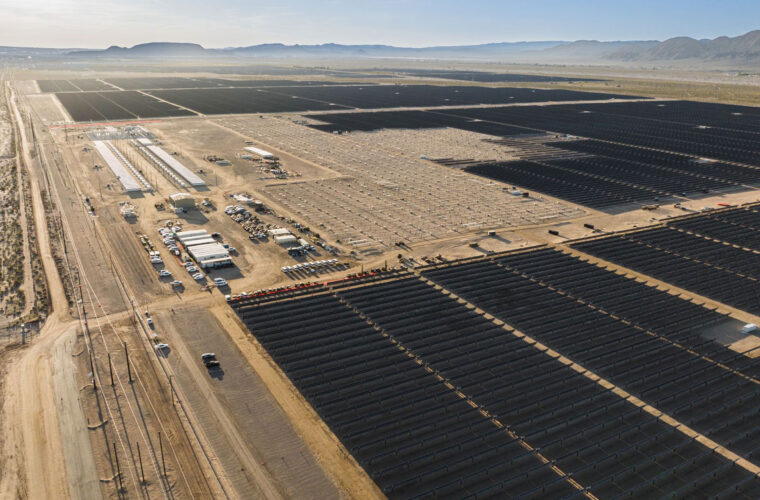
Positioned in the Mojave Desert’s renowned solar belt, the Daggett Solar Farm represents a strategic addition to California’s renewable energy infrastructure, leveraging one of the state’s optimal solar resource areas to support its ambitious clean energy goals. This project demonstrates how established solar regions continue to play a vital role in California’s evolving energy portfolio while adapting to modern grid requirements.
Significance & Context
The Daggett Solar Farm is a 135-megawatt (AC) facility developed by EDF Renewables on private land in San Bernardino County. The project’s output is sold to Southern California Edison (SCE) under a long-term power purchase agreement, contributing directly to California’s mandate for 100% carbon-free electricity by 2045. According to data from the California Energy Commission (CEC), the facility generates enough electricity to power approximately 50,000 homes. This clean energy contribution displaces an estimated 200,000 metric tons of carbon dioxide emissions annually, supporting grid reliability while improving regional air quality.
Development Timeline
The project’s development began with site assessment and land acquisition in 2017. A key milestone was reached when the project was selected in SCE’s 2018 resource solicitation process, approved by the California Public Utilities Commission (CPUC). The development team successfully navigated the local permitting process with the San Bernardino County Land Use Services and completed environmental reviews. Construction commenced in 2020, and the project achieved commercial operation in 2022.
Technology & Innovation
The Daggett Solar Farm utilizes contemporary solar technology optimized for the high-desert environment. The facility features single-axis tracking systems with bifacial solar panels that capture both direct and reflected light from the desert floor, increasing energy yield by approximately 8-12% compared to conventional systems. According to performance data from the National Renewable Energy Laboratory (NREL), this configuration is particularly effective in regions with high albedo. The project incorporates advanced inverters with voltage regulation capabilities that provide essential grid support services to the California Independent System Operator (CAISO) grid.
Challenges & Controversies
A significant challenge for the Daggett Solar project involved addressing the Mojave Desert’s extreme environmental conditions, including high temperatures, intense UV exposure, and occasional dust storms that can reduce panel efficiency. These conditions required specialized engineering solutions for both the solar equipment and the balance of system components. The challenge was resolved through collaboration with technology providers to implement heat-tolerant components and automated cleaning systems that maintain optimal performance in harsh desert conditions. The project also implemented a comprehensive water management plan that minimizes water usage for panel cleaning through efficient scheduling and water-recycling systems.
Community & Economic Impact
The Daggett Solar Farm provides meaningful economic benefits to San Bernardino County. During the construction phase, the project typically employed 250-350 workers, according to workforce estimates from the Solar Energy Industries Association (SEIA). For long-term operations, it supports a permanent team of technicians for maintenance and monitoring. The project provides stable, long-term lease payments to local landowners. Based on California’s tax policies for renewable energy, the project likely contributes significant annual tax revenue to San Bernardino County, funding local services including schools and public safety.
Future Outlook
With an operational lifespan of 30+ years, the Daggett Solar Farm represents a long-term contribution to California’s clean energy portfolio. The project’s location in a region with established solar development provides advantages in terms of infrastructure and operational expertise. The site’s design allows for potential future augmentation with battery energy storage systems (BESS), which would enhance the project’s value by allowing energy storage for evening peak demand periods. As California continues to implement its clean energy transition, the Daggett Solar Farm demonstrates how established solar regions can continue to play a crucial role in meeting the state’s climate goals while supporting local economies.
Also at California: Edwards Sanborn Solar farm