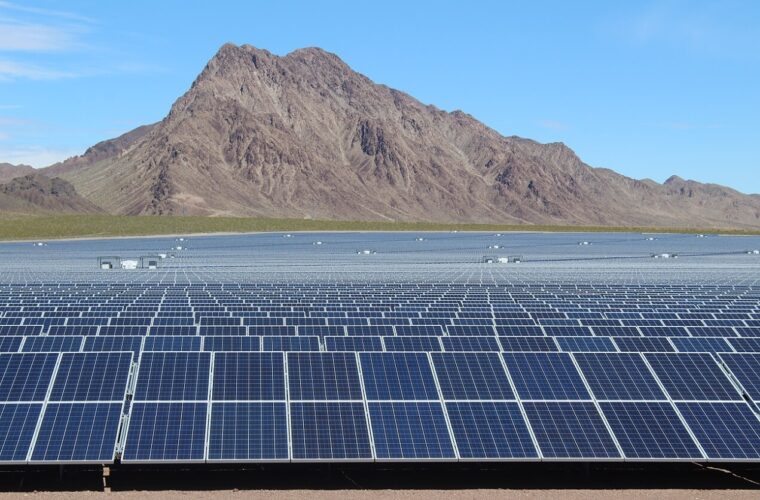
Battle Mountain Solar Project represents a strategic investment in renewable energy that brings economic diversification to a region historically dependent on mining while respecting the sensitive desert ecosystem. This project demonstrates how solar development can create new opportunities in rural communities while maintaining environmental stewardship in the Great Basin landscape.
Significance & Context
Developed by NV Energy as part of their integrated resource plan, the 100-megawatt (MW) Battle Mountain Solar Project contributes significantly to Nevada’s renewable energy goals while supporting the state’s economic diversification efforts. According to generation data from the U.S. Energy Information Administration (EIA), the facility produces enough electricity to power approximately 30,000 homes, helping meet Nevada’s renewable portfolio standard requirements. Its location in Humboldt County, an area with a strong mining heritage, positions it to provide economic stability while leveraging the region’s exceptional solar resources with minimal environmental impact.
Development Timeline
The project’s development followed a community-centered approach tailored to rural implementation. Development activities began in 2020, with the project receiving approval from the Humboldt County Commission in 2022 after extensive community engagement and environmental review. Construction commenced in 2023, achieving commercial operation in 2024, as documented in NV Energy regulatory filings. This timeline included additional consultation periods to address rural community concerns and ensure the project aligned with local values and development goals.
Technology & Innovation
Battle Mountain Solar utilizes single-axis tracking systems with monocrystalline silicon photovoltaic modules, optimized for high-desert conditions. According to performance data from the National Renewable Energy Laboratory (NREL), this technology provides reliable performance in variable high-desert conditions while maintaining a relatively low profile. The project incorporates advanced inverters with grid-support functionality that provide voltage regulation and frequency response capabilities, particularly valuable in remote areas with limited electrical infrastructure. Dust-resistant components and automated cleaning systems minimize maintenance requirements in the arid environment.
Challenges & Controversies
The project faced challenges related to its scale in a rural context and concerns about impacts on local character and wildlife. Some community members expressed apprehension about industrial-scale development in an area valued for its open spaces and natural beauty. The resolution involved implementing a Community Benefits Package that included customized visual mitigation measures, local hiring guarantees, and funding for community projects. The developer also established a Wildlife Protection Plan developed with the Nevada Department of Wildlife, which included habitat enhancement measures and monitoring programs for local species.
Community & Economic Impact
For Humboldt County, the project has delivered transformative economic benefits while addressing rural community priorities. During construction, the project typically employed 150-200 workers, with NV Energy exceeding its commitment to hire locally from the county and surrounding areas. For ongoing operations, it maintains 8-10 permanent positions—significant numbers in a rural county with limited employment opportunities. Based on Humboldt County’s tax assessment models, the project likely contributes approximately $500,000-$600,000 annually in property tax revenue to local governments and school districts. Additionally, it provides stable lease payments to multiple local landowners, creating a new source of agricultural revenue that complements traditional ranching operations.
Future Outlook
With an expected operational lifespan of 30+ years, the Battle Mountain Solar Project represents a long-term investment in rural Nevada’s economic future. The project’s success in balancing scale with community values provides a model for future renewable development in rural areas across the West. As technology advances, the site may incorporate battery storage to enhance its grid value or be repowered with more efficient panels. The project’s community engagement approach and economic benefits package have established new benchmarks for rural renewable development, demonstrating that large-scale solar can support rural communities while respecting the values that make them unique. This project positions Humboldt County as a participant in Nevada’s clean energy transition while providing economic stability for decades to come.