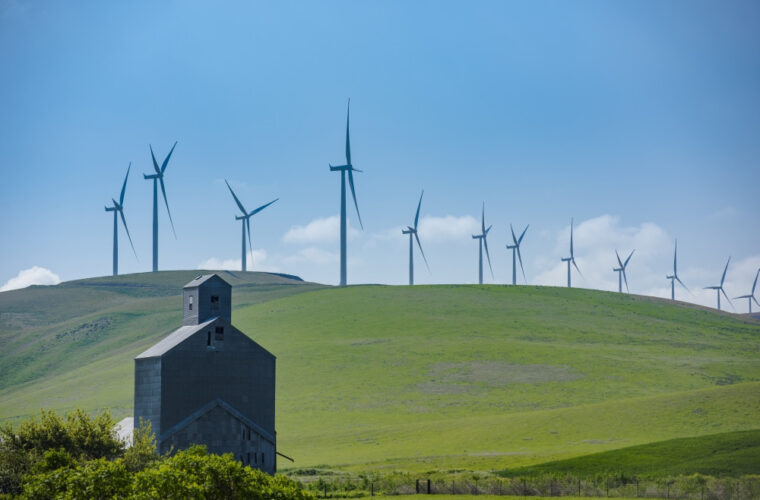
Stretching across the remote ranchlands of Garfield County, Washington, the Lower Snake River Wind Energy Project is a monumental development that capitalizes on the powerful, consistent winds of the Columbia Plateau. As a major contributor to the Pacific Northwest’s grid, this project exemplifies the strategic pairing of prime wind resources with existing high-voltage transmission infrastructure, delivering large-scale clean energy to population centers while providing transformative economic benefits to a sparsely populated county.
Significance & Context
The Lower Snake River Wind Energy Project, developed by Puget Sound Energy (PSE), is a cornerstone of the utility’s clean energy portfolio. With a substantial capacity of 343 megawatts (MW), the facility generates enough electricity to power approximately 100,000 Washington homes annually, based on calculations from the U.S. Energy Information Administration (EIA). Its strategic location near the Lower Snake River substation provides direct access to the regional transmission system managed by the Bonneville Power Administration (BPA), a key interconnection detailed in BPA’s generation interconnection reports. The project supports Washington’s Clean Energy Transformation Act (CETA), tracked by the Washington State Department of Commerce.
Development Timeline
The project’s development followed a deliberate, utility-led path. Initial assessment began in the mid-2000s. It underwent extensive review by the Washington Utilities and Transportation Commission (WUTC). After securing permits and finalizing agreements, construction commenced in the early 2010s. The Lower Snake River Wind Energy Project achieved commercial operation in 2012, a date confirmed by its listing in the U.S. Wind Turbine Database and PSE’s project announcements.
Technology & Innovation
The project utilizes robust, utility-grade turbines, featuring 149 Siemens (now Siemens Gamesa) 2.3 MW turbines. A key aspect was optimizing the electrical collection system to feed into the existing high-capacity grid node, a model for integrating remote resources studied by the National Renewable Energy Laboratory (NREL) on transmission planning.
Challenges & Controversies
A significant challenge was addressing concerns regarding the project’s potential impact on avian species, particularly golden eagles and sage-grouse. This required extensive surveys and monitoring. The hurdle was resolved through the development and implementation of a comprehensive Avian Protection Plan (APP) in consultation with the U.S. Fish and Wildlife Service (USFWS) and the Washington Department of Fish and Wildlife (WDFW). The plan included turbine siting adjustments and conservation funding, critical for obtaining permits.
Community & Economic Impact
For Garfield County, the wind farm represents an economic lifeline. During its multi-year construction, the project typically employed over 400 workers, according to industry models from the American Clean Power Association. Its long-term impact is the generation of millions in annual property tax revenue, a dominant share of the county’s budget, funding essential services as detailed in Garfield County financial records. Furthermore, it provides substantial lease payments to participating ranchers, a benefit for the agricultural economy supported by Washington State University Extension.
Future Outlook
As a core, utility-owned asset, the Lower Snake River Wind Energy Project has a stable, long-term operational future. Its turbines are now mature, placing it on the trajectory for future repowering, a strategy analyzed in NREL reports on wind plant modernization. Replacing turbines could significantly boost output and renew economic benefits, solidifying the county’s role in Washington’s clean energy future under CETA and within the BPA and WUTC regulatory framework.