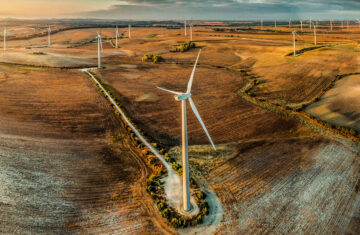
Spanning the high-desert valleys of White Pine County, Nevada, the Spring Valley Wind Project stands as a pioneering venture that unlocked the state’s immense wind energy potential. As the first utility-scale wind farm in Nevada, it charted a new course for the state’s energy portfolio, demonstrating the viability of harnessing its vast open spaces for renewable generation and setting a critical precedent for regulatory and environmental review in the Great Basin.
Significance & Context
The Spring Valley Wind Project, developed by Pattern Energy, is a landmark in Nevada’s renewable energy history. With an installed capacity of 151.8 megawatts (MW), the facility generates enough electricity to power approximately 45,000 Nevada homes annually, based on calculations from the U.S. Energy Information Administration (EIA). Its output is delivered to NV Energy‘s grid, a contribution supporting the state’s renewable goals as tracked by the Nevada Governor’s Office of Energy. By being the first of its kind, Spring Valley served as a crucial test case for permitting and environmental review.
Development Timeline
The project’s development was a multi-year journey as a pathfinder. Initial prospecting began in the mid-2000s. It underwent Nevada’s first major review for a wind project, navigating federal permitting on Bureau of Land Management (BLM) land. After extensive study, construction commenced in 2011. The Spring Valley Wind Project achieved commercial operation in 2012, a date confirmed by its listing in the U.S. Wind Turbine Database and coverage by the Las Vegas Review-Journal.
Technology & Innovation
The project utilized durable turbine technology, featuring 66 Siemens (now Siemens Gamesa) 2.3 MW turbines. A key innovation was the implementation of extensive avian and bat detection and minimization systems. Given the site’s location in a migratory corridor, this proactive approach set a new standard, informed by wildlife research from the National Renewable Energy Laboratory (NREL) on avian interactions.
Challenges & Controversies
The most significant challenge was navigating uncharted regulatory waters and overcoming opposition from conservation groups and some local ranchers. The project faced lawsuits that delayed its progress. This hurdle was resolved through a combination of settlement agreements and enhanced mitigation measures. Pattern Energy worked with opponents, including the Center for Biological Diversity, to establish a fund for permanent land conservation. These legally binding agreements, alongside permits from the Bureau of Land Management (BLM) and the Nevada Department of Wildlife, allowed the project to move forward. Key settlement details are often referenced in news archives and BLM project records.
Community & Economic Impact
For White Pine County, the wind farm introduced a new and substantial source of revenue. During construction, the project typically employed 200-300 workers, according to industry models from the American Clean Power Association. Its operation provides significant annual property tax revenue and payments in lieu of taxes (PILOT) to the county, delivering crucial funding detailed in White Pine County financial records. Furthermore, it provides long-term lease payments to participating ranchers, a benefit for the rural economy supported by University of Nevada, Reno Extension.
Future Outlook
As Nevada’s inaugural wind farm, Spring Valley holds a unique place in the state’s energy landscape. Its success proved the concept and led to larger projects. While its technology is now mature, its established infrastructure makes it a stable asset. The site could eventually be considered for repowering, a strategy analyzed in NREL reports on wind plant modernization. Its enduring legacy is that of a pioneer that balanced development with conservation, paving the way for Nevada’s growth as a renewable energy leader under its State Climate Strategy.
At DeKalb County you can find also: Lost Creek Wind Energy Facility