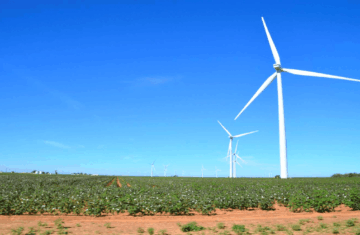
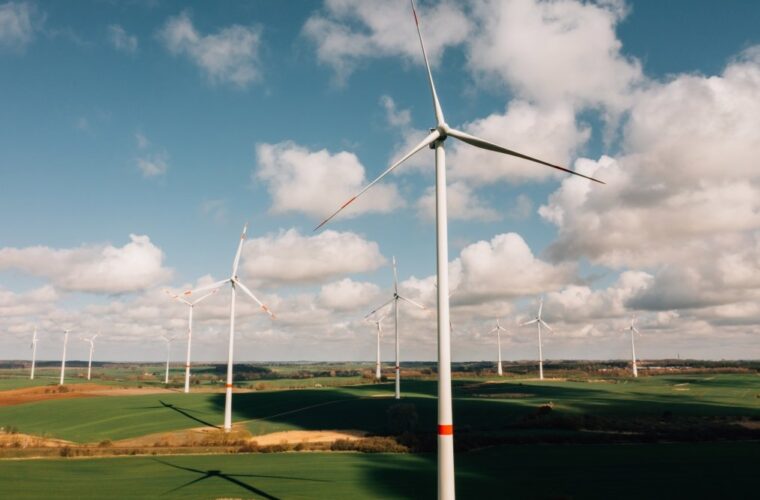
Notrees Windpower Hybrid project stands as a pioneering model for the future of grid reliability. By integrating wind generation with one of the world’s largest battery storage systems at the time of its deployment, this facility demonstrated a critical solution to the intermittency of renewable power, proving that wind energy can be stored and dispatched to meet electricity demand exactly when it is needed.
Significance & Context
The Notrees Windpower Hybrid project, a collaboration between Duke Energy Renewables and ERCOT (the Electric Reliability Council of Texas), is a landmark in energy storage integration. The site combines an existing 153-megawatt (MW) wind farm with a groundbreaking 36 MW battery storage facility. This hybrid system was designed to provide crucial grid stability services, specifically frequency regulation, to help balance the ERCOT grid. When commissioned, it was the largest battery storage project of its kind in the United States, a milestone documented by the U.S. Department of Energy (DOE).
Development Timeline
The project evolved in two distinct phases. The original Notrees Wind Farm began commercial operation in 2009. The innovative battery storage addition was enabled by a $22 million grant from the U.S. Department of Energy’s Smart Grid Demonstration Program. Construction on the storage component began in 2011, and the fully integrated hybrid project was commissioned in 2012, a timeline detailed in DOE project reports and the U.S. Wind Turbine Database.
Technology & Innovation
The core innovation was the Xtreme Power battery storage system, which used advanced lead-acid and later lithium-ion technology. This system acted as a “shock absorber” for the grid, a novel application for utility-scale batteries that provided invaluable real-world data. The project’s role in advancing storage technology is analyzed in reports from the National Renewable Energy Laboratory (NREL) and the Electric Power Research Institute (EPRI).
Challenges & Controversies
A significant challenge was the technical and financial risk of deploying unproven, utility-scale battery technology. The hurdle was resolved through public-private partnership. The U.S. Department of Energy’s grant under the Recovery Act absorbed a substantial portion of the capital risk, making the project financially viable. This government support, managed by the DOE Loan Programs Office, was crucial for proving the concept and de-risking the technology for future commercial deployments.
Community & Economic Impact
For Ector County, a region synonymous with the oil and gas industry, the project represented economic diversification. During construction of both phases, the projects typically employed hundreds of workers, according to industry estimates. Operationally, the facility contributed significant property tax revenue to the county, as reflected in Ector County financial records. It also provided steady lease payments to landowners, offering a clean energy revenue stream. The project positioned the region as a leader in advanced energy technologies, supported by outreach from University of Texas Permian Basin.
Future Outlook
The Notrees Windpower Hybrid project has completed its primary role as a pioneering demonstrator. The original battery system has been decommissioned after providing a decade of critical service and data. Its legacy is immense, directly informing the commercial deployment of gigawatts of battery storage across Texas, as tracked by ERCOT’s Storage Deployment Reports. The site’s existing wind turbines continue to generate power, and the infrastructure remains a prime location for future, larger storage deployments, ensuring its place in the history of the modern grid’s evolution.
At Borden County you can find also: Bull Creek Wind