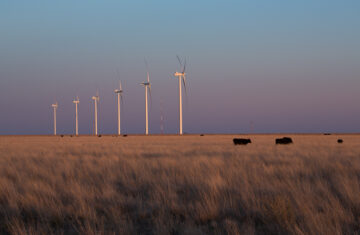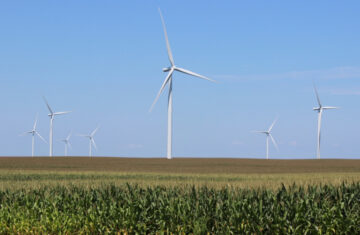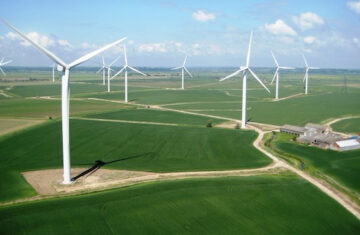
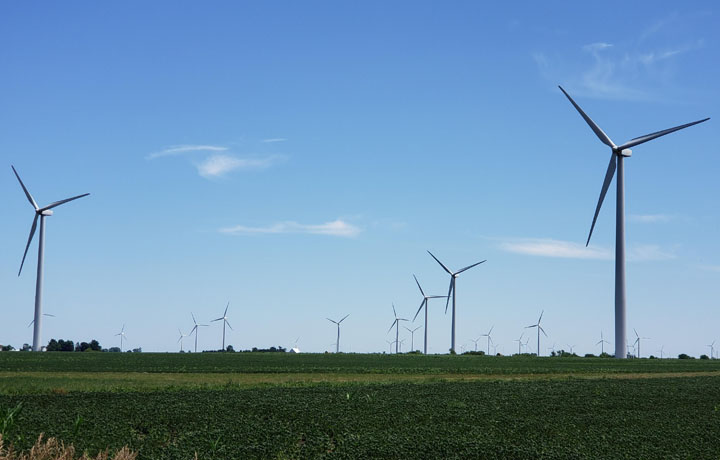
The Rail Splitter Wind Farm, situated in the agricultural heartland of central Illinois, is a cornerstone of the state’s renewable energy portfolio. Developed by E.ON Climate & Renewables, this project transforms the region’s steady winds into a significant source of clean electricity, directly supporting Illinois’s ambitious climate goals while providing vital economic stability to the rural communities of Tazewell and Logan Counties.
Significance & Context
The Rail Splitter Wind Farm is a major contributor to Illinois’s energy transition, playing a key role in meeting the targets of the state’s landmark Climate and Equitable Jobs Act (CEJA), as outlined by the Illinois Power Agency. With an installed capacity of 200 megawatts (MW), the project generates enough electricity to power approximately 60,000 average Illinois homes annually, based on generation-to-homes calculations from the U.S. Energy Information Administration (EIA). Its output feeds into the PJM Interconnection grid, supplying clean power across the region.
Development Timeline
The project’s development followed a multi-year trajectory. Initial land leasing and feasibility studies began in the mid-2000s. After navigating the local zoning processes in Tazewell and Logan Counties and securing power purchase agreements, major construction commenced in 2011. The Rail Splitter Wind Farm achieved commercial operation in 2012, a date confirmed by its listing in the comprehensive U.S. Wind Turbine Database.
Technology & Innovation
The wind farm utilizes 121 General Electric (GE) 1.6-megawatt turbines, a reliable and widely deployed model for its time. The project’s design focused on integrating the turbines efficiently within active agricultural land, minimizing disruption to farming operations. Its successful connection to the high-voltage transmission system underscores the technical planning involved, details of which can be tracked through PJM Interconnection’s public generation interconnection queue.
Challenges & Controversies
As an early large-scale wind project in the area, it faced the common challenge of navigating local zoning and addressing community concerns about land use and visual impact. This was resolved through a transparent county approval process, where detailed site plans and economic impact studies were reviewed. Final ordinances and approvals, which set precedent for future projects, are accessible through the Tazewell County and Logan County government portals. This process balanced new energy development with the character of the farming community.
Community & Economic Impact
The wind farm delivers substantial local economic benefits. During peak construction, a project of this scale typically employs over 200 workers, providing a significant temporary boost, as modeled in reports from the American Clean Power Association. Operationally, it provides a long-term, predictable source of property tax revenue, bolstering budgets for local schools and public services. Critically, it offers steady lease payments to participating farmers, creating a drought-resilient source of income—a benefit for agricultural economics documented by the USDA and Illinois Farm Bureau.
Future Outlook
As a mature operational asset, the Rail Splitter Wind Farm is a stable, long-term contributor to Illinois’s grid. Its future may include eventual repowering with newer, more efficient turbine technology to extend its lifespan and increase output, a strategy supported by state policy. Its enduring success serves as a foundational model for integrating wind energy into Illinois’s working landscapes, supporting the state’s clean energy future as detailed in the Illinois Climate Action Plan.
At Gilliam County you can find also: Wheat Field Wind Power Project