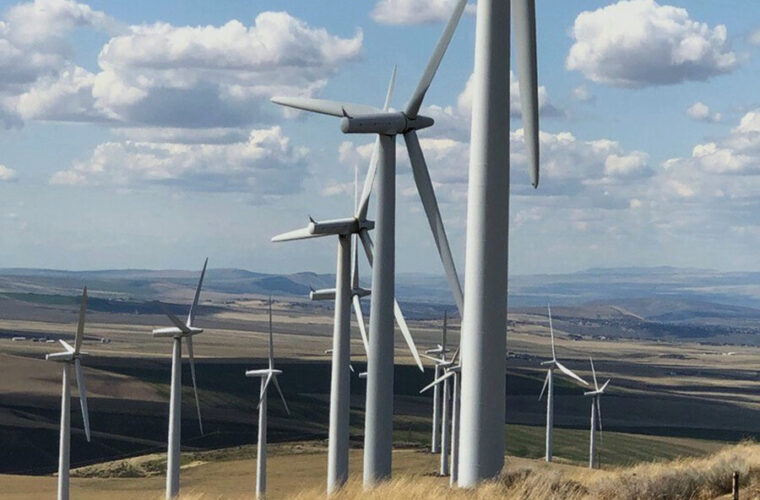
In the windswept hills of southeastern Washington, the Nine Canyon Wind Farm in Benton County represents a pioneering model of community-driven renewable energy development. As one of the first utility-scale wind projects in the Pacific Northwest to be developed and owned by a consortium of public utility districts, it demonstrated an alternative to corporate-owned generation. This innovative approach allowed local utilities to directly control a clean energy asset, providing ratepayers with cost-effective power while keeping economic benefits within the region and establishing a template for community energy independence.
Significance & Context
The Nine Canyon Wind Farm is a strategically important asset within the Bonneville Power Administration (BPA) grid, serving multiple public utility districts in Washington state. Its development represented a significant shift toward locally controlled renewable energy in a region traditionally dependent on large-scale hydroelectric and imported power. The project provided a blueprint for community-owned generation that aligned with Washington’s early renewable energy initiatives and energy independence goals, a strategy later expanded upon in reports by the Washington State Department of Commerce.
Development Timeline
Development for Nine Canyon began in the late 1990s, with the first phase becoming operational in 2002. The project was developed in multiple phases, with expansions completed in 2003, 2005, and 2007, reflecting its successful initial operation and growing demand for renewable power among member utilities. This phased approach allowed for continuous optimization based on operational experience and technological advancements.
Technology & Innovation
The Nine Canyon Wind Farm initially featured turbines that were considered large for their time, with capacity ratings that demonstrated the rapid technological evolution of the wind industry. A key innovation was its ownership structure—being developed and owned by Energy Northwest, a consortium of Washington public utility districts—which provided a model for community-controlled renewable development. The project also incorporated advanced grid integration features to interface effectively with the BPA transmission system.
Challenges & Controversies
A significant challenge for the Nine Canyon project was securing financing and power purchase agreements for a novel public ownership model without an established track record. Conventional lenders were initially hesitant to finance a utility-owned wind project of this scale. This hurdle was overcome through member utility commitments, joint ownership structures that distributed risk, and demonstrating the project’s strategic value for long-term rate stability, ultimately securing the necessary backing.
Community & Economic Impact
For Benton County and participating utilities, Nine Canyon delivered unique economic benefits. During its multi-phase construction, the project typically employed dozens of workers across various phases. The permanent operations created several long-term technical positions. Most significantly, the project likely contributes substantial tax revenue to local services while providing member utilities with cost-controlled power—a dual benefit documented in reports by the Washington Public Utility Districts Association. The public ownership model ensured that financial returns remained within the community rather than distributed to external shareholders.
Future Outlook
The Nine Canyon Wind Farm continues to serve as a working example of successful community-owned renewable energy. As the original turbines approach the end of their operational lives, the site presents a compelling opportunity for repowering with modern technology that could significantly increase output while maintaining local control. The project’s enduring legacy is its demonstration that public utilities can successfully develop, own, and operate substantial renewable energy assets, providing a replicable model for other communities seeking energy independence and economic benefits from their local renewable resources.
Discover also at USA: Storm Lake wind farm