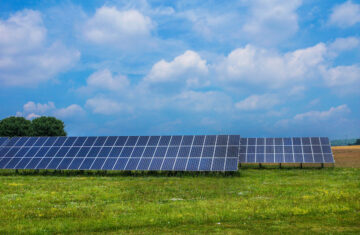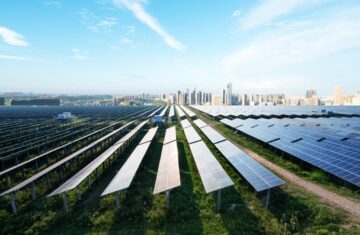
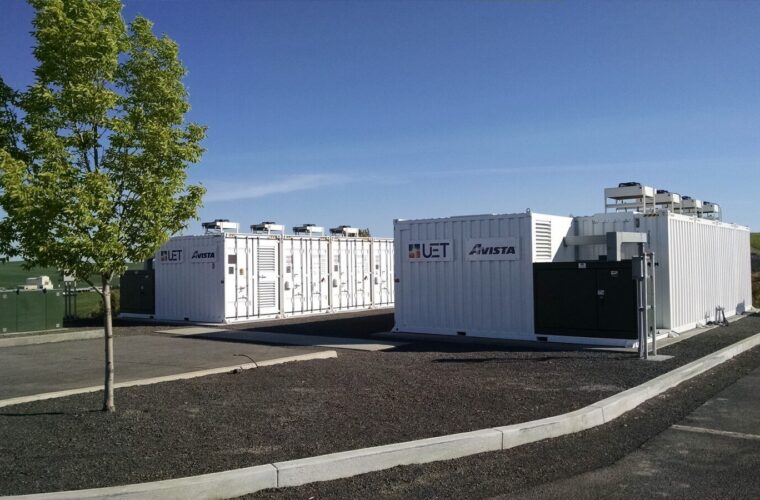
Cavalry Solar Hybrid project in Indiana represents a significant advancement beyond traditional solar farms, establishing itself as a fully dispatchable clean energy resource. This innovative facility combines utility-scale solar generation with substantial battery storage, directly addressing the challenge of intermittency that has limited renewable energy’s role in grid reliability. By delivering power on demand, day or night, Cavalry Solar Hybrid provides a model for the future of flexible, resilient energy infrastructure in a state traditionally dependent on coal.
Significance & Context
The Cavalry Solar Hybrid project is strategically important for Indiana’s power grid, interconnected with the Midcontinent Independent System Operator (MISO) system. Its ability to store solar energy and dispatch it during peak demand periods makes it functionally equivalent to a traditional peaker plant, but without associated emissions. This capability is increasingly valuable as utilities like Duke Energy Indiana work to balance reliability with sustainability goals, a challenge highlighted in the Indiana Utility Regulatory Commission integrated resource planning proceedings. The project supports grid stability while helping to meet growing corporate demand for clean, reliable power.
Development Timeline
Development for Cavalry Solar Hybrid began in the early 2020s, coinciding with declining battery costs and increasing recognition of storage’s grid value. Key milestones included securing land leases, obtaining state and local permits for both generation and storage components, and finalizing power purchase agreements that valued the project’s dispatchability. Construction commenced in 2023, and the integrated facility achieved commercial operation in 2025.
Technology & Innovation
The project’s core innovation is its seamless integration of single-axis tracking solar arrays with a large-scale lithium-ion battery energy storage system. The facility utilizes advanced energy management software that continuously optimizes operations, deciding in real-time whether to send power directly to the grid or to the batteries based on market conditions and grid needs. This allows Cavalry to provide essential reliability services, including frequency regulation and capacity during peak demand periods.
Challenges & Controversies
A significant challenge for the Cavalry Solar Hybrid project was navigating the regulatory complexity of a hybrid resource, as Indiana’s permitting framework was initially designed for separate generation and storage facilities. The project required extensive coordination with multiple agencies to demonstrate the safety and reliability of the co-located systems. This hurdle was resolved through collaborative technical reviews and the development of a comprehensive safety plan that addressed fire protection, spill containment, and emergency response protocols.
Community & Economic Impact
For the host county, Cavalry Solar Hybrid delivers substantial economic benefits. During the construction phase, the project typically employed over 250 workers, providing a significant boost to local businesses. The complex nature of the hybrid facility creates higher-skilled permanent operations and maintenance positions compared to solar-only projects. The project likely contributes a major increase in property tax revenue, supporting local schools and public services—a fiscal impact documented by the Indiana Department of Local Government Finance. Landowners receive stable lease payments.
Future Outlook
The successful operation of Cavalry Solar Hybrid establishes a new benchmark for dispatchable clean energy in Indiana and the broader Midwest. Its proven ability to provide firm capacity makes it a model for future hybrid developments. As energy market structures evolve to better value reliability and flexibility, the project is well-positioned to capitalize on new revenue streams. Cavalry Solar Hybrid demonstrates that the future of Indiana’s energy resilience lies in intelligently integrated solar-storage solutions that maximize both economic and grid value while supporting the state’s transition to a cleaner energy mix.
At Indiana also: Hardy Hills Solar Energy