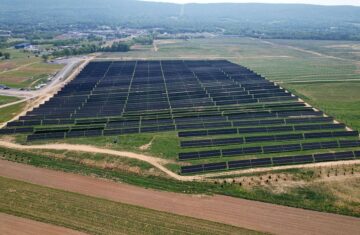
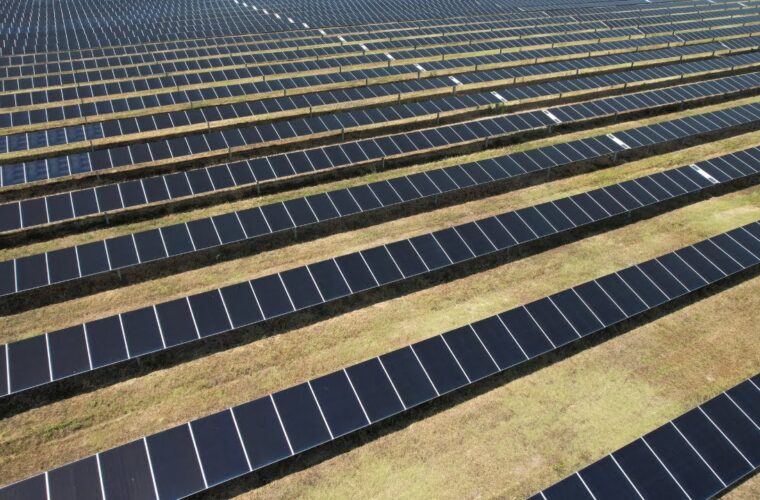
Arkansas’s Delta region, the Newport Solar Project underscores a pivotal shift in the state’s economic and energy landscape. By transforming former agricultural land into a source of clean power, the project highlights how rural communities can leverage their assets to attract major investment and play a central role in the modern energy economy.
Significance & Context
The Newport Solar Project is a substantial 100-megawatt (MW) facility developed by Savion, a Shell portfolio company. The project’s entire output is being purchased by Meta to support its nearby data center operations, a partnership highlighted in a Meta sustainability report. This power purchase agreement was facilitated through a partnership with Entergy Arkansas, under a renewable energy tariff approved by the Arkansas Public Service Commission (APSC) in Docket No. 21-____-U. The project’s capacity is sufficient to power the equivalent of approximately 18,000 homes.
Development Timeline
The project’s development began with land acquisition and preliminary studies in 2019. A key milestone was reached in 2021 with the APSC’s approval of the renewable energy tariff. The project’s interconnection agreement was secured through the Midcontinent Independent System Operator (MISO) Generation Interconnection Queue. Following these approvals, major construction commenced in 2022, and the Newport Solar Project achieved commercial operation in late 2023, as recorded in Entergy Arkansas’s resource updates.
Technology & Innovation
The Newport Solar Project utilizes single-axis tracking technology to maximize energy production. The project also incorporates a sophisticated stormwater management system designed to protect the local watershed, a critical consideration in the flood-prone Delta region. This system was developed in consultation with the Arkansas Department of Agriculture’s Natural Resources Division to ensure compliance with state environmental standards and to serve as a model for responsible solar development on former agricultural land.
Challenges & Controversies
A significant challenge for the Newport Solar Project involved navigating the complex regulatory framework to enable a corporate offtaker like Meta to purchase power from a specific facility within a regulated utility’s territory. This required the creation and approval of a novel renewable energy tariff by the Arkansas Public Service Commission. The process, detailed in public APSC filings, involved testimony and review to ensure the arrangement was beneficial for all parties, including the utility’s broader customer base. The successful approval of this tariff established a new model for corporate renewable energy procurement in Arkansas.
Community & Economic Impact
The project delivers a considerable economic benefit to Jackson County. During peak construction, the Newport Solar Project typically employed over 200 workers. Over its operational lifetime, the project is projected to generate over $20 million in new property tax revenue, according to estimates based on Jackson County property tax records. This revenue will likely contribute substantially to local budgets, providing enhanced funding for public schools. For the landowners, the long-term lease payments offer a stable source of income, diversifying the local agricultural economy.
Future Outlook
The Newport Solar Project is now a long-term, operational asset that solidifies Arkansas’s appeal for major corporate investment. Its success demonstrates a viable model for public-private-utility partnerships in the state. The project’s infrastructure is well-suited for potential future co-location of battery energy storage. As noted in the U.S. Energy Information Administration’s (EIA) Electric Power Monthly, pairing solar with storage is a key trend, and such an addition could allow the Newport facility to provide even more dependable power, further enhancing the reliability of the local grid for all customers.
Discover also at USA: Proxima solar farm