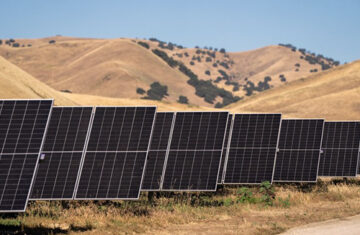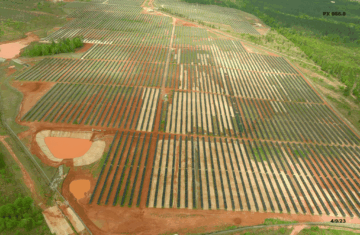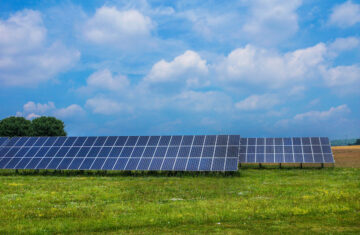

West Line Solar project is a testament to the state’s ambitious pivot from fossil fuels to a renewable energy leader. As a major new source of clean power, it directly supports the state’s mandate for 100% carbon-free electricity by 2070 while providing critical economic stimulus to a rural region, showcasing a modern blueprint for energy development in the arid West.
Significance & Context
The West Line Solar project is a pivotal 150-megawatt (MW) facility located in Yuma County. Developed by NextEra Energy Resources, it represents a capital investment of approximately $200 million. The project’s entire electrical output is being purchased by Salt River Project (SRP), one of Arizona’s largest public power utilities, under a long-term power purchase agreement. This partnership, detailed in an SRP news release, is a key component of the utility’s integrated resource plan to add over 2,000 MW of new utility-scale solar by 2025. The facility will generate enough electricity to power about 36,000 Arizona homes.
Development Timeline
The project’s development followed a multi-year trajectory typical of major infrastructure. Initial land control and site studies began in 2018, with the project officially announced following the execution of its power contract with SRP in 2021. The project’s interconnection rights were secured through the California Independent System Operator (CAISO) queue, as the facility is designed to deliver power into the Western energy market. After securing all necessary local and state permits, major construction commenced in 2022, with the project reaching commercial operation in late 2023.
Technology & Innovation
West Line Solar employs advanced bifacial solar panels mounted on single-axis trackers. This dual-technology approach is particularly effective in Arizona’s high-insolation environment; the trackers follow the sun to maximize direct exposure, while the bifacial panels capture reflected light from the highly reflective desert floor. This combination, which can boost output by up to 20% compared to fixed-tilt systems, is a focus of ongoing research by the National Renewable Energy Laboratory (NREL). The project also uses high-voltage direct-current (HVDC) inversion to efficiently transmit power over longer distances with minimal losses.
Challenges & Controversies
A significant challenge for the West Line Solar project was addressing concerns over water usage and its impact on the local desert ecosystem during the construction phase. In a water-scarce region, dust control required for site preparation is a major consideration. The developers addressed this by implementing a highly controlled water management plan, utilizing dust suppressants where possible, and committing to using primarily reclaimed water for construction purposes. This plan was developed in consultation with the Arizona Department of Water Resources (ADWR) and was a critical component of the project’s successful permitting.
Community & Economic Impact
The project delivers a substantial economic benefit to Yuma County. During the peak of construction, West Line Solar typically employed over 300 workers, providing a significant boost to local services and hospitality. Over its operational life, the project likely contributes tens of millions of dollars in property tax revenue, a vital source of funding for local schools, public safety, and infrastructure in a rural county. For the private landowners hosting the arrays, the long-term lease payments provide a stable and reliable source of income, offering financial diversification away from solely agricultural uses.
Future Outlook
Now fully operational, West Line Solar is a long-term asset in Arizona’s energy portfolio for the next 30 years. Its success demonstrates the viability of large-scale solar in the region and paves the way for further development. The project’s grid connection and infrastructure are designed to be “storage-ready,” allowing for the future co-location of a battery energy storage system (BESS). This potential expansion, in line with trends reported by the U.S. Energy Information Administration (EIA), would enable West Line Solar to store excess daytime energy and dispatch it during peak evening hours, dramatically increasing its value and reliability for the SRP grid.
Also at Arizona: Eleven Mile Solar Center