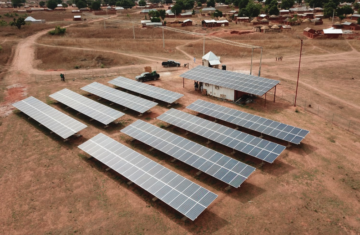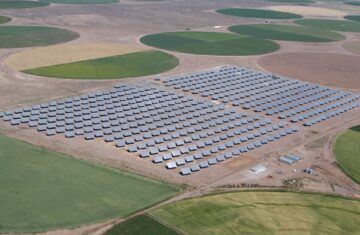

Crane Solar Project represents a strategic addition to the state’s renewable energy portfolio, demonstrating how solar development can create economic opportunities while contributing to grid reliability in the competitive ERCOT market. This project exemplifies Texas’ continued leadership in integrating utility-scale solar into its diverse energy mix while supporting rural economic development.
Significance & Context
Developed by 174 Power Global, the 150-megawatt (MW) Crane Solar Project contributes to Texas’ position as the national leader in renewable energy generation while operating within the competitive Electric Reliability Council of Texas (ERCOT) market. According to generation data from the U.S. Energy Information Administration (EIA), the facility produces enough electricity to power approximately 45,000 homes, enhancing grid diversity and reliability. Its location in Crane County, within the Permian Basin region, positions it to leverage existing energy infrastructure while providing local economic benefits to a community experienced with energy development.
Development Timeline
The project’s development progressed efficiently through Texas’s streamlined regulatory environment. Development activities began in 2020, with construction commencing in 2022 following execution of power purchase agreements with commercial off-takers. The project achieved commercial operation in 2024, as documented in ERCOT Generation Interconnection Queue reports. This accelerated timeline reflects Texas’s mature approach to renewable energy development, though the project still required comprehensive environmental review and community engagement to address local land use compatibility.
Technology & Innovation
Crane Solar Project utilizes single-axis tracking systems with monocrystalline silicon photovoltaic modules, optimized for West Texas’s high solar irradiance conditions. According to performance data from the National Renewable Energy Laboratory (NREL), the tracking technology increases energy production by approximately 25% compared to fixed-tilt systems. The project incorporates advanced inverters with reactive power capability, providing valuable voltage support to the local grid—a crucial feature in rural areas with long transmission lines. The facility also features automated monitoring systems and water-free cleaning technology that minimize operational water usage in the arid environment.
Challenges & Controversies
The project faced challenges related to supply chain constraints and interconnection timing within the competitive West Texas renewable energy zone. The concentration of multiple solar projects in the region created competition for equipment and skilled labor. These challenges were resolved through strategic procurement planning and phased construction scheduling. The project also addressed local concerns about land use through implementation of an Agricultural Compatibility Plan that maintained grazing operations around solar arrays and established wildlife corridors for local species movement.
Community & Economic Impact
For Crane County, the project has delivered meaningful economic benefits through both construction and long-term operations. During construction, the project typically employed 200-250 workers, providing local employment opportunities during the development phase. For ongoing operations, it maintains 8-10 permanent positions with competitive wages and benefits. Based on standard tax assessment models for utility-scale solar in Texas, the project likely contributes approximately $900,000-$1.1 million annually in property tax revenue to local governments and school districts. Additionally, it provides stable lease payments to local landowners, creating a reliable income source that complements both agricultural revenues and oil and gas royalties.
Future Outlook
With an expected operational lifespan of 30+ years, the Crane Solar Project represents a long-term investment in Texas’s diverse energy economy. The project’s success adds to the growing portfolio of renewable energy assets contributing to grid stability and market competition. As Texas’s energy needs continue to grow, the project’s ability to provide zero-marginal-cost energy during peak daylight hours helps maintain grid reliability and affordability. The project’s development experience contributes to the ongoing optimization of solar deployment in West Texas, providing valuable insights for future projects seeking to balance energy production with environmental considerations and community benefits in the evolving Texas electricity market.
Discover also at: Juno Solar Project