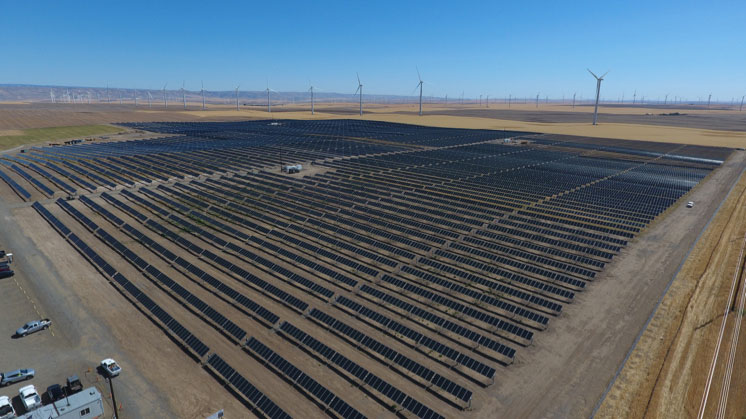
In the state of Washington, known for its hydropower dominance, the Lund Hill Solar Farm represents a strategic diversification of the renewable energy portfolio. Situated in the sunny, arid region east of the Cascade Mountains, this large-scale project demonstrates that solar power is not just a fair-weather friend to hydro but a crucial partner in building a resilient, year-round grid. By generating power during the dry summer months when water flows can be lower, Lund Hill complements the state’s existing hydroelectric assets and directly supports Washington’s ambitious clean energy goals under the Clean Energy Transformation Act (CETA).
Significance & Context
The Lund Hill Solar Farm is a key component of Washington’s transition away from fossil fuels. While hydropower provides a stable baseload, adding significant solar capacity helps the state meet peak electricity demands during hot summer afternoons when air conditioning use surges. The project’s output, enough to power tens of thousands of homes, is primarily contracted to the Port of Seattle as part of its Port of Seattle Solar initiative to power Seattle-Tacoma International Airport (SEA) with renewable energy. This partnership, highlighted in the Port of Seattle’s Century Agenda, marks one of the largest airport solar energy procurements in the country, setting a benchmark for large public entities.
Development Timeline
The development of Lund Hill accelerated following the passage of Washington’s CETA in 2019, which mandated 100% clean electricity by 2045. The project underwent extensive site evaluation and permitting starting in 2020, navigating the regulatory frameworks of both Klickitat County and state agencies. Key milestones included securing the landmark agreement with the Port of Seattle and finalizing the interconnection process with the Bonneville Power Administration (BPA), which operates the regional transmission grid. Construction proceeded through 2022 and 2023, with the project reaching full commercial operation in 2024.
Technology & Innovation
The Lund Hill Solar Farm utilizes high-efficiency bifacial solar panels mounted on single-axis trackers. These bifacial modules capture sunlight on both sides, increasing energy yield by reflecting light from the ground surface—a particular advantage in the high-albedo environment of Eastern Washington. The single-axis trackers follow the sun’s path, maximizing capture from morning to evening. This combination of technologies, validated by performance models from the National Renewable Energy Laboratory (NREL), ensures the project delivers optimal output to the grid, especially during the critical peak hours of summer.
Challenges & Controversies
A significant challenge for the Lund Hill project involved addressing wildlife and habitat concerns. The site required careful biological assessments to minimize impact on local species, including the endangered ferruginous hawk. Opposition from some local groups focused on the visual impact on the scenic landscape and potential soil disruption. The developers addressed these issues through a collaborative process with the Washington Department of Fish and Wildlife and county planners, resulting in a customized mitigation plan that included habitat restoration, controlled vegetation management to support pollinators, and setbacks to reduce visual prominence.
Community & Economic Impact
For Klickitat County, the Lund Hill Solar Farm provides a substantial economic infusion. During the construction phase, a project of this magnitude typically employs several hundred workers, benefiting local services and temporary housing. While permanent operational jobs are fewer, they represent long-term, skilled positions in the county. The project likely contributes a significant increase in property tax revenue, which supports essential local services like schools, roads, and emergency services—a fiscal benefit analyzed in reports by the Washington State Department of Commerce. Landowners involved in the project gain a stable, multi-decade source of lease revenue, providing economic resilience.
Future Outlook
The successful commissioning of Lund Hill paves the way for further solar development in Eastern Washington, demonstrating the region’s viability as a major solar hub. Its success underlines the importance of pairing new solar resources with large, anchor tenants like the Port of Seattle to ensure economic feasibility. As the state grid evolves under CETA, the Lund Hill site has the potential for future expansion or the integration of battery storage to shift its solar generation into the evening, a next step discussed in the Washington State University Extension Energy Program analyses. The project stands as a model for how strategic solar development can complement existing renewable resources to meet 21st-century energy demands.
There is also at USA: Copper Mountain Solar 5