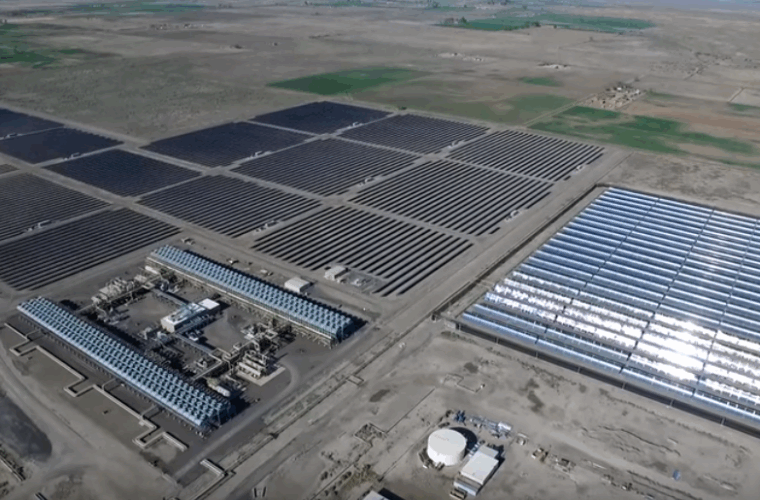
Across the arid landscapes of Churchill County, Nevada, the Stillwater Facility Solar Farm stretches across open desert terrain, a quiet but tangible contributor to the region’s clean energy transition. With a capacity of 22 megawatts (MW), this solar PV installation forms part of a larger hybrid energy complex that blends solar and geothermal generation, offering a unique model for reliable renewable power in the American West.
Developed and operated by Enel Green Power North America in collaboration with Ormat Technologies, the project delivers enough electricity to supply roughly 3,000 households annually, while complementing the continuous output of the existing geothermal plant. The solar panels, arranged in a single-axis tracking configuration, were chosen to maximize energy capture during daylight hours, effectively filling the gap when geothermal output alone cannot meet peak daytime demand.
The economic impact of the facility is substantial for this rural community. During construction, the project supported dozens of jobs in civil works, electrical systems, and site operations. Local landowners receive lease payments, diversifying income in a region traditionally dependent on agriculture and geothermal royalties. Property taxes from the project further bolster public services, enhancing the local tax base and funding schools, roads, and infrastructure projects. This structured approach reflects a careful community benefits agreement, balancing development with resident interests.
Environmentally, the solar farm makes a measurable difference. By generating zero-emission electricity, the facility offsets an estimated 5,000–6,000 metric tons of CO₂ annually, equivalent to taking over 1,000 cars off the road each year (EPA Greenhouse Gas Equivalencies Calculator). Its hybrid integration with geothermal generation also reduces variability in clean energy supply, increasing grid reliability for the surrounding areas and supporting Nevada’s broader renewable energy goals.
The development process required careful coordination to protect local ecosystems. Environmental assessments ensured minimal disruption to desert flora and fauna, and construction logistics were planned to limit soil disturbance. These measures, coupled with ongoing monitoring, highlight a commitment to responsible development and trustworthiness in renewable energy deployment.
Looking ahead, the Stillwater Facility Solar Farm is a strong candidate for future expansion or battery storage integration, which could further enhance its capacity and allow excess solar energy to meet evening demand. As hybrid projects like Stillwater gain traction, they demonstrate a replicable model for combining renewable technologies to provide consistent, environmentally responsible power while supporting local communities.