SENSEWind’s innovative self-installing turbine assembly technology has been shown to reduce the levelized cost of energy (LCoE) for large-scale fixed-bottom offshore wind farms by 4.7%. According to a report from the accreditation agency DNV, this reduction is equivalent to potential savings of £1 billion over the operational life of a project.
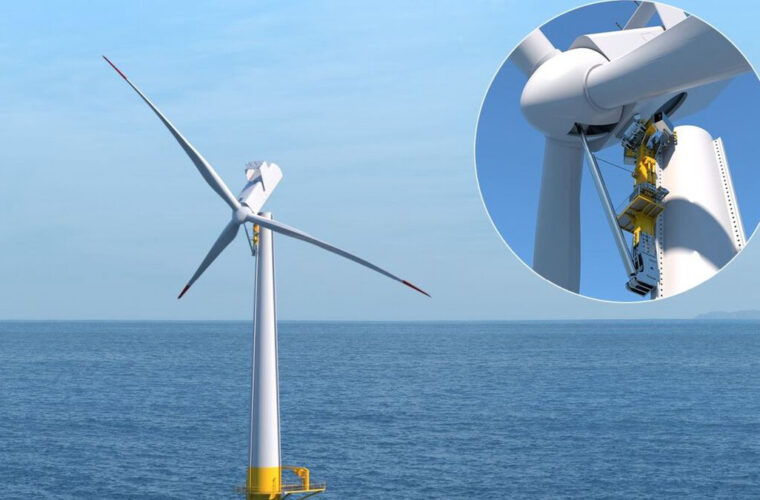
The technology utilizes a bespoke carriage system to transport the rotor nacelle assembly to the top of the turbine tower. This approach allows for the use of smaller jack-up vessels, significantly lowering installation and maintenance costs. SENSEWind has indicated that similar savings could be achieved for floating offshore and onshore wind projects. For instance, a 2 GW floating wind scheme could see LCoE reductions of up to 9%, translating to nearly £3 billion in savings over its operational period.
SENSEWind’s first commercial offering will focus on onshore applications in collaboration with a turbine manufacturer, utilizing a 6 MW unit. Following this, the technology will be adapted for fixed-bottom offshore applications and eventually for the floating sector, providing an alternative to conventional tow-back-to-port operations for maintenance.
Patrick Geraets, CEO of SENSEWind, emphasized the significance of the DNV results for fixed-bottom installations, stating, “The findings validate our approach to addressing the challenges of installing and maintaining ever-larger turbines. I am not aware of any other technology under development that can deliver the level of savings predicted for the SENSE system.”
Julian Brown, Chairman of SENSEWind, noted that not only does their technology reduce installation time and costs, but it also enables a new approach to major component replacement, ensuring that turbines can be quickly brought back online.
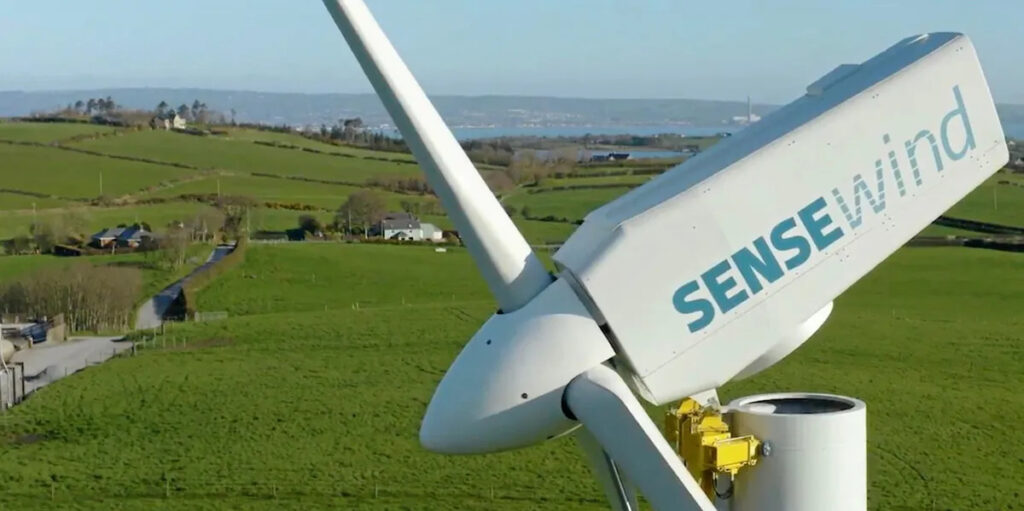
SENSEWind plans to install a 2 MW onshore demonstrator later this year, supported by grant funding from the UK government. The company is also working to scale the technology for a commercial prototype in the 6 MW to 8 MW range.
Chris Walker, Chairman of lead investor Muirhall Energy, expressed enthusiasm about the DNV report, stating, “This is very encouraging and lends credibility to the opportunities that SENSE technology offers. I am eager to deploy this technology in Muirhall’s 1 GW pipeline of onshore projects as soon as we can identify an OEM partner.”
SENSEWind’s self-installing turbine technology represents a significant advancement in the offshore wind industry, promising substantial cost savings and improved efficiency. As the company moves forward with its plans, it is well-positioned to play a crucial role in the future of renewable energy.