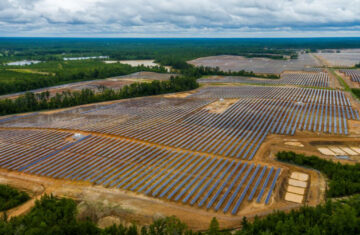
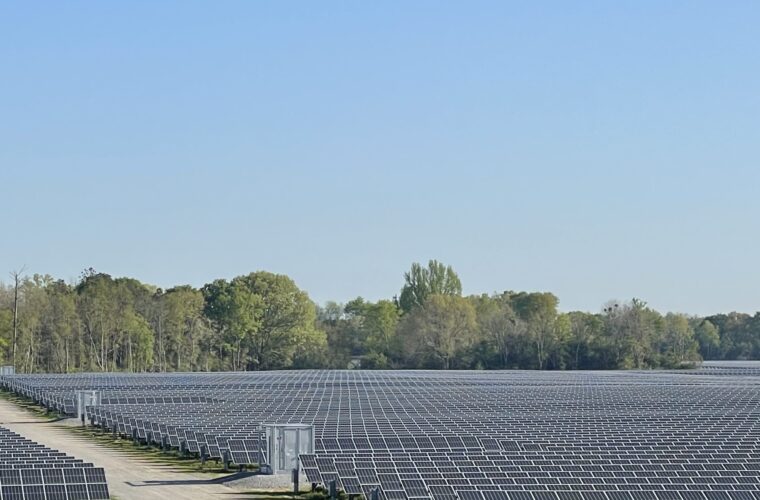
Situated on a portion of a vast military reservation in central Georgia, the Robins Air Force Base Solar project represents a strategic shift in how the U.S. Department of Defense secures its energy needs. This facility is a prime example of the military’s commitment to energy resilience and cost savings, using federal land to generate power that directly supports critical national defense operations while advancing broader renewable energy goals.
Significance & Context
The Robins Air Force Base Solar project is a substantial 42-megawatt (AC) solar facility located on underutilized land within the base’s boundaries in Bibb County, Georgia. Developed through a partnership with Georgia Power under a Power Purchase Agreement (PPA), the project provides a significant portion of the base’s electricity needs. This directly supports Executive Order 14057, which mandates federal agencies to achieve 100% carbon pollution-free electricity by 2030. The project’s output is equivalent to powering over 6,000 Georgia homes and is instrumental in reducing the base’s carbon footprint, enhancing its energy security against grid disruptions.
Development Timeline
The project’s development was initiated by the Air Force’s strategic goal to increase energy resilience. The process began with site identification and feasibility studies around 2018. A key milestone was the execution of a power purchase agreement with Georgia Power, which was reviewed by the Georgia Public Service Commission. Following federal and state permitting, which included environmental assessments, construction commenced in 2021. The project was completed and reached commercial operation in 2023, a timeline that demonstrates the efficiency of well-structured public-private partnerships.
Technology & Innovation
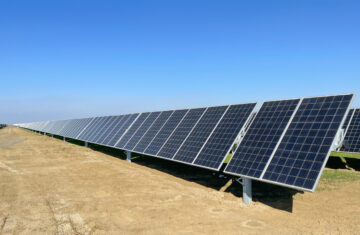
The innovation of the Robins Air Force Base Solar project lies less in technological breakthroughs and more in its application and strategic purpose. The facility utilizes standard, highly reliable photovoltaic (PV) panels on fixed-tilt mounting systems, a robust choice for maximizing output in Georgia’s climate with minimal maintenance. The primary innovation is its integration into the base’s energy infrastructure. The project is designed to enhance energy resilience, providing a local generation source that can help maintain critical operations during wider grid disturbances, a key concern for military installations detailed in Department of Defense (DOD) energy resilience reports.
Challenges & Controversies
A significant challenge for the project involved ensuring compatibility with the base’s primary mission: national defense. Siting a large-scale solar array on an active air force base required meticulous planning to avoid interference with radar systems, flight paths, and security protocols. This was resolved through close collaboration between the developer, Georgia Power, and base operations personnel. Comprehensive studies were conducted to model potential impacts, leading to a final design and location that posed no conflict with the base’s sensitive activities, turning a potential operational hurdle into a seamless integration.
Community & Economic Impact
While located on a federal installation, the Robins Air Force Base Solar project generated positive local economic impact. During construction, the project typically employed over 150 workers, with a focus on hiring local labor where possible. For Bibb County, the project does not generate traditional property tax revenue due to its location on federal land. However, the long-term PPA payments to the Air Force represent a significant cost savings for the federal government. Furthermore, the project strengthens the base’s long-term viability, which is the primary economic engine for the entire region, supporting thousands of civilian and military jobs.
Future Outlook
The Robins Air Force Base Solar project establishes a durable model for renewable energy development at military installations across the country. Its success demonstrates that energy resilience and environmental goals are mutually achievable. The project’s infrastructure has the potential for future expansion or the addition of battery energy storage systems (BESS) to provide even greater energy security, potentially allowing critical functions to operate independently of the grid for limited periods. As a pioneer in Georgia, it paves the way for similar projects at other Defense Department facilities, reinforcing the military’s role as a leader in the nation’s energy transition, as tracked by the U.S. Army Office of Energy Initiatives.
Learn more about: Top 10 Solar Farms in USA