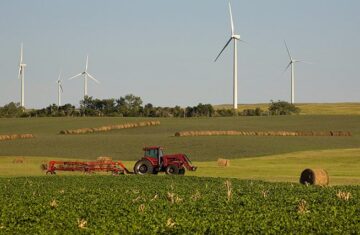
Prairie Winds ND1 represents a significant milestone as the first large-scale wind project developed by a major investor-owned utility in North Dakota. This facility marks a strategic pivot for the state’s energy sector, harnessing its world-class wind resources not just for export, but to directly power the local grid and diversify a portfolio long dominated by fossil fuels.
Significance & Context
Prairie Winds ND1 is a 200-megawatt (MW) facility owned and operated by Minnkota Power Cooperative. Unlike many North Dakota wind farms built primarily to serve out-of-state markets, this project was developed to provide cost-effective, clean power directly to the cooperative’s member-owners in eastern North Dakota and northwestern Minnesota. The project generates enough electricity to power approximately 60,000 homes and is a cornerstone of Minnkota’s resource diversification strategy.
Development Timeline
The project was announced by Minnkota in 2019 as part of its long-term resource planning. It successfully navigated the permitting process with the North Dakota Public Service Commission and secured its interconnection agreement with the Midcontinent Independent System Operator (MISO). Construction commenced in 2020 and continued through the global pandemic, with the project achieving commercial operation in late 2021.
Technology & Innovation
The project features 57 Siemens Gamesa 3.5-MW turbines, some of the most powerful models deployed in North Dakota at the time. A key innovation is the project’s integration with Minnkota’s Milton R. Young Station, a coal-fired power plant located just miles away. This co-location allows for potential shared use of existing transmission infrastructure and provides a unique opportunity to study the synergies between traditional baseload generation and large-scale renewable resources.
Challenges & Controversies
A significant challenge was the project’s timing, coinciding with the COVID-19 pandemic which disrupted global supply chains and complicated workforce management. Minnkota mitigated these risks through proactive procurement, securing turbine components early, and implementing strict health and safety protocols on-site to prevent construction delays. The project was completed on schedule despite these unprecedented global challenges.
Community & Economic Impact
The project delivers substantial economic benefits to Morton County. During peak construction, Prairie Winds ND1 typically employed over 250 workers, providing a major boost to local services. It supports a permanent operations team and has established a new source of long-term revenue for participating landowners. Over its lifetime, the project likely contributes millions in property tax revenue, directly supporting local schools, emergency services, and infrastructure in the county.
Future Outlook
As a new, utility-owned asset, Prairie Winds ND1 is positioned for decades of operation. Its success has demonstrated the viability of utility-scale wind for in-state consumption in North Dakota. The project’s design and Minnkota’s ownership also make it a potential platform for future innovation, including the integration of battery storage or green hydrogen production. As analyzed by the U.S. Energy Information Administration (EIA), such hybrid systems could become a key part of the region’s energy landscape, ensuring Prairie Winds ND1 remains at the forefront of North Dakota’s energy transition.
Find also at North Dakota: Langdon Renewables wind farm