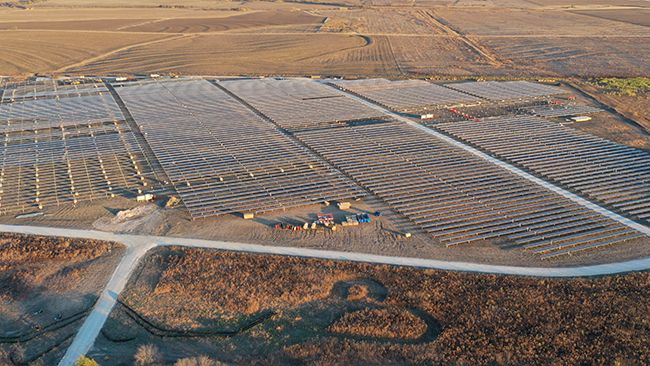
Rising from the rich agricultural lands of Central Texas, the East Blackland Solar Project 1 represents a new chapter in Travis County’s energy landscape, balancing the state’s booming renewable energy development with the preservation of its agricultural heritage. This project exemplifies the careful negotiation between land use priorities in a region where energy development, farming, and rapid urban expansion increasingly intersect, setting important precedents for how Texas can meet its growing energy demands while respecting local community values.
Significance & Context
Developed by Recurrent Energy, the 150-megawatt (MW) East Blackland Solar Project 1 is part of a new wave of renewable development in Central Texas, a region traditionally dominated by wind energy in West Texas. According to data from the Electric Reliability Council of Texas (ERCOT), the facility will generate enough electricity to power approximately 33,000 homes annually when operational. Its development in Travis County places clean energy generation close to the growing demand centers of the Austin metropolitan area, reducing transmission losses and supporting local grid reliability. The project represents a strategic diversification of Texas’s renewable energy map beyond the traditional wind-rich regions.
Development Timeline
The project’s development has navigated Texas’s unique regulatory landscape and local land use considerations. Development activities began in 2019 with land acquisition and resource assessment. The project received its interconnection approval from ERCOT in 2021, with construction expected to commence in 2023 following local permitting approvals. The commercial operation date is targeted for 2024, according to timelines reported in Texas Solar Energy Society market updates. This measured timeline reflects the careful community engagement and regulatory navigation required for projects in urban-adjacent areas.
Technology & Innovation
East Blackland Solar 1 will utilize single-axis tracking systems with bifacial photovoltaic modules, capturing reflected light from the ground to increase energy yield—particularly valuable in the variable cloud conditions of Central Texas. According to technology assessments from the National Renewable Energy Laboratory (NREL), this configuration can increase energy production by 10-15% compared to fixed-tilt systems. The project will incorporate advanced stormwater management systems designed to protect local watersheds and maintain agricultural drainage patterns, representing an innovation in integrating solar development with responsible land stewardship.
Challenges & Controversies
The project faced significant opposition from local residents and agricultural preservation advocates concerned about the conversion of farmland to industrial use. Community groups, including Save Our Blackland, organized opposition citing concerns about loss of agricultural character, property values, and visual impacts. The resolution involved extensive community engagement, with the developer implementing numerous design modifications including increased setbacks, vegetative screening, and a commitment to maintain agricultural uses between panel rows where possible. The project also established a comprehensive decommissioning plan and bond to ensure land restoration, addressing concerns about long-term land use impacts.
Community & Economic Impact
For Travis County, the East Blackland Solar Project offers substantial economic benefits while navigating land use sensitivities. During its 18-month construction phase, the project typically employs 250-300 workers, providing local job opportunities. For ongoing operations, it will maintain 4-6 permanent positions. Based on Travis County’s tax models for utility-scale solar, the project likely contributes approximately $1.2-1.5 million annually in property tax revenue to local governments and school districts. Additionally, it provides stable, drought-resistant lease payments to local landowners, offering financial stability for farming families while allowing some agricultural activities to continue alongside energy generation.
Future Outlook
The East Blackland Solar Project 1 represents a new model for urban-adjacent solar development in Texas. With an expected operational lifespan of 30+ years, the project will provide long-term clean energy and revenue for Travis County. Its development is being closely watched by other Central Texas communities, as noted in the Texas Commission on Environmental Quality’s renewable energy siting guidelines. The project’s innovative approach to combining solar generation with maintained agricultural uses may establish new best practices for dual-use solar development in Texas’s rapidly growing urban corridors, potentially paving the way for more community-integrated renewable projects that balance energy needs with land preservation.