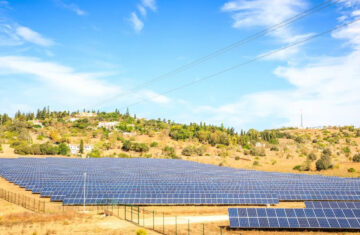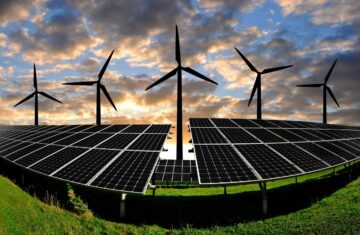

Assembly Solar II project represents a significant phase in the state’s strategic pivot toward renewable energy, transforming underutilized lands into productive clean power assets. This expansion demonstrates how legacy industrial regions can reinvent themselves as contributors to Michigan’s clean energy economy while maintaining their role as energy production hubs.
Significance & Context
The Assembly Solar II project is a 120-megawatt (AC) facility developed by D. E. Shaw Renewable Investments (DESRI) on private land in Shiawassee County. The project represents the second phase of a larger solar development that supports Consumers Energy‘s Integrated Resource Plan, approved by the Michigan Public Service Commission. According to data from the U.S. Energy Information Administration (EIA), the facility generates enough electricity to power approximately 25,000 Michigan homes. This clean energy contribution displaces an estimated 160,000 metric tons of carbon dioxide emissions annually, supporting Michigan’s goal of achieving carbon neutrality by 2050.
Development Timeline
The project’s development built upon the success of its predecessor phase, with planning commencing in 2020. A key milestone was reached when the project was selected in Consumers Energy’s 2021 renewable energy solicitation process. The development team successfully navigated local permitting with the Shiawassee County Planning Commission and completed necessary environmental reviews. Construction commenced in 2022, and the project achieved commercial operation in 2024, becoming one of the largest solar facilities in mid-Michigan.
Technology & Innovation
The Assembly Solar II project utilizes cold-climate optimized solar technology specifically engineered for Michigan’s variable weather conditions. The facility features single-axis tracking systems with reinforced components designed to withstand heavy snow loads and freeze-thaw cycles. The project employs monocrystalline silicon panels known for their performance in diffuse light conditions, which are common during Michigan’s cloudy winters. According to performance data from the National Renewable Energy Laboratory (NREL), this configuration maximizes energy production in the region’s latitude and climate patterns.
Challenges & Controversies
A significant challenge for the Assembly Solar II project involved addressing concerns about agricultural land conversion in a county with strong farming traditions. Some community members questioned the long-term impact on the local agricultural economy and rural character. These concerns were addressed through an extensive community engagement process that highlighted the project’s economic benefits and implemented agricultural compatibility measures. The resolution included designing the project to allow for pollinator habitats and sheep grazing beneath the panels, demonstrating that solar development can coexist with agricultural land uses.
Community & Economic Impact
The Assembly Solar II project provides substantial economic benefits to Shiawassee County. During the construction phase, the project typically employed 200-300 workers, according to workforce estimates from the Solar Energy Industries Association (SEIA). For long-term operations, it supports a permanent team of technicians for maintenance and monitoring. The project provides stable, long-term lease payments to local landowners, creating a reliable revenue source that complements traditional farming income. Based on Michigan’s tax assessment models for renewable energy projects, the facility likely contributes significant annual tax revenue to Shiawassee County, directly benefiting local schools and public services.
Future Outlook
With an operational lifespan of 30+ years, the Assembly Solar II project represents a long-term commitment to Michigan’s energy future. The project’s success as part of a larger solar complex provides a replicable model for phased renewable development in the state. The site’s infrastructure has potential for future technological enhancements, including possible integration with battery energy storage systems to enhance grid reliability. As Michigan continues to implement its carbon neutrality goals, the Assembly Solar II project stands as a testament to how strategic renewable energy investments can support both environmental objectives and economic development in rural communities, while helping to maintain Michigan’s legacy as an energy-producing state.
There is also at USA: Lund Hill Solar farm