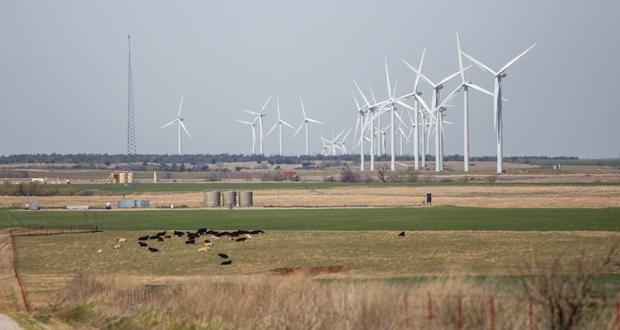
On the sweeping plains of Dewey County, Oklahoma, the Taloga Wind project stands as a significant contributor to the state’s rise as a wind energy powerhouse. This development exemplifies the strategic harnessing of the Great Plains’ relentless winds, channeling them into the regional grid to power distant cities while establishing a vital and predictable economic engine for its rural host community, demonstrating the modern synergy between agriculture and energy production.
Significance & Context
The Taloga Wind project, developed by Apex Clean Energy, is a substantial asset within Oklahoma’s robust wind energy portfolio. With an operational capacity of 298 megawatts (MW), the facility generates enough electricity to power approximately 110,000 homes annually, based on U.S. Energy Information Administration (EIA) calculations. Its output is integrated into the Southwest Power Pool (SPP) grid, supplying cost-competitive, carbon-free power across the central United States. Located in a state now ranked among the nation’s top wind producers, Taloga reinforces Oklahoma’s critical role in the national energy transition, leveraging its natural resources for economic growth and grid reliability.
Development Timeline
The project’s development capitalized on Oklahoma’s mature wind market in the late 2010s. Initial site prospecting and land acquisition in Dewey County began in the mid-2010s. After securing local permits and navigating the SPP interconnection queue, construction commenced. The Taloga Wind project was built efficiently and achieved commercial operation in 2019, rapidly transitioning from construction to a key generating asset.
Technology & Innovation
The project utilizes modern, high-capacity turbines designed for maximum efficiency in the plains environment. It features 119 Vestas V136-3.45 MW turbines. This model, with its 136-meter rotor diameter, is engineered to capture more wind energy at a wider range of speeds, optimizing the site’s energy yield. A key focus was designing a layout that minimized wake interference between turbines while maintaining compatibility with ongoing cattle grazing and farming operations across the project’s footprint, an approach informed by National Renewable Energy Laboratory (NREL) research on land use.
Challenges & Controversies
A primary challenge was addressing concerns from some local residents and county officials regarding the project’s scale, visual impact, and potential effects on property values in a community with deep agricultural roots. This hurdle was resolved through a transparent and extensive community engagement process. Apex Clean Energy conducted numerous public meetings and worked within the framework established by the Dewey County Commission. The commission’s ultimate approval of the necessary conditional use permits was based on the project’s adherence to county regulations and its substantial economic benefits.
Community & Economic Impact
For Dewey County, the wind farm delivers transformative and long-term economic benefits. During its peak construction phase, the project typically employed 300-400 workers, according to American Clean Power Association industry models, providing a major boost to local businesses. Its lasting impact is the generation of millions of dollars in annual property tax revenue, which has become a foundational source of funding for Dewey County schools and services, as detailed in Dewey County financial records. Furthermore, it provides guaranteed annual lease payments to participating landowners, creating a stable source of income that strengthens the financial resilience of the area’s agricultural economy, a benefit supported by Oklahoma State University Extension.
Future Outlook
As a modern facility with advanced turbine technology, Taloga Wind is positioned for decades of reliable operation within the SPP market. Its successful integration provides valuable data on the performance of this turbine class in Oklahoma’s climate. Given its strategic location, the site is a future candidate for repowering, a strategy analyzed in NREL reports on wind plant modernization. This could significantly increase the site’s energy output on the same land, triggering a new cycle of investment and renewing its stream of tax and lease revenue for the community, aligning with Oklahoma’s energy planning and the SPP’s long-term system assessments.
At Webb County you can find also: Cedro Hill Wind