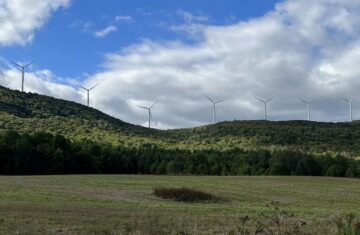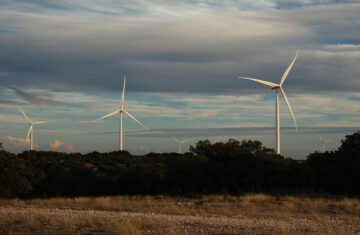
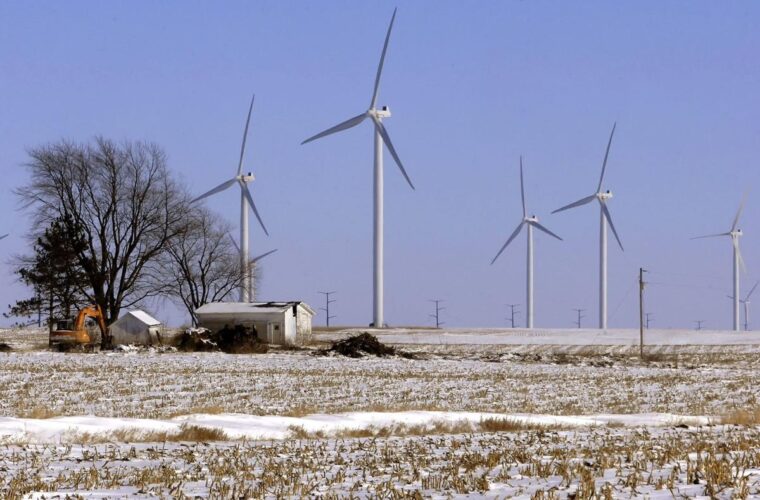
Lost Lakes Wind Farm stands as a significant contributor to the state’s emergence as a renewable energy leader. This project exemplifies how wind power is seamlessly woven into the agricultural tapestry of the Great Plains, generating clean electricity for the regional grid while providing a dependable, drought-proof source of revenue for local landowners and county services.
Significance & Context
The Lost Lakes Wind Farm, developed by EDP Renewables North America, is a substantial asset in Kansas’s robust wind energy portfolio. With an installed capacity of 200 megawatts (MW), the facility generates enough electricity to power approximately 60,000 Kansas homes annually, based on calculations from the U.S. Energy Information Administration (EIA). This output is integrated into the Southwest Power Pool (SPP) grid, a contribution tracked by the Kansas Corporation Commission and highlighted in the American Clean Power Association’s state profile.
Development Timeline
The project’s development progressed during a period of strong growth. Initial site prospecting began in the mid-2010s. After securing permits and finalizing a power purchase agreement, construction commenced. The Lost Lakes Wind Farm reached commercial operation in 2019, a date confirmed by its listing in the U.S. Wind Turbine Database and project updates from the developer.
Technology & Innovation
The project employs modern turbine technology, featuring 87 Siemens Gamesa wind turbines. A key focus was optimizing the layout for the agricultural landscape, an approach supported by research from the National Renewable Energy Laboratory (NREL) on land-use. The project utilizes sophisticated monitoring systems to ensure high reliability.
Challenges & Controversies
A notable challenge was addressing concerns related to potential impacts on wildlife, particularly avian species and the federally protected whooping crane. This required extensive environmental review. The hurdle was resolved through collaboration with wildlife agencies. The developer implemented a detailed Avian and Bat Protection Plan in consultation with the Kansas Department of Wildlife, Parks and Tourism (KDWPT) and the U.S. Fish and Wildlife Service (USFWS), which included monitoring and conservation measures.
Community & Economic Impact
For Dickinson County, the wind farm delivers meaningful economic benefits. During peak construction, the project typically employed 250-350 workers, according to industry models from the American Clean Power Association. In its operational phase, it generates a substantial stream of property tax revenue, providing vital funding for county services and schools, as detailed in Dickinson County financial records. Furthermore, it provides guaranteed annual lease payments to participating farmers, a benefit for the agricultural economy supported by Kansas State University Research and Extension.
Future Outlook
As a relatively new facility, the Lost Lakes Wind Farm is positioned for a long operational life. Its performance contributes to the SPP grid. The site could eventually be a candidate for future repowering or the co-location of solar generation, a strategy analyzed in NREL reports on hybrid power plants. Its continued success supports Kansas’s clean energy position within the evolving SPP market, detailed in the SPP’s Strategic Plan.
At Livingston County you can find also: Blackstone Wind Farm