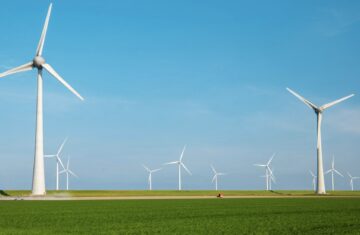
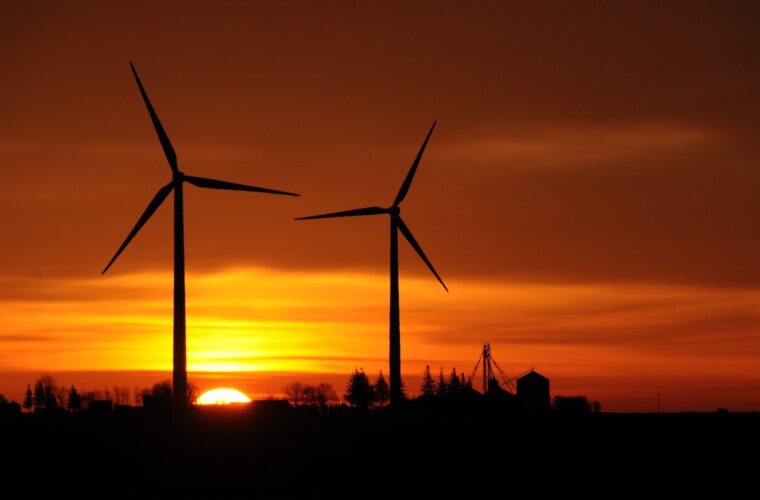
Spanning the rich farmlands of southern Minnesota, the Wapsipinicon Wind Project stands as a testament to the state’s deep commitment to renewable energy and rural economic vitality. Named for the iconic river that flows nearby, this large-scale wind farm exemplifies how modern energy infrastructure can be seamlessly woven into Minnesota’s agricultural tapestry, generating clean power for the regional grid while providing foundational financial support for local communities.
Significance & Context
The Wapsipinicon Wind Project, developed by EDP Renewables North America, is a major contributor to Minnesota’s nation-leading renewable energy portfolio. With a total installed capacity of 204 megawatts (MW), the facility generates enough electricity to power the equivalent of more than 80,000 Minnesota homes annually, based on calculations from the U.S. Energy Information Administration (EIA). This substantial output directly supports the state’s ambitious Renewable Energy Standard, detailed by the Minnesota Department of Commerce.
Development Timeline
The project’s development followed a trajectory aligned with Minnesota’s mature wind market. Initial land leasing and assessment in Mower County began in the late 2000s. After securing a power purchase agreement, construction commenced in the early 2010s. The Wapsipinicon Wind Project was completed and officially entered commercial operation in 2014, a date confirmed by its entry in the U.S. Wind Turbine Database managed by the U.S. Geological Survey and the DOE.
Technology & Innovation
The project utilizes robust, utility-scale wind turbine technology proven in the Midwest climate. The wind farm is equipped with Vestas V110-2.0 MW turbines. The engineering focus was on maximizing energy production across the agricultural landscape while minimizing interference with farming operations. The project’s successful interconnection required careful coordination with the local utility and the broader Midcontinent Independent System Operator (MISO) grid, as tracked in MISO’s Generator Interconnection Queue.
Challenges & Controversies
A notable challenge involved finalizing the route and infrastructure for the project’s collection system. These necessary components sometimes require crossing non-participating properties, leading to negotiations over easements. This hurdle was resolved through direct negotiation between the developer, landowners, and county officials, adhering to Minnesota’s statutory processes for utility easements with oversight from the Mower County Board of Commissioners to ensure the process followed local ordinances.
Community & Economic Impact
For Mower County, the wind farm delivers significant economic benefits. During its construction, a project of this scale typically employed 250-300 workers, according to job creation models from the American Clean Power Association. Operationally, it generates a substantial annual stream of property tax revenue, a critical funding source detailed in Mower County financial reports. Furthermore, it provides long-term, predictable lease payments to participating farmers, creating a drought-resistant income stream—a benefit for agricultural economics documented by the University of Minnesota Extension.
Future Outlook
As a core operational asset, the Wapsipinicon Wind Project is positioned for a long productive life. Looking ahead, the project may eventually be a candidate for repowering, a strategy analyzed in reports from the National Renewable Energy Laboratory (NREL). Its continued success serves as a model for the relationship between wind energy and agriculture, solidifying the region’s role in Minnesota’s clean energy future as outlined in the state’s Minnesota Climate Action Framework.
At Kittitas County you can find also: Sagebrush Power Partners Wind Farm