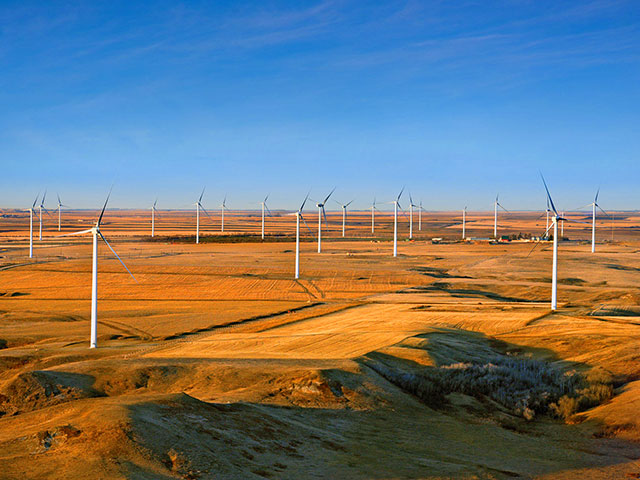
Centennial Wind Farm stands as a major pillar in the state’s energy landscape, demonstrating how wind power has become a cornerstone of both economic development and energy independence. As one of the largest wind farms in Oklahoma, Centennial exemplifies the state’s rapid ascent as a national leader in wind energy production, harnessing its abundant natural resource to power homes and businesses while generating significant local investment. This project highlights a successful partnership between private development and public benefit in America’s heartland.
Significance & Context
The Centennial Wind Farm is a monumental force in Oklahoma’s power grid. With a massive capacity of 400 megawatts (MW), the project generates enough electricity to power approximately 140,000 homes. This output makes a substantial contribution to the regional power supply, significantly displacing fossil fuel generation and avoiding hundreds of thousands of tons of carbon dioxide emissions annually. Its strategic location in a region with consistently strong wind resources allows it to operate with high efficiency, making it a cost-effective and reliable source of clean energy for the Southwest Power Pool (SPP) grid.
Development Timeline
The development of the Centennial Wind Farm was a significant undertaking that progressed through a focused and efficient timeline. Developed by Apex Clean Energy, the project moved through its development and permitting phases in the early 2010s. Major construction commenced in 2015, and the project was completed and reached commercial operation in 2016. This rapid construction pace showcased the maturity of the wind industry and the ability to deploy large-scale infrastructure efficiently to meet growing utility and corporate demand for renewable power.
Technology & Innovation
The Centennial Wind Farm was built with some of the most powerful and efficient turbine technology available at the time. The site is equipped with Siemens Gamesa wind turbines, each with a nameplate capacity of 2.3 MW. These turbines, with their large rotor diameters, are engineered to maximize energy capture from the Oklahoma winds. The project’s scale and technology represented a significant step forward in the state’s wind energy capabilities, pushing the boundaries of project size and output.
Challenges & Controversies
A significant challenge for the Centennial Wind Farm was navigating the complex logistics of constructing a project of its immense scale. This included managing the transportation of hundreds of oversized turbine components across rural roadways and coordinating a massive workforce. Furthermore, the project had to address common concerns regarding visual impact and potential effects on property values. The developer engaged in extensive community outreach, holding public meetings and working directly with landowners to negotiate lease agreements and address specific concerns, which helped to build local support and ensure the project’s successful completion.
Community & Economic Impact
The Centennial Wind Farm has delivered a transformative economic impact to its host counties. During its peak construction, a project of this scale typically employs over 300 workers, providing a major, though temporary, boost to local services. In its operational phase, it typically employs 15-25 full-time technicians for ongoing maintenance, creating a valuable source of skilled, long-term jobs in a rural area. Most importantly, the project likely contributes millions of dollars in annual property tax revenue, which is a critical source of funding for local schools, roads, and emergency services. Additionally, the project provides steady lease payments to the many landowners who host the turbines, creating a reliable and drought-resistant source of income that bolsters the agricultural economy.
Future Outlook
With its power sold under long-term purchase agreements, the Centennial Wind Farm has a stable and secure long-term outlook. As a flagship asset in Oklahoma’s energy portfolio, it is well-positioned to continue its significant contribution to the grid for decades. As the wind industry continues to evolve, the site may eventually become a candidate for repowering—replacing the original turbines with newer, more powerful models. This process, as outlined by the National Renewable Energy Laboratory (NREL), could significantly increase the farm’s capacity and efficiency, ensuring it remains a vital economic and energy asset for Oklahoma well into the future.
Find also at USA: Judith Gap Wind Energy Center