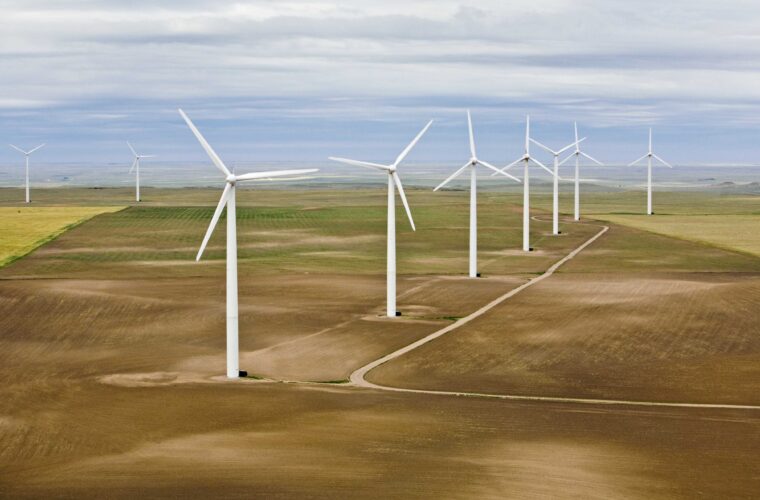
Cedar Creek Wind project represents a major milestone in the state’s ambitious pursuit of a clean energy economy. As one of the largest wind farms in Colorado upon its completion, it demonstrated the technical and financial viability of utility-scale renewable energy in the early 21st century. Cedar Creek helped catalyze Colorado’s wind industry, proving that the state’s powerful winds could be harnessed to power hundreds of thousands of homes, create economic opportunity in rural areas, and significantly reduce carbon emissions.
Significance & Context
The Cedar Creek Wind project is a foundational asset in Colorado’s energy portfolio. Developed through a multi-phase approach, the project’s combined capacity of over 300 megawatts (MW) provides enough electricity to power more than 120,000 Colorado homes. This massive output was a key contributor to helping Xcel Energy—Colorado’s largest utility—meet and exceed the state’s early Renewable Energy Standard. By displacing fossil fuel-based power generation, the project avoids hundreds of thousands of tons of carbon dioxide emissions annually, making a substantial contribution to the state’s climate goals.
Development Timeline
The development of Cedar Creek Wind occurred in distinct phases, reflecting its pioneering scale. The initial phase, Cedar Creek I, began construction in 2006 and was commissioned in 2007. Its immediate success and the favorable wind resource led to the rapid development of the larger Cedar Creek II, which was completed and came online in 2008. This phased development allowed the owner, NextEra Energy Resources, to manage the immense logistical challenge of building what was, at the time, one of the most significant wind projects in the United States.
Technology & Innovation
For its time, Cedar Creek Wind was a showcase of advanced turbine technology. The project utilized a fleet of GE Wind Energy’s 1.5-megawatt turbines, which were the industry standard for large-scale projects in that era. The installation of hundreds of these turbines across Weld County demonstrated a new scale of wind farm construction and integration. The project’s success provided crucial data and experience that helped de-risk subsequent large-scale wind developments across the country.
Challenges & Controversies
A significant challenge for the Cedar Creek Wind project was substantial local opposition, which culminated in a vocal and organized effort from some residents concerned about the project’s visual impact on the prairie landscape, potential noise, and effects on property values. This opposition led to legal challenges and intense public hearings. The conflict was ultimately resolved through a combination of county-level regulatory approval and the developer’s agreement to implement specific mitigation measures, including a larger-than-standard setback distance for turbines from non-participating homes, to address community concerns.
Community & Economic Impact
The Cedar Creek Wind project has had a profound and lasting economic impact on Weld County. During its multi-phase construction, the project typically employed hundreds of workers, providing a major boost to local businesses. In its operational phase, it typically employs a team of local technicians for ongoing maintenance, creating skilled, long-term jobs. Most significantly, the project likely contributes millions of dollars in annual property tax revenue, which is a critical source of funding for local schools, roads, and emergency services. Additionally, the project provides steady lease payments to the many landowners who host the turbines, creating a reliable new revenue stream that supports the agricultural community.
Future Outlook
As one of Colorado’s pioneering large-scale wind farms, Cedar Creek Wind is a well-established and reliable asset. However, as its original turbines are now over a decade old, the project’s future is likely to involve a strategic evaluation of its operational life. The site is a prime candidate for repowering—a process where older turbines are replaced with newer, more powerful and efficient models. As detailed by the National Renewable Energy Laboratory (NREL), repowering could significantly increase the site’s energy output on the same footprint, ensuring Cedar Creek remains a cornerstone of Colorado’s clean energy grid for decades to come.
Find also at USA: Spearville Wind Farm