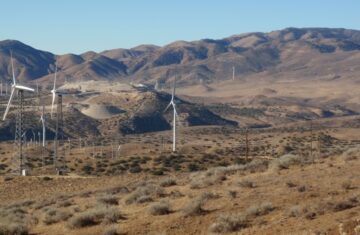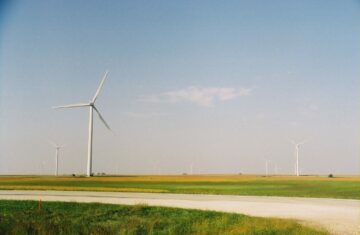
Klickitat County, the Big Horn Wind Project exemplifies a strategic partnership between heavy industry and renewable energy, showcasing a pragmatic path to decarbonization. Developed on land owned by a major cement manufacturer, this project demonstrates how wind power can be co-located with existing industrial operations, reducing the carbon footprint of energy-intensive sectors while contributing clean electricity to the regional grid. This innovative approach positions Big Horn as a model for integrating renewables directly into the industrial landscape of the Pacific Northwest.
Significance & Context
The Big Horn Wind Project is a significant contributor to Washington’s diverse energy portfolio. With a total capacity of 200 megawatts (MW), the project generates enough electricity to power approximately 60,000 homes. Its location is strategically key; by siting the turbines on land owned by the Ash Grove Cement plant, the project directly offsets a portion of the facility’s substantial energy demand with clean power. This symbiosis helps avoid an estimated 300,000 metric tons of carbon dioxide emissions annually, making a tangible dent in the industrial sector’s emissions profile within the state.
Development Timeline
The Big Horn Wind Project was developed in two distinct phases, reflecting its scale and the evolving economics of wind power in the mid-2000s. Big Horn I, with a capacity of 100 MW, was completed and began operations in 2006. Its success and the favorable wind resource led to the rapid development of Big Horn II, a second 100 MW phase that was commissioned and came online in 2007. This phased rollout allowed the developers to manage construction logistics effectively and secure financing for the substantial investment required.
Technology & Innovation
At the time of its construction, the Big Horn Wind Project utilized state-of-the-art turbine technology. The site is populated with Siemens wind turbines, each with a capacity of 2.3 MW. A key innovation for this project was its direct connection to the industrial user. While the power feeds into the broader grid, the project’s design and power purchase agreement are structured to effectively serve the adjacent Ash Grove Cement plant, demonstrating a pioneering model for corporate renewable energy procurement that has since become more widespread.
Challenges & Controversies
A significant challenge for the Big Horn Wind Project was navigating the complex logistics of constructing a massive wind farm on an active industrial site. This required meticulous coordination to ensure that construction activities did not disrupt the 24/7 operations of the cement plant. Furthermore, the project had to address concerns common to wind development in the region, including potential impacts on scenic vistas and wildlife. The developers conducted extensive environmental reviews and worked with local stakeholders and agencies like the Washington Department of Fish and Wildlife to implement mitigation measures, such as careful siting to minimize visual intrusion and avian impacts.
Community & Economic Impact
The Big Horn Wind Project has provided a substantial economic boost to Klickitat County. During the multi-phase construction, the project typically employed over 200 workers, creating a surge in local demand for services and housing. In its operational phase, it typically employs a dedicated team of technicians for maintenance, providing skilled, long-term jobs. The project likely contributes millions of dollars in property tax revenue, which is vital for funding county services, schools, and infrastructure. Additionally, the project provides steady lease payments to the landowner, Ash Grove Cement, diversifying its revenue streams.
Future Outlook
With its unique industrial partnership, the Big Horn Wind Project has a stable and predictable long-term outlook. Its power purchase agreement with the cement plant secures a reliable offtaker for its electricity. As one of the larger wind projects in Washington, it remains a cornerstone of the state’s renewable energy infrastructure. As the original turbines approach the middle of their operational lifespan, the site may eventually be considered for repowering. This would involve replacing older turbines with newer, more powerful models, a process detailed by the National Renewable Energy Laboratory (NREL), which could significantly boost the site’s output and efficiency for decades to come.
Find also at Washington: Marengo Wind Plant