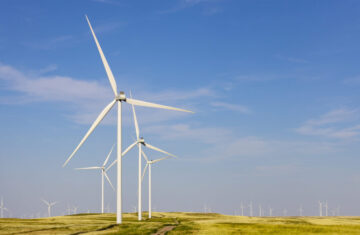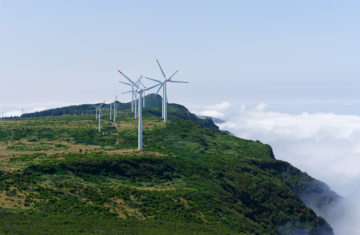
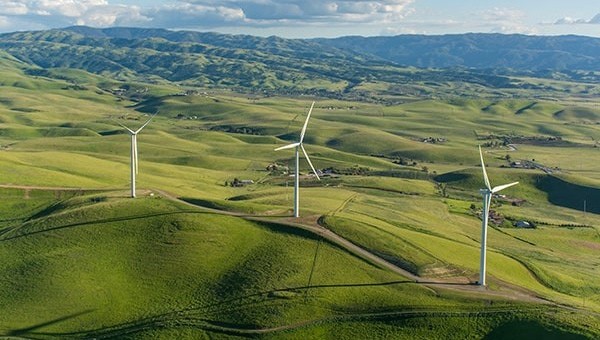
In the rolling hills of southeastern Washington, the FPL Energy Vansycle Wind Farm stands as a pioneering development in the state’s renewable energy landscape. As one of the first commercial-scale wind projects in the Pacific Northwest, it demonstrated the viability of harnessing the region’s robust wind resources for utility-scale power generation. This project helped establish the technical and economic framework for subsequent wind developments across Washington and Oregon, proving that the Columbia River Plateau offered world-class wind energy potential alongside its established agricultural value.
Significance & Context
The FPL Energy Vansycle Wind Farm was a landmark project when it commenced operations, interconnected with the Bonneville Power Administration (BPA) grid that serves the Pacific Northwest. Its development occurred during a period of growing interest in wind power as a viable complement to the region’s extensive hydroelectric system. The project helped validate Washington’s wind resources at a commercial scale, contributing to the state’s early renewable energy goals and providing valuable operational data that informed subsequent wind developments throughout the region, a trend later tracked by the Washington State Department of Commerce.
Development Timeline
Development for the Vansycle Wind Farm began in the late 1990s, a time of significant innovation in the U.S. wind industry. Key milestones included securing land leases from local ranchers, conducting extensive wind resource assessment, and navigating the permitting process for one of the region’s first major wind facilities. Construction was completed in 2001, marking it as a pathfinder project for the Pacific Northwest.
Technology & Innovation
For its era, the Vansycle Wind Farm utilized state-of-the-art wind turbine technology, featuring turbines that were considered large and efficient at the time of installation. The project demonstrated the feasibility of integrating wind power into a hydroelectric-dominated grid, providing valuable insights into managing the variability of wind generation. Its successful operation helped prove the reliability of wind technology in the specific climatic conditions of the Columbia River Plateau.
Challenges & Controversies
A significant challenge for the Vansycle Wind Farm was addressing the novelty of utility-scale wind power in a region with limited prior exposure to the technology. Some local residents expressed concerns about visual impacts, noise, and the overall concept of large-scale wind development. This challenge was resolved through extensive public education efforts, open houses, and the demonstration that wind generation could coexist with traditional agricultural uses, as cattle grazing continued undisturbed beneath the turbines.
Community & Economic Impact
For Umatilla County, the Vansycle Wind Farm introduced a new model for economic development. During construction, the project typically employed approximately 100 workers, providing a noticeable boost to the local economy. While permanent operations required a smaller team, it created long-term technical positions. The project likely contributed a new stream of property tax revenue, supporting local public services—a benefit analyzed by the Oregon Department of Revenue. Landowners received a novel source of lease income that complemented their agricultural earnings.
Future Outlook
As one of the Pacific Northwest’s pioneering wind projects, the FPL Energy Vansycle Wind Farm has provided decades of clean energy and will eventually face decisions regarding repowering or decommissioning. The site’s proven wind resource and established grid connection make it a potential candidate for modernization with contemporary turbine technology. The project’s enduring legacy is its role in demonstrating the technical and economic feasibility of wind energy in the region, paving the way for the significant wind capacity that now dots the landscapes of both Washington and Oregon.
Discover also at USA: Gray County Wind Energy