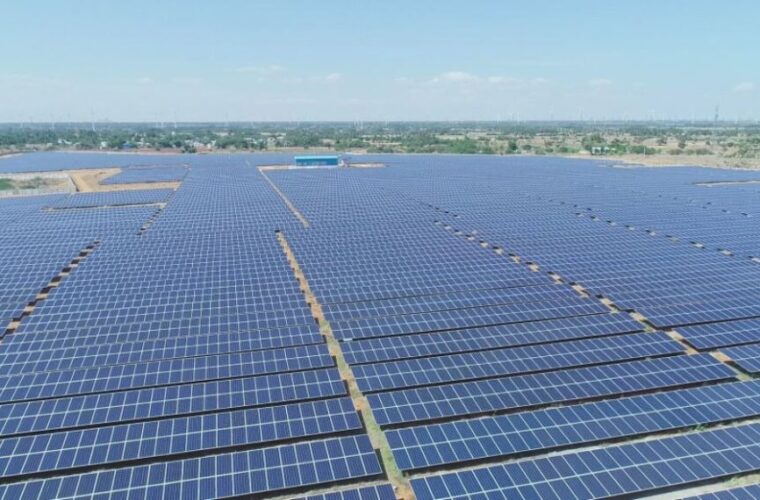
Hopkins Energy Solar Farm represents a strategic deployment of renewable generation designed for both economic efficiency and grid reliability. This West Texas facility exemplifies the next wave of solar development, where projects are optimized for seamless grid integration and maximum value in the ERCOT market. By combining proven technology with strategic siting, Hopkins Energy Solar delivers cost-competitive power while supporting the state’s growing need for diversified energy resources during peak demand periods.
Significance & Context
The Hopkins Energy Solar Farm is a significant contributor to the Electric Reliability Council of Texas (ERCOT) grid, adding substantial capacity to a system facing record-breaking electricity demand. Its location in West Texas capitalizes on the region’s high solar irradiance while its interconnection point was strategically selected to leverage available transmission capacity, thereby maximizing power deliverability. The project supports market-driven decarbonization and provides a hedge against price volatility in the state’s natural gas-dominated power market—a key concern identified in ERCOT’s Seasonal Assessments of Resource Adequacy.
Development Timeline
Development for Hopkins Energy Solar began in the early 2020s, leveraging improving solar economics and streamlined development processes. Key milestones included securing land leases from multiple local landowners, navigating county permitting, and successfully completing the ERCOT interconnection process. Construction commenced in 2023, and despite global supply chain pressures, the project achieved commercial operation in 2025, adhering to an aggressive development schedule.
Technology & Innovation
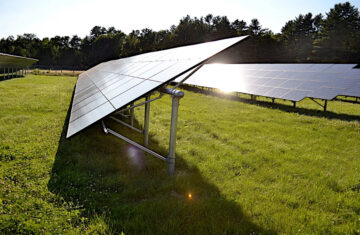
The Hopkins Energy Solar Farm utilizes single-axis tracking systems paired with high-efficiency, monocrystalline solar panels engineered for durability in the West Texas climate. The project incorporates advanced inverters with grid-forming capabilities, allowing it to provide essential reliability services like voltage support and frequency regulation. This technology enhances grid stability—a feature increasingly valued by ERCOT as renewable penetration grows across the system.
Challenges & Controversies
A primary challenge for the Hopkins Energy Solar project was managing dust mitigation in the arid environment, which can impact both local air quality and solar panel performance. The developers addressed this issue through a comprehensive dust control plan implemented during construction and ongoing operations. This included using soil stabilizers and establishing native, low-water ground cover to minimize particulate matter, ensuring compliance with environmental standards while maintaining optimal energy production.
Community & Economic Impact
For the host county, Hopkins Energy Solar delivers substantial economic benefits. During peak construction, the project typically employed over 250 workers, providing a significant boost to local services and suppliers. The permanent operations and maintenance team creates numerous long-term, skilled technical positions. The project likely contributes a major increase in property tax revenue over its operational lifespan, providing crucial funding for local schools, emergency services, and infrastructure—a fiscal impact detailed in analyses by the Texas Comptroller of Public Accounts. Landowners receive stable, long-term lease payments.
Future Outlook
The successful commissioning of Hopkins Energy Solar reinforces the strong economic case for utility-scale solar in West Texas. Its operational data will provide valuable insights for optimizing future projects in similar environments. The site is ideally configured for potential future augmentation with battery energy storage, which would allow it to supply power during evening peak hours and significantly increase its market value. Hopkins Energy Solar exemplifies the maturation of solar power as a fundamental, reliable component of Texas’s diverse energy portfolio.
Find also at Texas: Markum Solar Farm