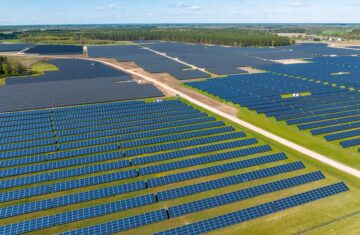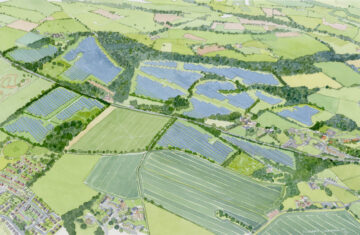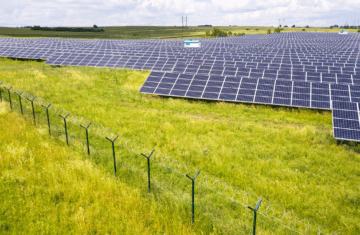
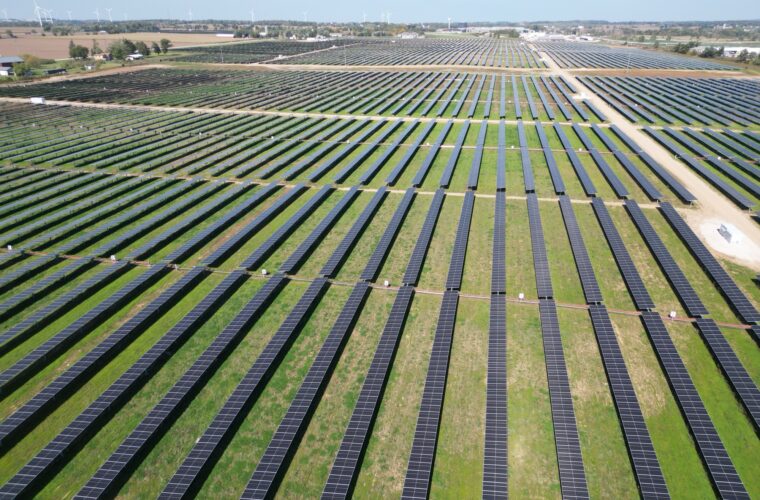
In the heart of America’s Dairyland, the Springfield Solar Farm represents a growing commitment to a diversified and homegrown energy portfolio for Wisconsin. This utility-scale project signifies an important shift in the state’s energy strategy, leveraging underutilized land to generate clean power that supports both rural economies and statewide sustainability goals. By integrating renewable generation into an agricultural landscape, Springfield Solar demonstrates a forward-looking approach to energy independence and economic resilience.
Significance & Context
The Springfield Solar Farm is a meaningful contributor to Wisconsin’s energy grid, managed primarily by regional utilities and the Midcontinent Independent System Operator (MISO). Its development aligns with the state’s pursuit of a more diverse energy mix, reducing reliance on imported fossil fuels and enhancing local grid stability. The project supports the clean energy objectives of Wisconsin’s utilities and businesses, a strategic direction reflected in the Wisconsin Public Service Commission’s focus on renewable integration and long-term energy planning.
Development Timeline
Development for the Springfield Solar project began in the early 2020s, following increasing interest in Wisconsin’s solar potential. Key milestones included securing land leases from local landowners, navigating county zoning and permit approvals, and finalizing a power purchase agreement with a utility or corporate offtaker. Construction commenced in 2023, with careful adaptation to the region’s seasonal climate, and the project is on track for commercial operation in 2025.
Technology & Innovation
The Springfield Solar Farm utilizes durable, cold-climate-rated solar panels mounted on single-axis tracking systems. These trackers are engineered to perform reliably through Wisconsin’s winters and maximize energy capture during all seasons. The project design incorporates robust stormwater management practices to protect local watersheds. A key feature is its commitment to agrivoltaics, with plans for maintained pollinator habitats or sheep grazing beneath the arrays, supporting both agricultural activity and local biodiversity—a practice encouraged by the University of Wisconsin-Madison Division of Extension.
Challenges & Controversies
A significant challenge for the Springfield Solar project was navigating local perceptions regarding land use and project scale. In a community with strong agricultural ties, some residents voiced concerns about the conversion of farmland and the visual impact on the rural landscape. The developers addressed these concerns through an extensive public engagement campaign, including open houses and direct dialogue with town boards. They emphasized the project’s temporary land use, binding decommissioning plan, and substantial economic benefits, which helped build community trust and secure the necessary approvals.
Community & Economic Impact
For the local township and county, the Springfield Solar Farm provides a substantial and sustained economic benefit. During the construction phase, the project typically employs over 150 workers, providing a significant boost to area businesses. The permanent operations and maintenance team creates long-term, skilled technical jobs. The project likely contributes a major increase in property tax revenue over its operational life, providing crucial funding for local schools, emergency services, and road maintenance—a fiscal impact documented by the Wisconsin Counties Association. Landowners receive a stable, drought-resistant source of lease income.
Future Outlook
The successful operation of the Springfield Solar Farm will establish a strong precedent for future solar development in Wisconsin. It demonstrates that large-scale renewable energy can be developed responsibly while providing clear economic benefits to host communities. As energy storage technology advances, the site is a logical candidate for a future battery storage addition, which would allow it to supply power during evening peaks and further enhance local grid reliability. Springfield Solar stands as a testament to Wisconsin’s ability to cultivate a clean energy future that works in harmony with its agricultural heritage.
There is also at Wisconsin: Wautoma Solar farm