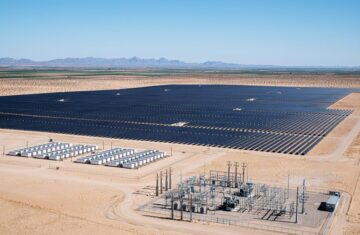
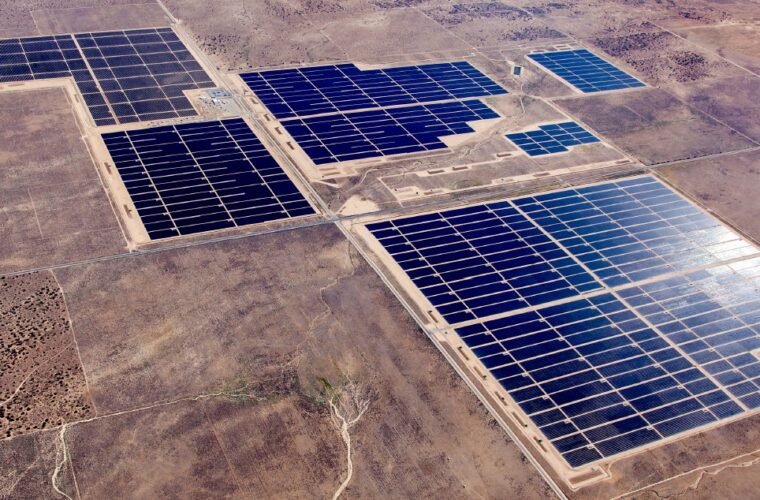
Perched in the high desert of northern Los Angeles County, the Antelope Valley Solar Ranch One represents a transformative model for urban-adjacent renewable energy development, demonstrating how major metropolitan areas can leverage nearby land resources for clean power generation while establishing new benchmarks for environmental stewardship and community integration. This project has served as a crucial test case for balancing California’s ambitious renewable energy goals with the preservation of sensitive desert ecosystems near population centers.
Significance & Context
Developed by First Solar (now owned by Exelon Corporation), the 230-megawatt (MW) Antelope Valley Solar Ranch One was among the first utility-scale solar projects to be built relatively close to a major metropolitan area. According to generation data from the California Energy Commission, the facility produces enough electricity to power approximately 75,000 homes while displacing approximately 140,000 tons of carbon dioxide emissions annually. Its location in the Antelope Valley positions it strategically to serve the Los Angeles metropolitan area while minimizing transmission losses, making it a key component of Southern California’s renewable energy infrastructure and supporting the state’s mandate for 60% renewable energy by 2030.
Development Timeline
The project’s development progressed during a critical period of solar industry expansion in California. Development activities began in 2009, with construction commencing in 2011 following the securing of a $646 million loan guarantee from the U.S. Department of Energy and a power purchase agreement with PG&E. The project achieved commercial operation in phases between 2012 and 2014, with the entire facility coming online by March 2014, as documented in First Solar’s operational reports. This phased approach allowed for continuous optimization of construction techniques and environmental mitigation measures.
Technology & Innovation
Antelope Valley Solar Ranch One utilized First Solar’s advanced thin-film cadmium telluride (CdTe) photovoltaic modules mounted on single-axis tracking systems. According to performance data from the National Renewable Energy Laboratory (NREL), this technology combination delivered superior performance in the high-temperature desert environment, with the tracking systems increasing energy production by approximately 20-25% compared to fixed-tilt installations. The project incorporated a sophisticated supervisory control and data acquisition (SCADA) system that optimized performance across the extensive site and provided valuable data for future utility-scale solar developments in similar environments.
Challenges & Controversies
The project faced significant challenges related to its proximity to both urban areas and sensitive ecosystems. Local residents expressed concerns about visual impacts, glare, and property values, while environmental groups including the Sierra Club raised issues about impacts on desert tortoise habitat and migratory bird pathways. The resolution involved implementing an extensive community engagement program and one of the most comprehensive environmental mitigation plans for a solar project at that time, developed in coordination with the California Department of Fish and Wildlife. This included creating over 600 acres of protected habitat, establishing wildlife corridors, and implementing a successful desert tortoise translocation program that became a model for subsequent projects.
Community & Economic Impact
For Los Angeles County and the Antelope Valley region, the project has delivered substantial economic benefits while establishing new standards for community-responsive development. During construction, the project typically employed over 400 workers at peak, with significant local hiring from the Antelope Valley area. For ongoing operations, it maintains 15-20 permanent positions. Based on Los Angeles County’s tax assessment models for utility-scale solar, the project likely contributes approximately $1.8-2.2 million annually in property tax revenue to local governments and school districts. Additionally, it provides stable lease payments to local landowners, creating a reliable income source that has helped sustain agricultural operations in the region while preserving the majority of the land for future use.
Future Outlook
With an expected operational lifespan of 30+ years, the Antelope Valley Solar Ranch One continues to serve as an important case study in urban-adjacent renewable energy development. The project’s extensive environmental monitoring programs, documented in reports to wildlife agencies, continue to provide valuable data for balancing renewable energy development with ecosystem conservation. As technology advances, the site is well-positioned for potential future repowering with more efficient panels. The project’s success in navigating the complex interface between urban concerns and environmental protection has established important precedents for the responsible development of renewable energy projects near population centers, informing both policy and practice across California and beyond.