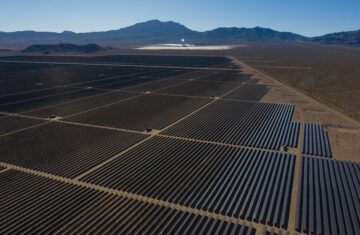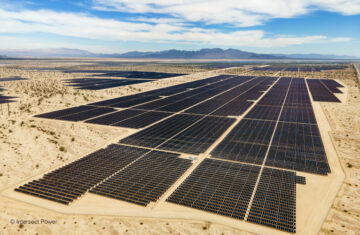
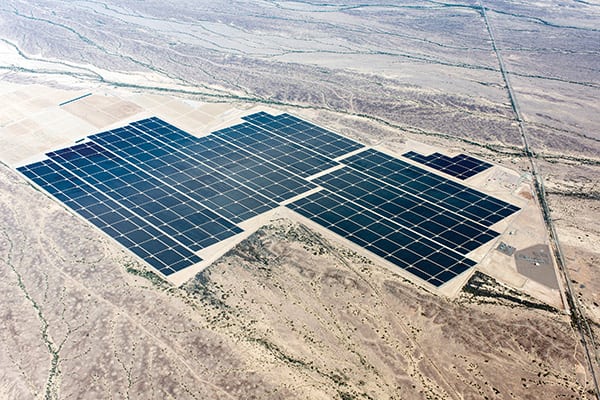
Rising from the sun-baked landscape of southwestern Arizona, the Agua Caliente Solar Project stands as a testament to the rapid scaling of utility-scale photovoltaic technology and its integration into the national grid. When completed in 2014, it briefly held the title of the world’s largest operating solar farm, demonstrating how projects of unprecedented scale could be successfully developed, financed, and connected to serve distant population centers while establishing new benchmarks for reliability and performance in desert environments.
Significance & Context
Developed by First Solar and now owned by NRG Energy, the 290-megawatt (MW) Agua Caliente Solar Project represents a milestone in the commercialization of utility-scale solar power. According to generation data from the U.S. Energy Information Administration, the facility produces enough electricity to power approximately 100,000 homes while offsetting nearly 220,000 tons of carbon dioxide emissions annually. Its location in Yuma County, which boasts some of the highest solar irradiance levels in North America, maximizes energy production efficiency. The project’s output is transmitted to California via the Pacific Gas & Electric grid, supporting the state’s renewable portfolio standards while demonstrating the potential for interstate renewable energy transmission.
Development Timeline
The project’s development coincided with a period of rapid innovation and cost reduction in solar technology. Development activities began in 2008, with construction commencing in 2010 following the securing of a $967 million loan guarantee from the U.S. Department of Energy and a power purchase agreement with PG&E. The project achieved commercial operation in phases between 2011 and 2014, with the entire facility coming online by April 2014, as documented in First Solar’s operational reports. This phased construction approach allowed for continuous optimization of installation techniques and supply chain management.
Technology & Innovation
Agua Caliente Solar Project utilized First Solar’s advanced thin-film cadmium telluride (CdTe) photovoltaic modules on fixed-tilt mounting systems. According to performance studies from the National Renewable Energy Laboratory (NREL), this technology demonstrated particular advantages in hot desert conditions, maintaining higher efficiency levels at elevated temperatures compared to conventional silicon panels. The project incorporated a sophisticated plant control system that allowed remote monitoring and adjustment of power output, providing valuable grid support functions and helping to maintain stability on the transmission system—a crucial innovation for integrating large-scale variable generation into the grid.
Challenges & Controversies
The project faced significant challenges related to its scale and interconnection requirements. Technical hurdles included managing voltage stability and power quality on the transmission system connecting remote Yuma County to California load centers. These were resolved through close coordination with PG&E and the Western Electricity Coordinating Council (WECC), implementing advanced inverter settings and control systems that established new technical standards for large-scale solar integration. Environmental concerns regarding desert habitat were addressed through a comprehensive mitigation plan developed with the Arizona Game and Fish Department, including habitat restoration and monitoring programs for local species.
Community & Economic Impact
For Yuma County, the project has delivered substantial economic benefits while establishing Arizona as a major solar energy producer. During construction, the project typically employed over 400 workers at peak, providing significant local employment opportunities in a region traditionally dependent on agriculture. For ongoing operations, it maintains 10-15 permanent positions. Based on Yuma County’s tax assessment models for utility-scale solar, the project likely contributes approximately $1.2-1.5 million annually in property tax revenue to local governments and school districts. Additionally, it provides stable lease payments to local landowners, creating a reliable income source that complements rather than replaces agricultural activities on adjacent lands.
Future Outlook
With an expected operational lifespan of 30+ years, the Agua Caliente Solar Project continues to provide valuable performance data for desert solar installations. The project’s success in grid integration has informed technical standards for inverter-based resources across the industry. As technology advances, the site may eventually be repowered with more efficient panels, potentially increasing output without expanding its footprint. The project’s extensive operational experience continues to provide insights into long-term performance degradation, maintenance requirements, and optimization strategies for large-scale solar facilities in harsh desert environments, contributing to the ongoing improvement of solar technology worldwide.