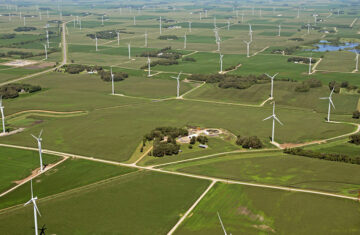
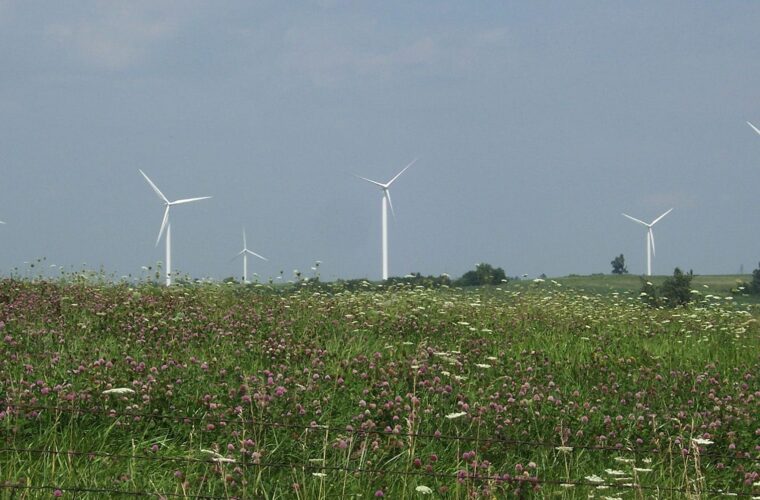
Spanning the agricultural landscape of DeKalb County, Missouri, the Lost Creek Wind Energy Facility stands as a landmark project that introduced utility-scale wind power to the state on a major scale. Its development marked a turning point, demonstrating Missouri’s significant wind potential and establishing a new economic model for rural communities, proving that wind energy could be a viable and lucrative complement to traditional farming in the Show-Me State.
Significance & Context
The Lost Creek Wind Energy Facility, developed by TradeWind Energy (now part of AES Clean Energy), is a foundational asset in Missouri’s renewable energy portfolio. With a total installed capacity of 150 megawatts (MW), the facility generates enough electricity to power approximately 50,000 Missouri homes annually, based on calculations from the U.S. Energy Information Administration (EIA). When it became operational, it was the largest wind farm in the state, a milestone noted by the Missouri Department of Natural Resources, Division of Energy. Its output feeds into the Midcontinent Independent System Operator (MISO) grid, a contribution tracked in MISO’s generation mix reports.
Development Timeline
The project’s journey was a pioneering effort. Initial development and landowner outreach in DeKalb County began in the mid-2000s. After a multi-year process of securing county permits and a power purchase agreement, construction commenced in 2009. The Lost Creek Wind Energy Facility was completed and achieved commercial operation in 2010, a date confirmed by its listing in the U.S. Wind Turbine Database.
Technology & Innovation
For its time, the project deployed robust turbine technology, featuring 100 Clipper Windpower Liberty 2.5 MW turbines. A notable aspect was its integrated meteorological (met) tower network for wind resource assessment, a practice that aligns with pre-construction analysis standards supported by the National Renewable Energy Laboratory (NREL).
Challenges & Controversies
The primary challenge was overcoming skepticism and establishing the first county-level regulatory framework for a utility-scale wind project in Missouri. This hurdle was resolved through an extensive public education campaign and collaborative ordinance development. TradeWind Energy worked closely with the DeKalb County Commission to help draft the county’s first comprehensive wind energy ordinance. The commission’s adoption of this ordinance and approval of the project’s conditional use permit provided the necessary legal foundation. The ordinance is accessible through county resources.
Community & Economic Impact
For DeKalb County, the wind farm has been a transformative economic development. During its peak construction, the project typically employed over 300 workers, according to industry models from the American Clean Power Association. Its long-term impact is profound: it generates millions in annual property tax revenue, a cornerstone of the county’s budget, directly funding schools and services as detailed in DeKalb County financial records. Furthermore, it provides guaranteed annual lease payments to participating farmers, a benefit for the agricultural economy supported by the University of Missouri Extension.
Future Outlook
As a mature asset, the Lost Creek Wind Energy Facility is a reliable, long-term contributor. Its success paved the way for other projects. Given its age, the facility is now entering the period where repowering considerations will emerge, a strategy analyzed in NREL reports on wind plant modernization. This could potentially double the site’s output, triggering a new cycle of investment and refreshed revenue for the county, aligning with Missouri’s energy planning and MISO’s long-term system assessments accessible through MISO’s MTEP.
At Klickitat County you can find also: Windy Flats Wind Project