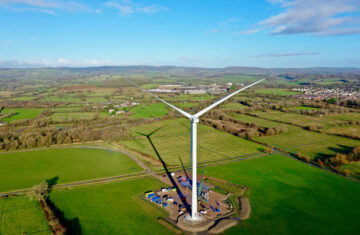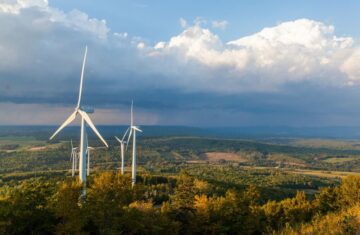

Perched on the Allegheny Front in West Virginia’s eastern panhandle, the NedPower Mount Storm Wind Farm represents a pioneering venture in harnessing the state’s significant wind resources. This project marked a notable diversification for a region historically dominated by coal, demonstrating the technical and economic viability of utility-scale wind generation in Appalachian terrain.
Significance & Context
The NedPower Mount Storm Wind Farm is a 264-megawatt (MW) facility developed by Shell Windenergy and Dominion Resources in Grant County. As one of the first major wind projects in West Virginia, it played a crucial role in proving the state’s wind potential. The facility’s output is integrated into the PJM Interconnection grid, serving customers across the mid-Atlantic region. With an investment of approximately $400 million, the project generates enough electricity to power over 70,000 homes.
Development Timeline
Development for the project began in the early 2000s, with construction commencing in 2006. The project navigated West Virginia’s regulatory process, receiving necessary approvals from the West Virginia Public Service Commission. The wind farm was built in phases, achieving full commercial operation in 2008. Its development coincided with growing regional interest in renewable energy and represented one of the larger wind investments in the Appalachian region at the time.
Technology & Innovation
The facility utilizes 132 Siemens 2.0-MW turbines specifically engineered for the challenging mountain environment. A key innovation was the project’s terrain-adaptive design, which required specialized foundation engineering for the steep slopes and complex wind patterns of the Allegheny Front. The project’s success in this difficult topography provided valuable data for subsequent wind developments in similar mountainous regions.
Challenges & Controversies
The project faced significant opposition from some local residents and environmental groups concerned about visual impacts on the scenic mountain landscape and potential effects on bat populations, particularly the endangered Indiana bat. Developers addressed these concerns through extensive environmental studies and mitigation measures, including implementing turbine curtailment protocols during low-wind nights in bat migration season to reduce wildlife impacts.
Community & Economic Impact
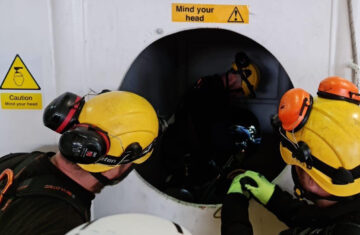
The project has delivered substantial economic benefits to Grant County. During construction, NedPower Mount Storm typically employed over 200 workers. The project continues to support local technicians for ongoing operations and maintenance. As one of the county’s largest taxpayers, the project likely contributes millions of dollars annually in property tax revenue, providing crucial funding for local schools, emergency services, and infrastructure. Landowners receive stable lease payments, creating a new revenue stream for rural property owners.
Future Outlook
Now well into its operational life, NedPower Mount Storm continues to be a significant renewable energy asset for the region. As one of West Virginia’s foundational wind projects, it represents a potential candidate for future repowering efforts. As analyzed by the National Renewable Energy Laboratory (NREL), modernizing the turbines could significantly increase the facility’s output. The project’s established infrastructure and proven wind resource position it to remain a contributor to West Virginia’s energy landscape for the foreseeable future, even as the state explores new energy opportunities.
Find also at USA: Smoky Hills Wind Project Phase I