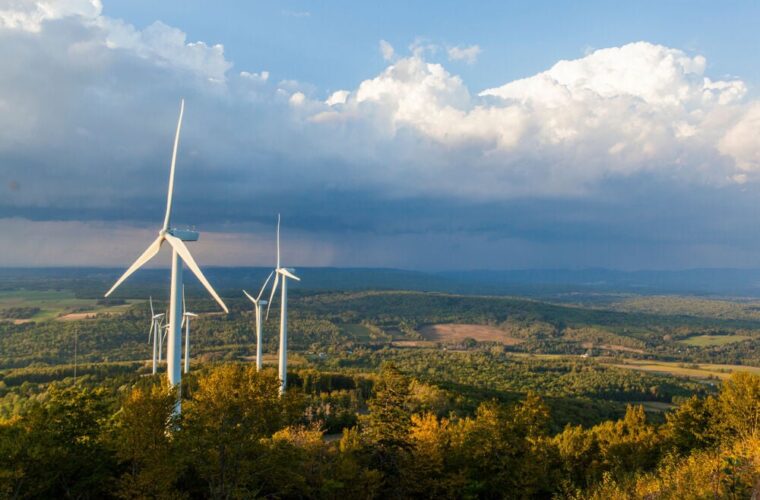
High Trail Wind Farm represents a new era of clean energy investment in the American Midwest. As a major infrastructure project developed in a state traditionally dominated by nuclear and coal, High Trail signals a significant diversification of Illinois’s energy portfolio. This project not only contributes to the state’s ambitious climate goals but also demonstrates how wind energy has become a cornerstone of rural economic development, providing a stable new source of revenue for farming communities.
Significance & Context
The High Trail Wind Farm is a substantial contributor to Illinois’s renewable energy targets. With a capacity of 150 megawatts (MW), the project generates enough electricity to power approximately 50,000 Illinois homes. This clean energy output directly supports the state’s Future Energy Jobs Act, which aims to dramatically increase renewable generation. By displacing fossil fuel-based power, High Trail helps avoid an estimated 300,000 metric tons of carbon dioxide emissions annually, making a meaningful contribution to regional air quality and climate mitigation efforts.
Development Timeline
The development of High Trail Wind Farm followed a careful, multi-year process. Initiated by developer Invenergy, the project underwent extensive planning and community engagement starting in the mid-2010s. Construction commenced in 2018, involving significant local workforce mobilization and infrastructure preparation. The project successfully navigated the construction phase and achieved commercial operation in 2020, bringing a major new source of clean power online for the Midcontinent Independent System Operator (MISO) grid.
Technology & Innovation
The High Trail Wind Farm utilizes modern, high-efficiency turbine technology to maximize energy production. The project features GE Renewable Energy’s turbines, selected for their reliability and performance in the wind profiles of central Illinois. These turbines, with their tall towers and large rotor diameters, are designed to capture wind energy more efficiently at higher altitudes. The project also incorporates advanced digital monitoring and control systems to optimize performance and ensure seamless integration with the regional grid.
Challenges & Controversies
A significant challenge for the High Trail Wind Farm was navigating the complex web of landowner negotiations and addressing concerns from some community members about the project’s visual impact and potential effects on property values. As with many wind developments, this required a sustained period of public engagement and negotiation. The project also faced logistical challenges related to transporting massive turbine components through rural Illinois. These hurdles were overcome through detailed route planning, coordination with local authorities, and the implementation of a comprehensive community benefits agreement.
Community & Economic Impact
The High Trail Wind Farm has delivered substantial economic benefits to its host county. During peak construction, the project typically employed over 200 workers, providing a significant boost to local businesses. In its operational phase, a wind farm of this size typically employs 10-15 full-time technicians for maintenance, creating stable, long-term jobs in a rural area. Crucially, the project likely contributes millions of dollars in new property tax revenue over its lifetime, providing essential funding for local schools, roads, and emergency services. Additionally, participating landowners receive annual lease payments, creating a drought-resistant source of income that supports the local agricultural economy.
Future Outlook
With a long-term power purchase agreement in place, the High Trail Wind Farm has a stable and predictable future. As a key component of Illinois’s clean energy infrastructure, the project is well-positioned to contribute to the state’s grid for decades. Its success helps pave the way for continued renewable investment in the region. As wind technology continues to advance, the site may eventually become a candidate for repowering—a process detailed by the National Renewable Energy Laboratory (NREL)—where newer, more efficient turbines could be deployed to further enhance its output and extend its operational life.
Find also at USA: Blue Sky Green Field Wind Project