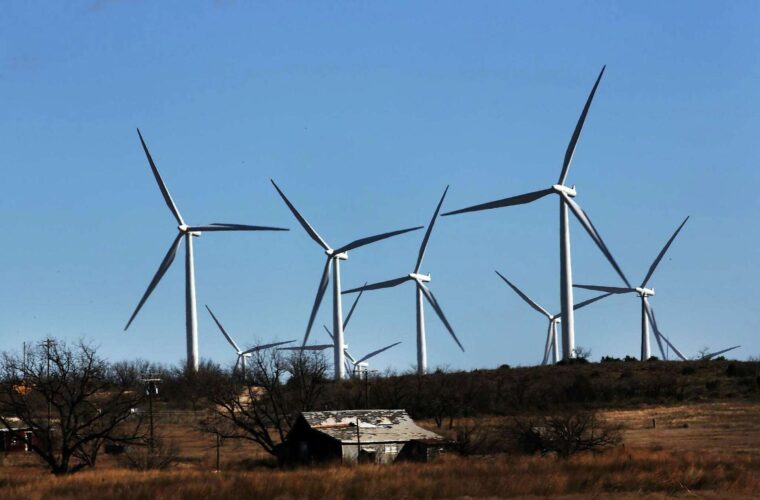
Sweetwater Wind Farm stands as a monumental chapter in the story of American renewable energy, representing one of the largest and most significant wind power developments in the United States at its peak. This sprawling project transformed the economic and physical landscape of Nolan County and cemented Texas’s status as a wind energy powerhouse. By harnessing the relentless winds of the Texas plains, Sweetwater not only generated massive amounts of clean electricity but also created a new economic paradigm for rural communities, demonstrating how wind power could become a cornerstone of both energy strategy and local prosperity.
Significance & Context
The Sweetwater Wind Farm was a cornerstone of the explosive growth of wind power in the Electric Reliability Council of Texas (ERCOT) grid during the 2000s. Its massive scale was a direct result of Texas’s forward-looking Renewable Portfolio Standard and the subsequent Competitive Renewable Energy Zones (CREZ) transmission initiative, which aimed to bring West Texas wind to urban centers. Developed in multiple phases, the project’s cumulative capacity made it a symbol of the state’s commitment to diversifying its energy portfolio and a key contributor to Texas becoming the national leader in wind generation, a status tracked by the U.S. Energy Information Administration (EIA).
Development Timeline
Development of the Sweetwater Wind Farm occurred in several phases beginning in the early 2000s, with major expansions continuing through the late 2000s. This multi-stage development allowed for the incorporation of rapidly evolving turbine technology. Key milestones involved securing land agreements across a vast area, coordinating with the evolving CREZ transmission plan, and navigating local zoning. The project’s final phases were completed around 2009, establishing its place as a wind energy giant.
Technology & Innovation
At its peak, the Sweetwater Wind Farm featured thousands of wind turbines, representing multiple generations of technology. Earlier phases utilized turbines that were standard for the mid-2000s, while later phases incorporated larger, more efficient models with taller towers and longer blades. The project’s immense scale served as a real-world laboratory for optimizing large-scale wind farm operations and maintenance, providing invaluable data on everything from turbine performance to grid integration challenges.
Challenges & Controversies
A significant challenge for the Sweetwater project was managing the sheer logistical complexity of constructing and interconnecting one of the world’s largest wind farms in a relatively remote location. This involved coordinating the delivery and installation of thousands of turbine components and building the necessary electrical collection systems. This hurdle was overcome through meticulous project management, the development of local infrastructure, and close collaboration with transmission providers to ensure the power could be delivered to market.
Community & Economic Impact
For Nolan County and the town of Sweetwater, the project’s impact was transformative. During the multi-year construction boom, the wind farm typically employed over one thousand workers at its peak, fundamentally reshaping the local economy. While permanent operations and maintenance jobs were fewer, they created a stable core of high-skilled technical positions. The project likely contributed tens of millions of dollars in property tax revenue, providing a massive boost to local school districts and county services—a fiscal impact documented by the Texas Comptroller of Public Accounts. The project created a new class of “windfall” landowners who received substantial, long-term lease payments.
Future Outlook
As one of the pioneering mega-projects of the U.S. wind industry, the Sweetwater Wind Farm is now entering a new phase of its lifecycle. Many of its original turbines are approaching the end of their operational lifespan, making the site a prime candidate for repowering. This process, which involves replacing older turbines with newer, far more powerful models, could significantly increase the site’s energy output on a smaller physical footprint. The project’s legacy is its proof that wind energy can be a dominant, reliable, and community-supporting power source, a lesson that continues to influence energy development across the nation.
Also at Texas: Brazos Wind Farm