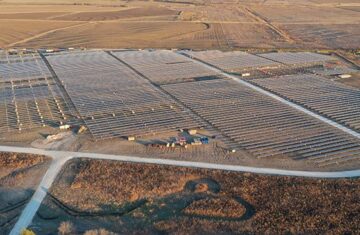
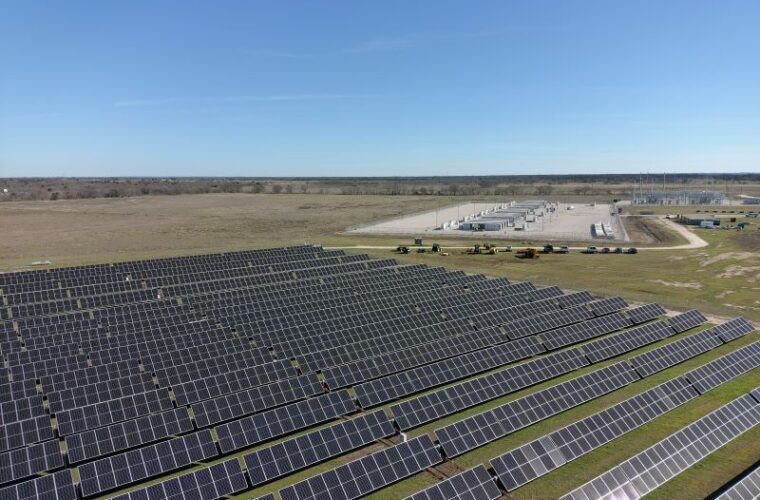
Fence Post Solar Hybrid Project represents a significant evolution beyond traditional solar farms, establishing itself as a fully dispatchable clean energy power plant. This innovative facility directly addresses the challenge of solar intermittency by co-locating generation with substantial battery storage, creating a reliable resource capable of supplying power day and night. As the ERCOT grid faces growing demand and the need for greater flexibility, Fence Post provides a model for the future of resilient, market-responsive renewable energy.
Significance & Context
The Fence Post Solar Hybrid Project is strategically vital for the Electric Reliability Council of Texas (ERCOT) grid. Its ability to store solar energy and dispatch it during high-value periods—such as the evening peak when solar generation naturally declines—makes it functionally equivalent to a traditional peaker plant but without associated emissions. This capability is increasingly critical for grid reliability, a concern consistently highlighted in ERCOT’s Seasonal Assessments of Resource Adequacy. The project supports both utility and corporate clean energy goals while enhancing overall system stability.
Development Timeline
Development for the Fence Post project began in the early 2020s, coinciding with rapidly declining battery costs and a market signal for more flexible resources. Key milestones included securing land rights, navigating state and county permitting for the hybrid facility, and finalizing power purchase agreements that valued its dispatchability. Construction commenced in 2023, and the integrated solar-plus-storage facility achieved full commercial operation in 2025.
Technology & Innovation
The core innovation of Fence Post is its seamless integration of single-axis tracking solar arrays with a large-scale lithium-ion battery energy storage system (BESS). The facility is managed by a sophisticated energy management system that continuously optimizes operations, deciding in real-time whether to send power directly to the grid or to the batteries based on market prices and grid conditions. This allows the project to provide essential reliability services, including frequency regulation and black-start capability.
Challenges & Controversies
A significant challenge for the Fence Post project was navigating the regulatory and interconnection complexities of a hybrid resource. ERCOT’s interconnection process for co-located generation and storage was evolving during development, requiring extensive technical coordination and modeling to ensure grid compatibility. This hurdle was resolved through proactive collaboration with ERCOT engineers and independent system studies, which demonstrated the project’s stability benefits and secured its interconnection agreement.
Community & Economic Impact
For the host county, the Fence Post Solar Hybrid Project delivers a substantial economic boost. During the construction phase, the project typically employed over 300 workers, providing a significant infusion of local spending. The complex nature of the hybrid facility creates higher-skilled permanent operations and maintenance jobs compared to solar-only projects. The project likely contributes a major increase in property tax revenue, supporting local schools and public services—a fiscal benefit detailed in analyses by the Texas Comptroller of Public Accounts. Landowners receive stable lease payments.
Future Outlook
The successful operation of the Fence Post Solar Hybrid Project establishes a new benchmark for what constitutes a modern, dispatchable power plant in Texas. Its proven ability to provide firm, clean energy makes it a model for future hybrid developments. As energy market structures evolve to better value reliability and flexibility, the project is well-positioned to capitalize on new revenue streams. Fence Post demonstrates that the future of Texas’s energy resilience lies in intelligently integrated solar-storage solutions that maximize both economic and grid value.
Discover also at Texas: Orion Solar Project