Martin County Solar Project represents a strategic investment in local economic resilience and energy independence. This project demonstrates how rural communities can leverage their land resources to generate stable revenue, create jobs, and contribute to a more diverse and modernized energy grid.
Significance & Context
The Martin County Solar Project is a 100-megawatt (MW) facility developed by National Grid Renewables. The project’s entire electrical output is being sold through a long-term Power Purchase Agreement (PPA) to Hormel Foods, supporting the corporation’s ambitious sustainability goals for its operations. This commercial and industrial (C&I) offtake agreement, highlighted in Hormel’s corporate responsibility report, represents a growing trend of major manufacturers directly sourcing renewable energy. The facility will generate enough electricity to power approximately 20,000 homes and is expected to offset over 150,000 metric tons of carbon dioxide emissions annually.
Development Timeline
Development for the Martin County Solar Project began with land leasing and preliminary studies in 2019. The project successfully navigated the interconnection process with the Midcontinent Independent System Operator (MISO), with its status documented in the public MISO Generation Interconnection Queue. After securing its PPA with Hormel and obtaining all necessary local permits from the Martin County Commission, major construction commenced in 2022. The project reached commercial operation and began delivering power in the fourth quarter of 2023.
Technology & Innovation
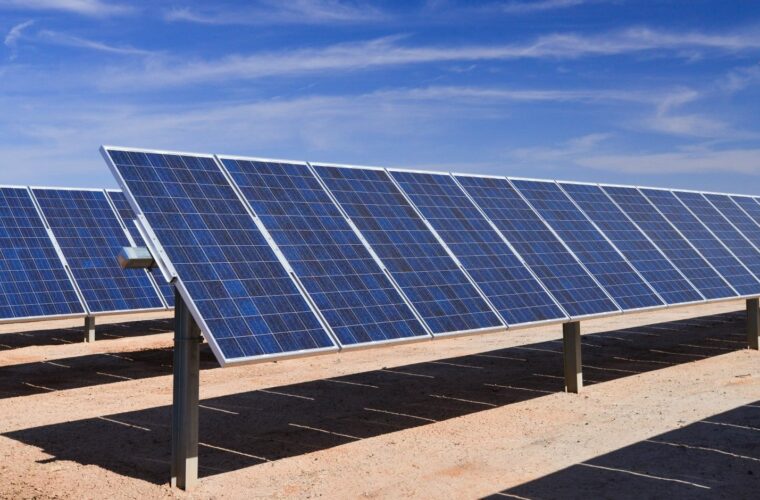
The Martin County Solar Project utilizes single-axis tracking technology to maximize energy production by following the sun’s path from east to west. This system increases the facility’s capacity factor, ensuring optimal output during peak daylight hours. The project also incorporates a pollinator-friendly habitat plan across the site, planting native grasses and flowering species beneath the solar arrays. This approach, which aligns with best practices from the University of Minnesota Bee Lab, supports local biodiversity, improves soil health, and benefits neighboring agricultural lands.
Challenges & Controversies
A significant challenge for the Martin County Solar Project was navigating initial local concerns regarding the project’s visual impact and its effect on the county’s agricultural identity. Some residents were wary of converting cropland to an industrial use. The developer addressed this through a series of open houses and direct meetings with neighbors, emphasizing the project’s long-term economic benefits. Crucially, the commitment to the pollinator-friendly habitat helped reframe the project as an environmentally conscious development, and the binding decommissioning plan filed with the Martin County Administrator’s office provided assurance that the land would be restored in the future.
Community & Economic Impact
The project delivers a substantial and sustained economic benefit to Martin County. During peak construction, the Martin County Solar Project typically employed over 200 workers. Over its 30-year operational life, the project is projected to generate over $20 million in new property tax revenue. This revenue will likely contribute significantly to the county’s budget, providing enhanced, predictable funding for local schools, road maintenance, and public safety services. For the landowners hosting the arrays, the long-term lease payments provide a stable source of income, insulating them from the volatility of traditional farming.
Future Outlook
Now fully operational, the Martin County Solar Project is a long-term asset that will provide clean power and economic stability for decades. Its success as a C&I-focused project highlights a viable pathway for renewable development in the region. The project’s infrastructure is designed to be “storage-ready,” with potential for the future co-location of a battery energy storage system. As analyzed by the U.S. Energy Information Administration (EIA), adding storage could allow the facility to supply power during evening peak hours, further increasing its value to the grid and solidifying its role in Minnesota’s clean energy transition.
You can find also at USA: Dunns Bridge Solar