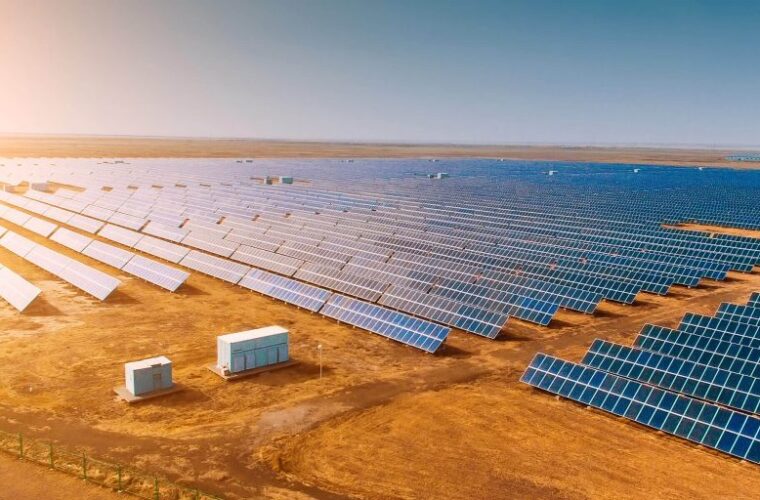
In the competitive landscape of the Texas energy market, the Nebula Solar Farm distinguishes itself as a next-generation project designed for both scale and intelligence. This facility represents a new wave of solar development that prioritizes deep grid integration and operational flexibility. By incorporating advanced technology from its inception, Nebula Solar is engineered not merely to generate power, but to actively enhance the stability and reliability of the ERCOT grid, setting a new standard for the role of renewable assets in a modern power system.
Significance & Context
The Nebula Solar Farm is a strategically significant addition to the Electric Reliability Council of Texas (ERCOT) grid, coming online during a period of unprecedented demand growth and energy transition. Unlike earlier solar projects, its development was closely aligned with evolving grid codes that require renewable resources to provide essential reliability services traditionally supplied by thermal power plants. The project’s ability to offer features like voltage support and synthetic inertia makes it a valuable partner in maintaining grid frequency, a critical need highlighted in recent ERCOT System Planning Reports.
Development Timeline
Development for the Nebula Solar project began in the early 2020s, with a design phase that incorporated forward-looking grid requirements from the outset. Key milestones included securing a large, contiguous land parcel, navigating the county permitting process with a focus on long-term compatibility, and successfully completing a more rigorous interconnection study. Construction commenced in 2023, and the project achieved commercial operation in 2025, meeting its targeted in-service date.
Technology & Innovation
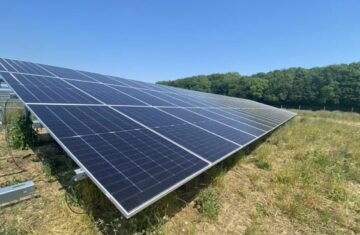
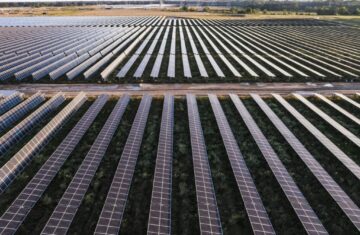
The core innovation of the Nebula Solar Farm lies in its advanced power electronics. The facility is equipped with state-of-the-art grid-forming inverters. Unlike conventional inverters that simply follow the grid’s frequency, these can actively stabilize it, providing crucial services that help prevent cascading outages. The project also utilizes bifacial panels on single-axis trackers and a sophisticated energy management system that allows it to dynamically respond to real-time grid conditions and market signals.
Challenges & Controversies
A significant challenge for the Nebula Solar project was the higher capital cost and technical complexity associated with its advanced grid-forming technology. This required a substantial upfront investment beyond a standard solar farm. The hurdle was resolved by securing a power purchase agreement (PPA) with a credit-worthy offtaker that valued the project’s enhanced grid benefits, thereby ensuring the financial viability of the more sophisticated and resilient design.
Community & Economic Impact
For its host county, the Nebula Solar Farm provides a substantial and predictable economic boost. During peak construction, the project typically employed over 350 workers, providing a significant infusion of local spending. The permanent operations team includes specialized technicians for maintaining the advanced systems, creating higher-skilled, long-term jobs. The project likely contributes a major source of property tax revenue over its decades-long lifespan, directly funding local schools, emergency services, and infrastructure—a fiscal benefit analyzed by the Texas Comptroller of Public Accounts. Landowners receive a stable source of lease income.
Future Outlook
The successful deployment of Nebula Solar positions it as a model for future renewable projects in Texas and beyond. Its operational data will be invaluable for utilities and grid operators seeking to understand the real-world benefits of grid-forming inverters at scale. The project’s design inherently allows for the seamless future addition of large-scale battery storage, which would create one of the most resilient and valuable grid assets in the region. Nebula Solar demonstrates that the future of renewable energy lies not just in capacity, but in intelligence and grid support.
Discover also at Texas: Waco Solar farm