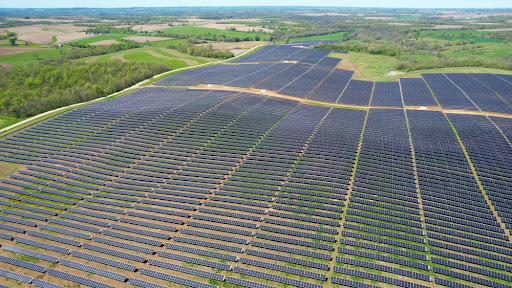
Grant County Solar Farm represents a significant advancement in the state’s renewable energy portfolio, demonstrating how solar development can complement traditional farming while creating new economic pathways for rural communities. This project highlights Wisconsin’s strategic approach to diversifying its energy resources while maintaining agricultural productivity.
Significance & Context
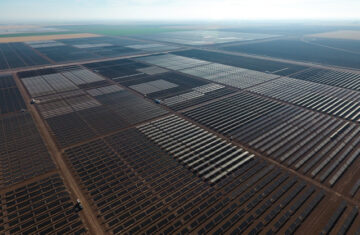
The Grant County Solar Farm is a 150-megawatt (AC) facility developed by Ranger Power on private land in Grant County. The project’s output is purchased by Alliant Energy as part of the utility’s commitment to expanding clean energy resources for its customers across Wisconsin. According to data from the U.S. Energy Information Administration (EIA), the facility generates enough electricity to power approximately 33,000 homes. This clean energy contribution displaces an estimated 225,000 metric tons of carbon dioxide emissions annually, supporting Wisconsin’s transition to a more sustainable energy future while maintaining the region’s agricultural character.
Development Timeline
The project’s development began with comprehensive site assessment and land acquisition in 2019. A key milestone was reached when the project received approval from the Public Service Commission of Wisconsin (PSCW), which oversees major energy projects in the state. The development team successfully navigated local permitting with the Grant County Board of Supervisors and completed interconnection studies. Construction commenced in 2022, and the project achieved commercial operation in 2024.
Technology & Innovation
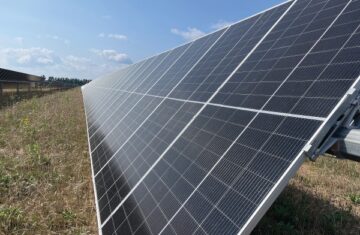
The Grant County Solar Farm utilizes solar technology specifically engineered for Wisconsin’s climate conditions. The facility features single-axis tracking systems with reinforced components designed to withstand heavy snow loads and seasonal weather variations. The project employs bifacial panel technology that captures reflected light from the ground, particularly effective during Wisconsin’s winter months when snow cover increases albedo. According to performance data from the National Renewable Energy Laboratory (NREL), this configuration can increase energy production by 5-15% compared to conventional systems in similar climates. Advanced inverters ensure stable integration with the regional grid.
Challenges & Controversies
A significant challenge for the Grant County Solar project involved addressing concerns about agricultural land preservation in a county with deep farming traditions. Some community members questioned the long-term impact on the local agricultural economy and expressed apprehension about changing the rural landscape. These concerns were addressed through an extensive community engagement process that included public meetings, visual impact assessments, and the implementation of vegetative screening buffers. The project also incorporated an agricultural compatibility plan that allows for sheep grazing and pollinator habitats beneath the panels, demonstrating that solar development can coexist with agricultural benefits.
Community & Economic Impact
The Grant County Solar Farm provides substantial economic benefits to its host community. During the construction phase, the project typically employed 250-350 workers, according to workforce estimates from the Solar Energy Industries Association (SEIA). For long-term operations, it supports a permanent team of technicians for maintenance and monitoring. The project provides stable, long-term lease payments to local landowners, creating a reliable revenue source that complements traditional farming income. Based on Wisconsin’s tax assessment models for renewable energy projects, the facility likely contributes significant annual tax revenue to Grant County, directly benefiting local schools and public services.
Future Outlook
With an operational lifespan of 30+ years, the Grant County Solar Farm represents a long-term commitment to Wisconsin’s energy future. The project’s success provides a replicable model for future renewable development in agricultural communities across the state. The site’s infrastructure is designed with future potential in mind; it could potentially host co-located battery energy storage systems (BESS) to enhance grid reliability and the value of the solar power generated. As Wisconsin continues to implement its clean energy transition, the Grant County Solar Farm demonstrates how solar projects can support both economic development and environmental goals while creating sustainable opportunities for rural communities.
There is also at Wisconsin: Onion River Solar farm