In California’s relentless pursuit of a carbon-free grid, the SE Athos II Solar Farm represents a critical piece of the state’s strategic energy puzzle. Located in the sun-drenched Riverside County, this utility-scale project is part of a broader wave of renewable development essential for meeting ambitious climate mandates. As the second phase of a larger complex, SE Athos II exemplifies the efficient expansion of existing solar sites, maximizing transmission infrastructure and land use to deliver clean, cost-effective power precisely when the grid needs it most.
Significance & Context
The SE Athos II Solar Farm is a direct contributor to California’s mandate for 100% clean electricity by 2045. Its power is crucial for the California Independent System Operator (CAISO) grid, particularly for meeting peak afternoon demand and offsetting generation from natural gas power plants. The project’s location in Southern California is strategic, helping to serve the massive load centers of Los Angeles and San Diego while bolstering regional grid reliability. This development aligns with the state’s need for rapid decarbonization, as consistently outlined in the California Public Utilities Commission (CPUC) integrated resource planning proceedings.
Development Timeline
Development of SE Athos II accelerated following the successful commissioning of its first phase. Building on existing permits and infrastructure streamlined the process, with key activities around 2022 focusing on securing a power purchase agreement (PPA) and finalizing the engineering design. Construction commenced in 2023, leveraging lessons learned from the prior phase to enhance efficiency. The project reached commercial operation in 2025, demonstrating a faster development pathway achievable for phased solar projects.
Technology & Innovation
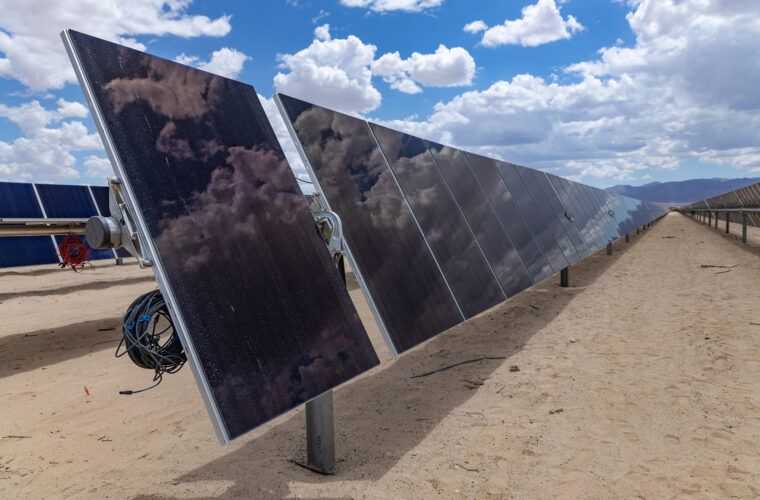
SE Athos II utilizes high-efficiency bifacial solar panels mounted on single-axis tracking systems. These bifacial modules capture sunlight on both sides, increasing energy yield by utilizing light reflected from the desert floor. The project incorporates a water-free robotic cleaning system to maintain panel efficiency, a critical innovation in California’s arid environment where water conservation is paramount. Its electrical systems are designed for seamless integration with the existing Phase I infrastructure, optimizing interconnection capacity.
Challenges & Controversies
A significant challenge for the SE Athos II project involved addressing environmental and habitat concerns in the sensitive desert ecosystem. The project area required careful biological surveys to minimize impact on native species and vegetation. Opposition from some environmental groups focused on land use and potential disruption to wildlife corridors. The developers addressed these concerns through a comprehensive mitigation plan developed in consultation with the California Department of Fish and Wildlife. This plan included habitat restoration, controlled grazing for vegetation management, and setting aside conservation areas, which helped secure the necessary permits.
Community & Economic Impact
For Riverside County, SE Athos II provides a substantial and sustained economic benefit. During peak construction, the project typically employed over 300 workers, providing a significant boost to local economies. While permanent operational jobs are fewer, they represent long-term, skilled positions. The project likely contributes a major source of property tax revenue, which is vital for funding local public services such as schools, healthcare, and public safety—a fiscal impact recognized by the Riverside County Economic Development Agency. Landowners hosting the arrays receive a stable, long-term source of lease income.
Future Outlook
The completion of SE Athos II reinforces the viability of phased solar development as a model for maximizing infrastructure investments. Its success paves the way for potential future phases or the integration of battery energy storage systems (BESS), which would allow the solar energy to be dispatched during evening peak hours. As California’s grid evolves, the ability of projects like SE Athos II to provide reliable, daytime power will remain indispensable. The project stands as a benchmark for responsible solar development that balances clean energy goals with environmental stewardship.
See at California: Fifth Standard Solar PV