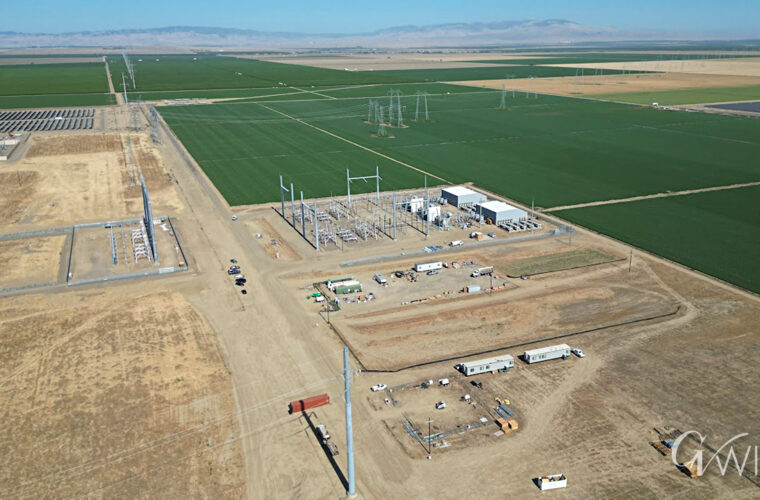
Fifth Standard Solar PV project represents a strategic conversion of underutilized acreage into a productive clean energy asset, demonstrating how solar development can support both environmental goals and economic revitalization in agricultural regions. This project exemplifies California’s leadership in repurposing land for renewable generation while maintaining agricultural compatibility.
Significance & Context
The Fifth Standard Solar PV is a 110-megawatt (AC) facility developed by Recurrent Energy on private land in Fresno County. The project’s output is sold to Silicon Valley Clean Energy under a long-term power purchase agreement, supporting the community choice aggregator’s goal of providing 100% carbon-free electricity to its customers. According to data from the California Energy Commission (CEC), the facility generates enough electricity to power approximately 40,000 homes. This clean energy contribution displaces an estimated 155,000 metric tons of carbon dioxide emissions annually, supporting California’s mandate for a carbon-free grid by 2045.
Development Timeline
The project’s development began with site acquisition and feasibility studies in 2018. A key milestone was reached when the project was selected in Silicon Valley Clean Energy’s competitive solicitation process. The development team successfully navigated the local permitting process with the Fresno County Department of Public Works and Planning and completed necessary environmental reviews. Construction commenced in 2021, and the project achieved commercial operation in 2023.
Technology & Innovation
The Fifth Standard Solar PV utilizes contemporary solar technology optimized for the Central Valley’s high solar irradiance. The facility features single-axis tracking systems that follow the sun’s path from east to west, increasing energy production by approximately 20-25% compared to fixed-tilt systems. The project employs a water-efficient design for panel cleaning, using automated systems that minimize water consumption—a critical consideration in California’s drought-prone environment. According to performance data from the National Renewable Energy Laboratory (NREL), this configuration maximizes energy capture while reducing operational water use by up to 90% compared to conventional cleaning methods.
Challenges & Controversies
A significant challenge for the Fifth Standard Solar project involved addressing concerns about the conversion of agricultural land in a region known as “America’s Salad Bowl.” Some stakeholders questioned the long-term impact on the county’s agricultural economy and expressed concerns about soil preservation. These concerns were addressed through a comprehensive agricultural compatibility plan that includes soil conservation measures and allows for sheep grazing for vegetation management. The project also implemented pollinator-friendly planting beneath the arrays, demonstrating that solar development can support ecological benefits while generating clean energy.
Community & Economic Impact
The Fifth Standard Solar PV provides substantial economic benefits to Fresno County. During the construction phase, the project typically employed 200-300 workers, providing a significant temporary boost to the local economy. For long-term operations, it supports a permanent team of technicians for maintenance and monitoring. The project provides stable, long-term lease payments to local landowners, creating a drought-resistant revenue source that complements traditional farming income. Based on California’s tax policies for renewable energy and local assessment models, the project likely contributes several hundred thousand dollars annually in property tax revenue to Fresno County, directly benefiting local schools and public services.
Future Outlook
With an operational lifespan of 30+ years, the Fifth Standard Solar PV represents a long-term commitment to California’s energy and agricultural future. The project’s successful integration of solar generation with agricultural-compatible land use provides a replicable model for future developments in the Central Valley. The site’s infrastructure is designed with future potential in mind; it could potentially host co-located battery energy storage systems (BESS) to store excess solar energy for use during peak demand periods. As California continues to implement its clean energy transition, projects like Fifth Standard Solar PV demonstrate how renewable development can support both environmental goals and economic resilience in agricultural communities
See at California: Arlington Energy Center