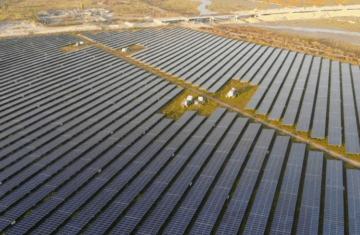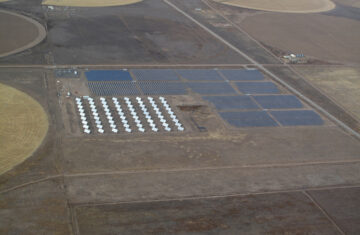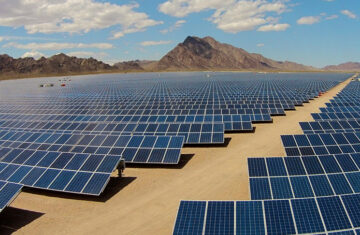
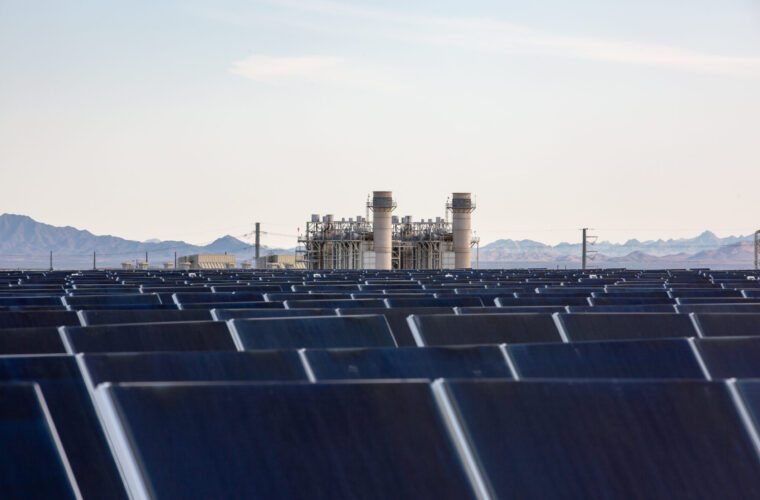
Southern California’s Colorado Desert, the Athos Solar Project represents a strategic advancement in renewable energy development, demonstrating how innovative technology and comprehensive environmental planning can maximize clean power generation while minimizing ecological impacts. This project exemplifies the next generation of solar development in California’s sensitive desert ecosystems, balancing ambitious climate goals with responsible stewardship of natural resources.
Significance & Context
Developed by RWE Renewables, the 450-megawatt (MW) Athos Solar Project stands as a major contributor to California’s renewable energy portfolio while operating within the state’s Desert Renewable Energy Conservation Plan (DRECP) framework. According to generation data from the California Energy Commission, the facility produces enough electricity to power approximately 138,000 homes, making it a significant asset for Southern California Edison‘s clean energy supply. Its location in Riverside County positions it to capitalize on some of the highest solar irradiance levels in North America while adhering to strict conservation guidelines for protected species and habitats.
Development Timeline
The project’s development involved extensive planning to address both environmental concerns and technological optimization. Development activities began in 2019, with the project receiving approval from the Riverside County Board of Supervisors in 2021 after comprehensive environmental review. Construction commenced in 2022, achieving commercial operation in 2024, as documented in California Independent System Operator (CAISO) interconnection records. This timeline included additional engineering phases to implement innovative environmental mitigation measures and optimize the facility’s water conservation systems.
Technology & Innovation
Athos Solar utilizes single-axis tracking systems with advanced bifacial photovoltaic modules, specifically engineered for high-temperature desert performance. According to technical reports from the National Renewable Energy Laboratory (NREL), this configuration increases energy yield by 15-20% compared to earlier desert solar technology. The project’s most significant innovation is its completely water-free operation, utilizing automated robotic cleaning systems that employ air pressure and rotating brushes instead of water. Advanced inverters with grid-forming capabilities provide essential reliability services, including black start capability and enhanced frequency response for grid stability.
Challenges & Controversies
The project faced significant challenges related to its location in environmentally sensitive desert habitat. Conservation groups including the Colorado Desert Coalition raised concerns about impacts on desert tortoise corridors and potential disruption of wildlife migration patterns. The resolution involved implementing one of the most comprehensive Habitat Conservation Plans for a solar project to date, developed in coordination with the California Department of Fish and Wildlife and the U.S. Fish and Wildlife Service. This included creating thousands of acres of protected habitat, establishing enhanced wildlife corridors, and implementing a successful desert tortoise translocation program.
Community & Economic Impact
For Riverside County, particularly the eastern region where economic opportunities are limited, the project has delivered substantial benefits. During construction, the project typically employed 500-600 workers, with strong local hiring programs for county residents. For ongoing operations, it maintains 20-25 permanent positions. Based on Riverside County’s tax assessment models for utility-scale solar, the project likely contributes approximately $2.5-3 million annually in property tax revenue to local governments. Additionally, it provides stable lease payments to local landowners, creating a drought-resistant income source that complements other economic activities in the region.
Future Outlook
With an expected operational lifespan of 35+ years, the Athos Solar Project represents a long-term commitment to both clean energy and desert conservation. The project’s completely water-free approach and enhanced environmental mitigation strategies set new benchmarks for solar development in arid regions. As climate change intensifies drought conditions in the Southwest, the project’s conservation innovations become increasingly valuable. The facility’s performance data continues to inform best practices for solar development in sensitive ecosystems, while its operational experience contributes to improving the environmental compatibility and economic viability of renewable energy projects throughout the desert Southwest, demonstrating that California’s climate goals can be achieved while respecting environmental constraints.
Also at California: Drew Solar farm